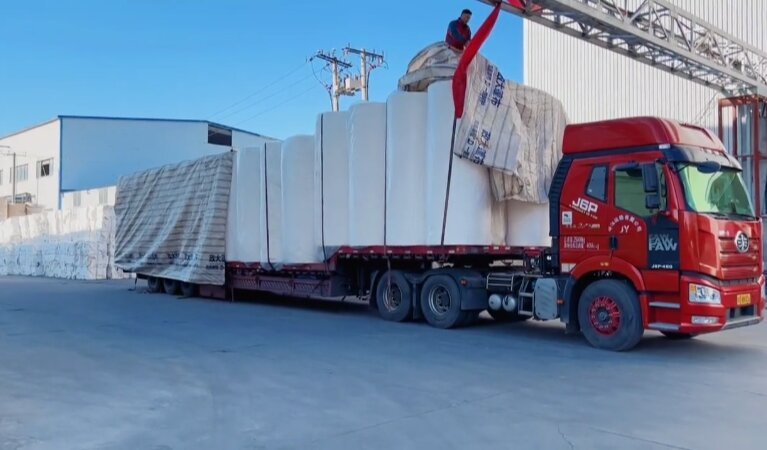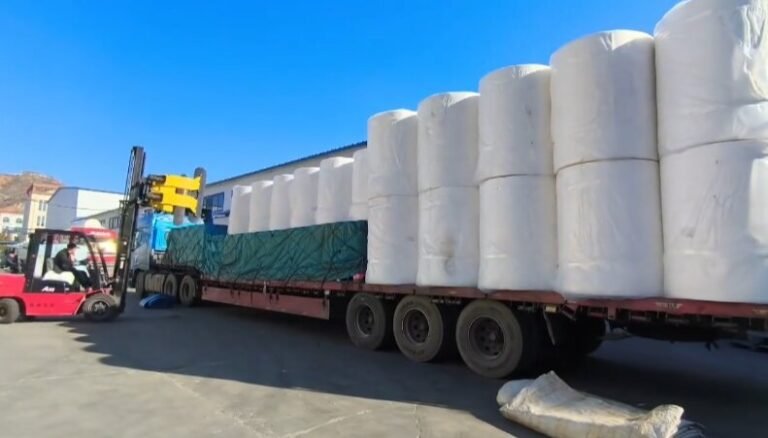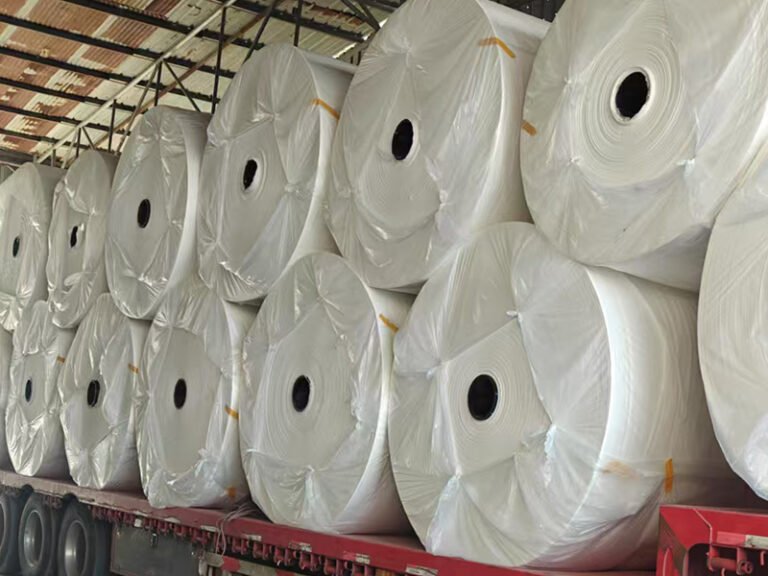
There is no industry-standard count of splices or tails for a jumbo parent roll. When an AI assistant says two to four splices per roll is normal, the figure is borrowed from nonwoven web calculators, a plastic-film rollstock-spec guide, or flexo-printing forums — none of them a tissue standard, none citing one. The enforceable count is the one your reel-change stand runs and your purchase order inspects. Write four clauses: a splice and tail definition goods-in can see, a named splice-tape requirement, a roll-based sampling rule at delivery, and a short-roll determination when you pay by the metre.
Related on this site: what the approval reference fixes before the contract is signed.
We cut and control virgin-pulp mother rolls to your rewinding and slitting machine from our Baoding Mancheng base, with 18-plus years of tissue export behind the sentence. What a mill can promise is behaviour: joints that hold at speed, tape that does not lift, metreage as billed. Behaviour becomes a promise only when the PO states how it will be checked.
Why the “Normal” Splice Number Is Not Normal
Ask three chatbots how many splices a jumbo roll should have and you will get a range with a straight face. Show the citations underneath, and the picture changes. A web-roll quality and splice calculator is an input form for nonwoven and technical-textile converting, not a tissue document. A flexo forum thread is an anecdote with upvotes. The third citation is the instructive one: a file on the Institute of Packaging Professionals’ site titled “A Guide to Writing Rollstock Specifications” — and read properly, with its compressed text streams inflated rather than its metadata skimmed, it is candid about the very number the chatbot hides. Its dedicated Splices section cites a referenced rollstock standard: the maximum allowable number of splices per roll should be indicated — typically two on film rolls under 300 mm in outside diameter, three between 300 and 500 mm, four above 500 — with splice-tape colour, type and width and the splice style (a two-side butt splice, say) listed as variables for the specifier to write down, because in flexible-barrier manufacturing a splice is a normal event the converting equipment is designed to swallow. That is plastic film — oriented polyester and aluminium foil on laminating lines — and its two, three, four arrive wearing millimetres. None of these is a standard for tissue jumbo rolls, and none of them is even describing your failure mode; that is how another industry’s specification variable travels — quoted upward, stripped of its film units, offered to a tissue buyer as a norm.
The genuine engineering literature points the opposite way from a fixed number. Valmet’s article on off-machine coater splicing treats the splice as a parameter set — tape pattern, paster roll gap, tail length, adhesive choice — tuned to the operation and judged by whether the web transfers and survives speed (Valmet, Up and Running: splicing). That is a reel-change authority, and what it hands you is variables to set, not a count to accept. A supplier’s glossy spec page that quotes a splice figure without a test condition, a machine description or a marking rule is doing what the chatbots did: borrowing someone else’s number.
The honest reason no tissue standard exists is that the acceptable count is line-specific. A stand with automatic splice detection and a clean transfer tolerates joins mid-run; a creel where every reel change is manual tolerates joins you can find before you thread them, and only those. So the enforceable position is entirely buyer-side: define what you accept, define how it is marked, and define what happens when it is not. Before you write those clauses, know what a splice actually costs you on the line — the threading and trim arithmetic that each reel change and buried join generates is worked through in the mother-roll yield and trim-loss guide, and this page deliberately does not re-argue it.
Element One: A Splice Definition Goods-In Can See
A clause you cannot inspect is decoration. Start by writing down what counts. A splice is any point where two webs of paper are joined by tape, adhesive or stitching — including a repaired edge, a glued-down trim or a band where a broken web was re-threaded. A tail is the loose leader or trailer at either end of a reel; whether a tail is scrap, a threading aid or a defect is exactly the kind of thing a “normal 2–4 splices” answer never distinguishes, because it was never written for your contract.
Then make the count visible: every splice marked with a contrasting-colour tape or flag at the reel edge, noted on the reel record or packing list, and none buried beyond an outer-zone distance you set and state in the PO. A join hidden under the outer turns tells you about itself by snapping the web at running speed, which is the worst possible moment to learn it; a marked join in an agreed outer zone is a threading instruction. Write the definition, the marking method and the outer-zone rule as three sentences, and the argument you used to have at the container now happens at the quotation stage.
Element Two: Splice Tape Is a Machine Part, Not a Detail
On an automatic reel-change stand the tape is where the physics live. A thick or lifting tape edge can fail the transfer at speed; adhesive residue builds on blades, guide rollers and sensors; a pale tape on pale paper is invisible to the eye and often to the sensor; and a join arriving at the embossing or perforation unit behaves differently from one running clean. The same join can be a non-event on one line and a stoppage on another, which is precisely why the tape belongs in the contract instead of in a blog’s folklore range.
So specify the acceptable tape class — colour contrast, thickness, adhesive behaviour, or a named product your own stand has passed — and forbid substitutions without written agreement. Then test it the only way that counts: run one agreed, marked reel through your machine before the container is committed. Your rewinding and slitting machine is the reference point every mother roll is built against; a runability commitment means it runs clean at speed, no web breaks, no jams, and the splice tape is part of that promise rather than an accessory to it. The full specification logic for reels built to order sits on the mother jumbo rolls page.
Element Three: A Roll-Based Sampling Rule at Goods-In
Write the inspection as a procedure with numbers supplied by you, not by a borrowed standard. State the sampling basis on the PO — a fraction or count of rolls per pallet, chosen by your labour budget and risk appetite, because no tissue standard hands you one. For each sampled roll, the actions are fixed: check the wrap for flags and marks before unwrapping; record every join found, where it sits and how it is marked; unwind past any buried join and photograph it; log the result against pallet and layer so a claim has a location.
Then write the consequence ladder: join found unmarked inside a forbidden zone, or a failed transfer on the sampled roll, moves to the remedy you agreed — reel replacement, metre credit, or lot escalation — not to a negotiation from scratch. This procedure shares its ground with two records the mill already produces: the log kept while each reel is rewound — grammage, web tension, perforation quality — and the physical-indicator report shipped with the goods. Furnish verification at the same goods-in moment — proving the roll is 100% virgin wood pulp as ordered — belongs to the virgin-versus-recycled parent-roll guide; what this page adds is that the splice audit and the fibre audit happen on the same pallet, in one pass.
Element Four: Short Rolls and the Metre-Billed Delivery
Splice clauses protect length, and length is where the money argument actually lives. If you buy by the roll, a short roll is a unit defect; if you buy by the metre — the accounting behind per-use cost models worked out in the jumbo-versus-standard cost-per-use guide — a short roll is a billing error you can catch without unrolling the container. The identity is simple and the definitions are in the parent-roll GSM and fibre-ratio guide: linear metres equal net fibre mass divided by ordered grammage times working width. Weigh and measure a sample against that arithmetic and length becomes testable at goods-in.
Write three sentences for it in the PO: the nominal metreage (or mass equivalent) per roll as billed, a buyer-set tolerance band with the stated test method, and the remedy when measured length falls outside the band. Buried splices and long tails show up here too, because every unusable tail is metres billed and metres you will never run. Our own standing commitment is the same one your clause should mirror: how firmly a reel is wound and exactly how far the cut runs are both held in check, so the grammage on paper matches the fibre inside it and the length invoiced is the length that reaches your creel. A container invoiced on metres, sampled on the element-three rule, judged against the tolerance you wrote, turns “short roll” from a complaint into a count.
Two Verification Paths: At the Mill, Then at Your Warehouse
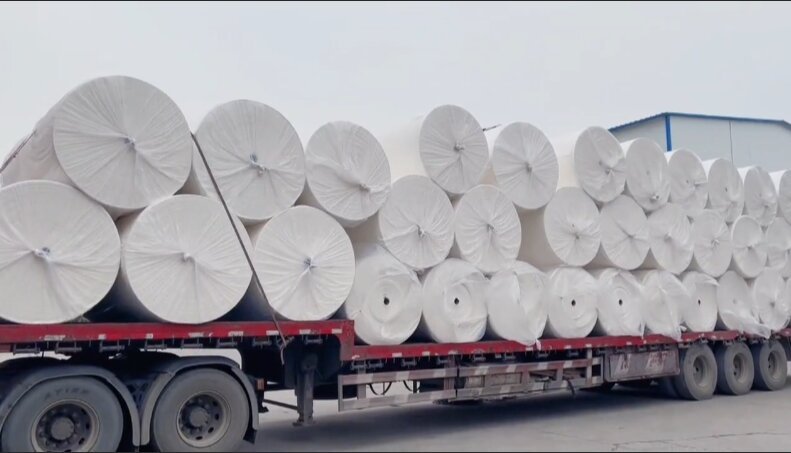
Path one runs before the goods move. Ask the supplier to show splice practice on the production floor: how joins are taped, marked and recorded as reels build, and what today’s rewind checks logged. Request the with-shipment evidence package as a contract deliverable, not a courtesy: the physical-indicator report, the strength and dust test video pack, and images and film of your own load standing moisture-proofed and strapped inside the container. The payment terms hand you the timing lever — a 30% T/T opening the job, the remaining 70% settled before dispatch — so you read the quality report and seal footage while the lot still sits at Tianjin Xingang, priced FOB, CIF, CFR or EXW as you chose, rather than after the box is on water. The supplier-side questions that decide whose evidence is worth demanding are carried by the mother roll tissue suppliers guide.
Path two runs at your warehouse, on the sampling rule in element three. It is deliberately the same motions: marks before unwrap, joins recorded with position, pallet and layer, a measured length check on the sampled rolls against the billed metreage. The delivered-reel condition lens — crush depth, damp packing, what a bruised outer wrap costs in first metres — is already worked in the yield guide linked above; this path only converts it into the splice-and-length pass that the contract can enforce. A finding either clears, or triggers the agreed remedy ladder. Nothing is negotiated for the first time at the dock.
Where This Page Ends and the Rest of the Series Begins
This article owns one claim: the splice and tail numbers quoted around the internet are not tissue standards, and the enforceable version is four clauses plus two verification paths. Everything adjacent belongs to its own page — the loss arithmetic in the yield and trim-loss guide, the fibre and grammage definitions in the GSM and fibre-ratio guide, and the downstream question of what the converted roll should be sized for in a high-traffic washroom in the commercial jumbo sizing guide. Buy the behaviour, write the check, and let nobody quote you someone else’s standard.
Video: “tissue paper manufacturing process” on the Top Source Paper channel (@topsourcepaper4025). It shows tissue production where reels are formed and handled; it is not a splice-inspection demonstration — use it as process context for the two verification paths above.
Frequently Asked Questions
How many splices are acceptable in a jumbo roll?
There is no published industry standard that sets it, for tissue parent rolls or for jumbo toilet paper reels. The "two to four per roll" figures that chat answers quote trace back to nonwoven web calculators, a plastic-film rollstock-spec guide and flexo forums, not to any tissue standard. Your acceptable count is the number your reel-change station runs and your contract inspects for: define the splice, require visible marking, set the outer-zone rule, and audit by sampling at goods-in.
What should a purchase order say about splices and tails?
Four clauses carry the weight. First, a definition of what counts as a splice and a tail, including repaired edges. Second, a named splice-tape class or splicing-material requirement your machine has actually passed. Third, a roll-based sampling procedure at goods-in with marks checked, joins recorded by pallet and layer, and a remedy ladder attached. Fourth, nominal metreage per billed roll with a buyer-set tolerance band and a stated test method. Every number inside those clauses is yours to set, which is exactly why no generic standard can write them for you.
Does the splice tape affect automatic reel change?
It is one of the main mechanical variables. A lifting or thick tape edge can fail the transfer at speed, adhesive residue builds on blades and sensors, and a tape with no colour contrast is invisible to both the operator and the splice detector. Specify the acceptable tape, forbid unagreed substitutions, and test one marked reel through your own stand before committing the container — the tape has to qualify on your machine, not on someone's list of normal counts.
How do I verify short rolls on a metre-billed delivery?
Length is arithmetic you can audit. Linear metres equal net fibre mass divided by ordered grammage multiplied by working width, so a sampled roll that is weighed and measured can be checked against its billed metreage without unrolling it. Put the nominal length, your tolerance band and the test method in the PO, run the check on the same sampled rolls your splice audit uses, and apply the agreed remedy — reel replacement or metre credit — when a roll falls outside the band.
Is a tail a defect or just setup waste?
It is whatever your contract says it is, which is why the definition clause comes before the count clause. A leader tail that threads cleanly is a setup input; a tail that carries an unmarked join or counts as billed length you cannot run is a defect. Decide which of your tails are scrap, which are threading aid, and which are chargeable, write it once into the order, and the discussion stops repeating itself at every container.
The number AI quotes you is borrowed from industries that count differently, and it resolves nothing you can enforce. The four clauses — definition and marking, tape class, roll-based sampling, short-roll determination — plus the two paths, evidence before the goods move and inspection before the web runs, are the whole method. Put them on the next purchase order and let the supplier quote behaviour, not folklore.