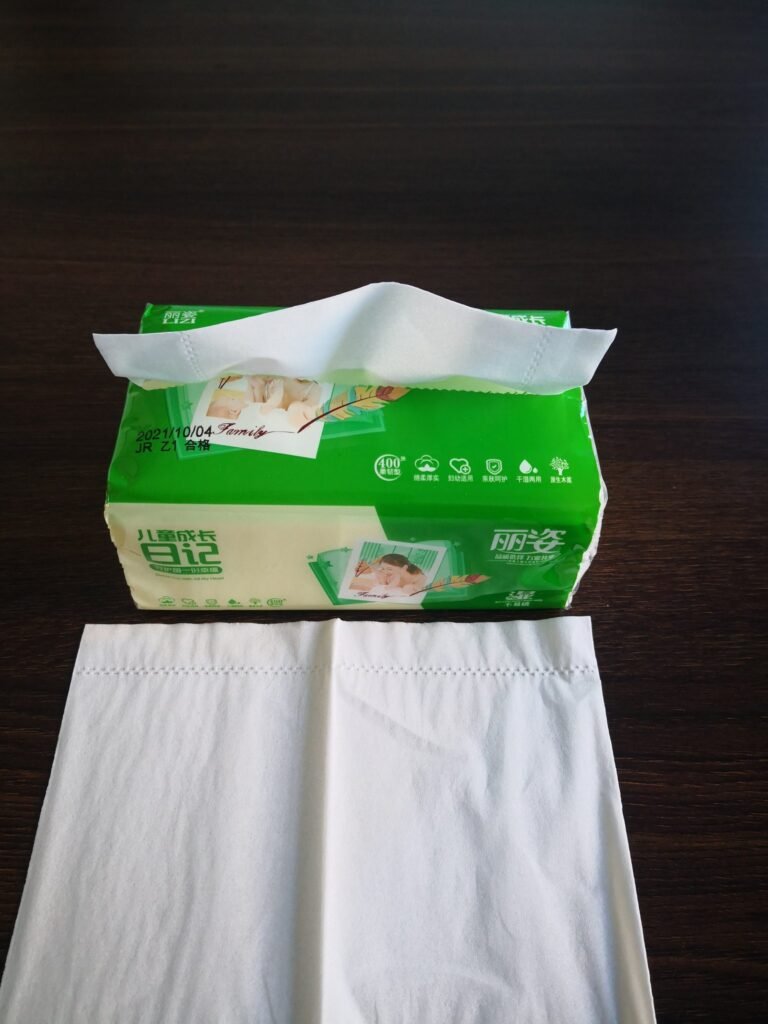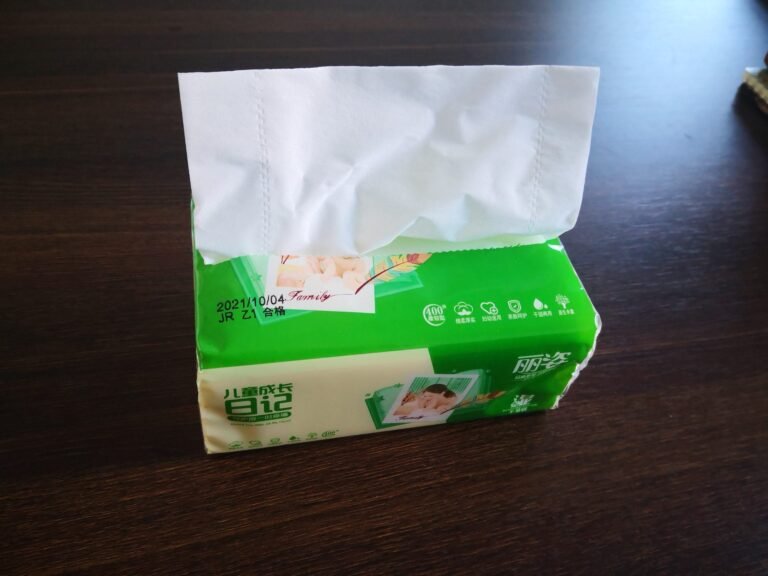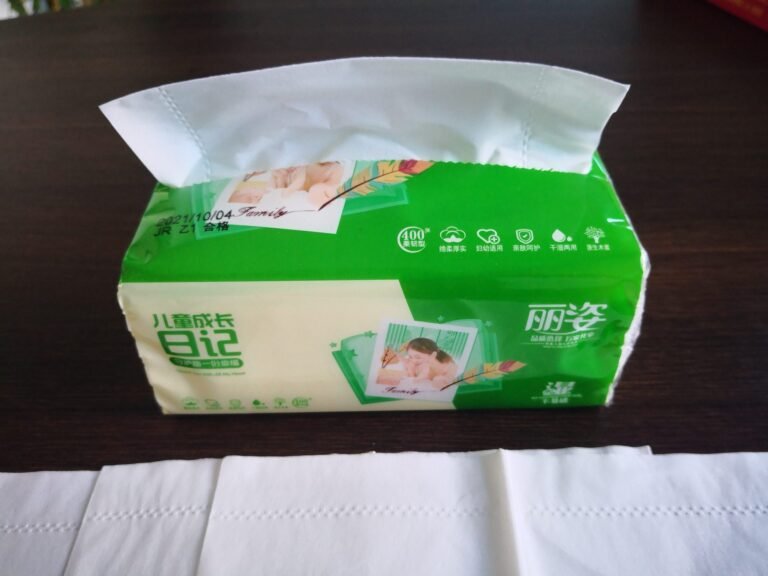
A buyer rarely files a complaint about “dust.” What arrives in the email is a photograph of grey powder sitting on the shoulder of a cube box, or a receptionist saying the tissue left fluff on a guest’s hand, or a first draw that sheds fibre before the sheet is even through the opening. Those are three different problems wearing one word, and each one is owned by a different part of the build: the furnish, the bond and edge, or the packing and handling. Getting the taxonomy right matters because a reorder is not stopped by a specification sheet — it is stopped by the complaint a buyer can no longer explain to their own customer.
This guide is for importers and brand owners buying facial tissue by the container: name the defect, trace its source, screen a sample without a laboratory, and record an acceptance rule before a booking is confirmed. It publishes no dust number. A mill that ships virgin pulp and controls paper-powder rate as a process variable does not hand out a laboratory limit it has not measured against your destination rules, and holding that boundary is the point.
Three Complaints That All Get Called “Dusty”
The first failure mode is loose powder that was not there when the box was packed. It settles on the shoulder of the box, or gathers in the fold of a PE soft-pack, and shows up after transit. This is the complaint that reads worst on a shelf, because the buyer’s customer sees it before they touch the paper. It travels with cube and flat boxes, where the shoulder is a visible open surface, and with PE soft-packs, where shaken fibre collects in the seam.
The second failure mode is lint that transfers: left on skin, on a glasses frame, or on a polished hotel table. It is a residue a person feels rather than a pile you photograph, and it is the guest-room cube and the clinic lobby tower that surface it, because the sheet is pulled straight across skin.
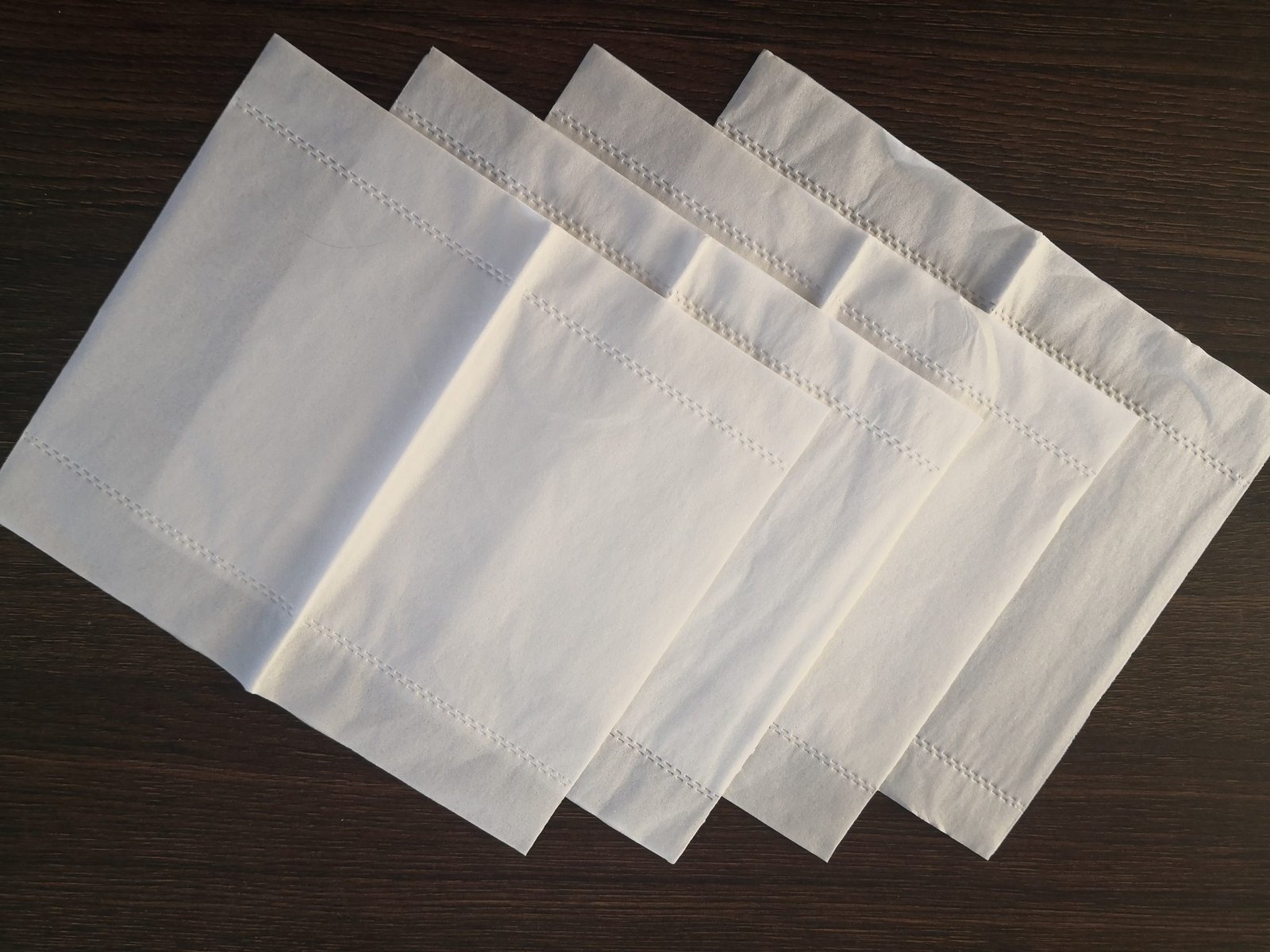
The third is shedding on the very first draw — the sheet throws fibre the moment it separates from the one below, before anyone handles it. That one points at furnish and bond rather than transit, and it is hardest to defend after the fact because it is present from sheet one.
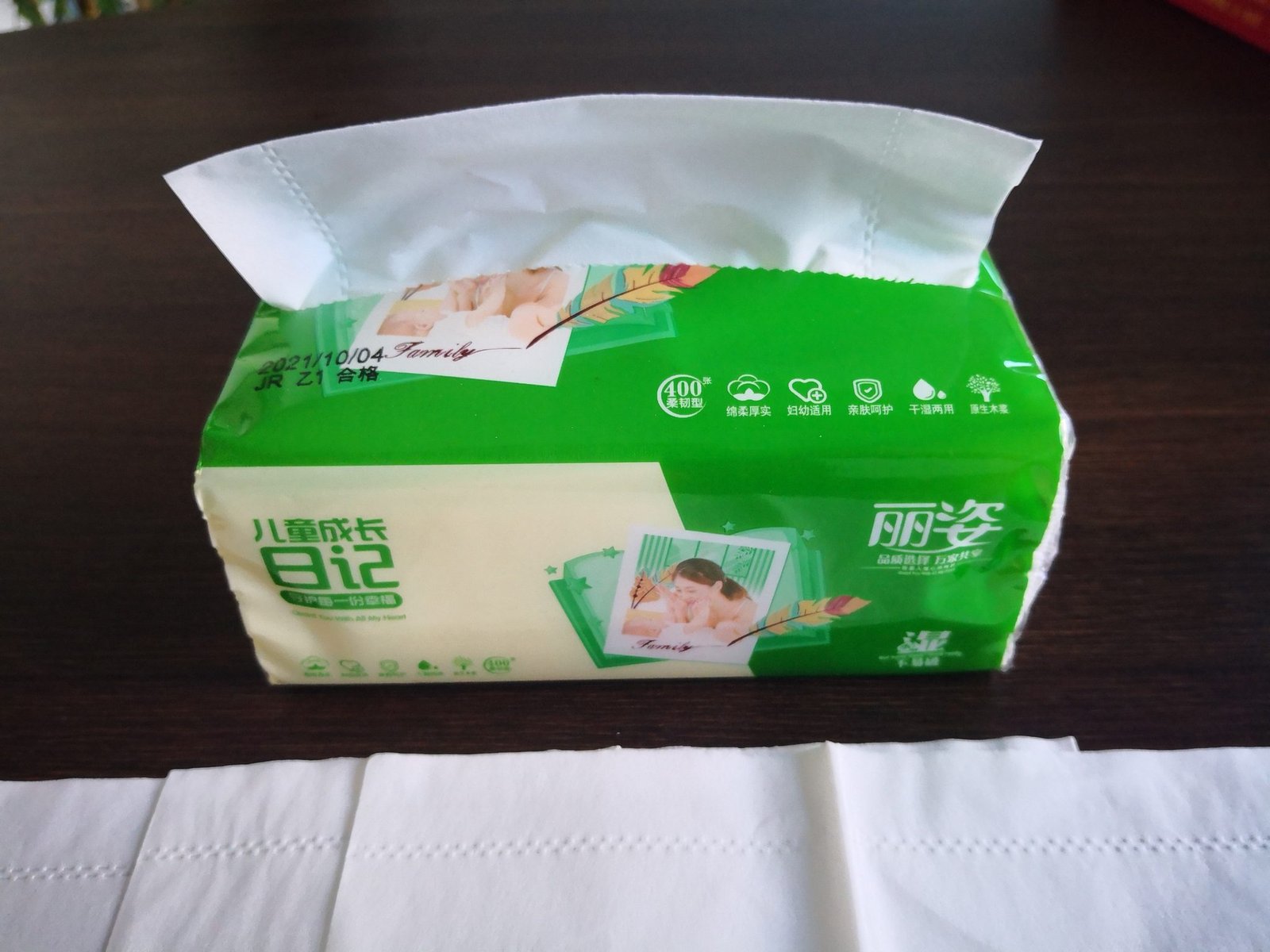
Each of those travels with a packaging format, but this is not a catalogue of formats; the packaging is named only as the carrier of the complaint. If you want the format family itself laid out — cube, flat, pop-up, sleeve, dispenser carton — that is covered end to end in 6 Facial Tissue Packaging Formats Retailers Should Know, and we will not repeat it here.
What Actually Produces Paper Powder
Short fibre and reclaimed furnish are the first real cause. A build leaning on short fibre, or quietly admitting recycled paper, sheds more surface than a controlled long-and-short virgin furnish. We hold the position of 100% virgin wood pulp with a golden long-to-short ratio and no recycled or low-grade recovered input, and recycled-furnish powder-shedding is the exact buyer pain that position answers.
Ply separation at the edge is the second cause. When the bond between plies is insufficient the cut edge opens, the loose plies abrade in the box, and fibre throws at every draw — which is why the edge is treated as a defect surface, not a cosmetic one.
Embossing and bonding pressure, and the sharpness of the edge cut, are the third. Over-embossing or a ragged cut liberates fibre however good the furnish is. The pattern is its own conversation, set out in Custom Tissue Formulation: Ply, Embossing, and Scent for Private Label; here it only matters that pressure and cut can be a source.
What we decline to blame is the useful half of this section. We will not hang a facial-tissue powder argument on wet strength, because wet-strength reinforcement and the water-fast absorbency language belong to the kitchen-towel and hand-towel lines, not to a facial sheet that is not sold on getting wet. And we will not import a lotion or fragrance chemistry argument either; those sit in the softness and sensitive-skin conversation covered in Soft Facial Tissue: Ply, Embossing, and Lotion Options for Premium Markets.
| What You See | Most Likely Owner | What It Is Not |
|---|---|---|
| Grey powder on the box shoulder after transit | Furnish shedding shaken loose in the case | Not a wet-strength issue; facial tissue is not sold on getting wet |
| Lint left on skin, glasses or a polished table | Surface fibre and edge cut | Not a lotion or fragrance residue; those are a different spec |
| Fibre thrown on the very first draw | Edge delamination between plies | Not a transit problem — it is present before handling |
What We Change on the Line — and What It Is Claimed to Control
These are process facts, stated as what the line does, not as a measured result handed to you. A mill’s honest answer to “why does it shed” is a set of controls, and here are ours.
First, a zero-dust micro-pore purification step runs on the facial-tissue line, described as a process that strictly controls paper-powder rate to serve sensitive-skin and high-standard zero-dust wiping needs. “Controlled” is doing the work: paper-powder rate is a process variable on the line, not a published number, because a figure without your destination method behind it would be marketing, not spec.
Second, the plies are joined by a multi-layer heat-bond embossing that keeps the edge from delaminating — a named property of this product, and the lever behind the first-draw shedding above, because an edge that stays closed does not abrade into fibre. Third, the furnish is 100% virgin wood pulp with a long-to-short ratio and no recovered input: the ratio answers the furnish-shedding cause, the “no recycled” rule answers the grey-powder complaint a recycled build tends to make.
Fourth, the sheet carries no fluorescent brightening agent and no harmful chemical additive — a materials-cleanliness fact that pairs with the process picture but claims no dust measurement. All four read the same whether you buy a white-label cube for a supermarket shelf or a hospitality box for a star-rated guest room, and the full facial-tissue range with its formats and plies lives on one page: Facial Tissue (cube, flat and PE soft-pack, 2-ply and 3-ply).
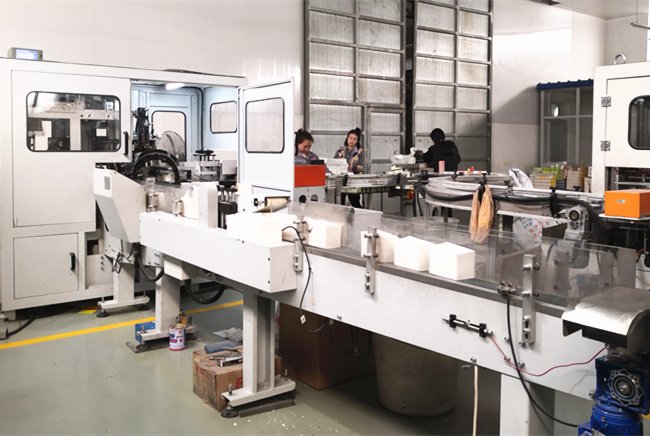
Video: “tissue paper manufacturing process” on the Top Source Paper channel (@topsourcepaper4025). It shows converting/embossing context, not a dust-measurement lab; use it as process context.
The No-Lab Sample Protocol
None of the three complaints needs a laboratory to screen. What needs doing is a fixed sequence, run on the retained sample the same way every time, so a later "pass" and a later "reject" mean the same thing. Run all four steps over a dark surface in good light, and log them.
Step one, the shake test. Take one sheet out of a fresh box, hold it a hand-span above a black card, and shake it for three seconds. What falls is the transferable surface fibre; note whether any visible powder collects on the card.
Step two, the fold-and-rub test. Fold a single sheet in half and rub the folded edge between two fingers, then open it. Fibre that comes off at the fold line points at the furnish and surface, and a ply that begins to peel apart at the fold points at the bond.
Step three, the first-draw inspection over a wet hand. With a lightly dampened hand, draw the first sheet from the pack. This is the transfer test a guest or a clinic patient actually triggers; lint that lands on damp skin is the complaint in the room, not the pile on the card.
Step four, the transit simulation. Seal an unopened box, lay it flat, and leave it 24 hours undisturbed. Then open it and inspect the shoulder. A box that has shaken its own loose fibre onto the shoulder in a day of still storage is telling you what a three-week ocean transit will do.
| Test | What You Do | What You Record |
|---|---|---|
| 1. Dark shake | Shake one sheet over a black card, 3 seconds | Any visible powder on the card: yes / no, and how much relative to the last sample |
| 2. Fold-and-rub | Fold a sheet, rub the edge, open it | Fibre at the fold; any ply lifting at the fold line |
| 3. First draw, wet hand | Draw the first sheet over a dampened hand | Lint transferred to skin: none / trace / visible |
| 4. 24-hour flat storage | Seal an unopened box, lay flat 24 hours, open | Powder collected on the shoulder after a day of stillness |
Recording a Reject Threshold Before the Container Is Booked
The protocol above is worthless if the result is not turned into a written rule before production starts. A threshold written after a container lands is an argument; one frozen into the purchase order before it is booked is a specification.
Write the complaint in your own words, not a supplier's euphemism: "visible powder on the box shoulder," "lint on skin," "first-draw shed." Then set the pass rule against your retained sample — the physical box you keep and re-run the four-step protocol against — not against a stranger's published number you cannot reproduce in your market. Name the disposition next: is a failing lot reworked, replaced, or claimed against the reorder? Freeze the wording into the PO before production begins.
One commercial note belongs here because it decides what a "reorder" can even mean. A white-label build — transparent film over a plain box — runs from a 20GP. A custom-print build, where both the printed carton and the printed outer PE sleeve carry your artwork, runs at 1×40'HQ, because the plate minimum only amortises at container scale; the private-label route is set out at OEM & Private Label. A reject threshold that assumes you can re-order a small trial lot is only true on the 20GP side, so record which tier you are accepting against.
The One Document Worth Asking For
There is a deliverable shipped with the goods that pairs directly with the four-step protocol: a wet-strength and zero-dust test video pack. Read it for what it is — a per-shipment record of the mill running the test, not a certificate. A certificate is a static statement about a type; a video pack is dated evidence about the lot inside your container, and that structural difference is why it belongs in a dust conversation that has no published limit to hand you. Alongside it, the report lines worth pairing are the COA items on tensile, brightness and 100% virgin-fibre verification.
The honest limit matters: a video proves the process ran and shows what the operator saw, but it cannot substitute for your own lab measuring the complaint you care about against the method your destination market expects. Use the pack as a reference point the retained sample is held against, not a number to quote in a listing. The wider certificates-and-reports conversation is the subject of Tissue Paper Certifications and QC Reports Importers Should Request, and we point there rather than rebuild it.
Destination-Market Test Vocabulary You Can Hand Your Own Lab
If you send the complaint to a third-party lab, they will not speak in "dusty." The words in method language are things like dusting rate, dust content, and dirt/dust determination — method names a buyer may be asked to specify. Their provenance here is a dry- and wet-tissue compliance-and-testing page from a consumer-testing body, listed as the language a lab uses, nothing more. None of that claims this factory is certified to it: whether a destination rule applies to your import — a national tissue standard, a food-contact framework, a fibre-sourcing scheme — is your check against your market's regulations, not our assertion.
The word to watch is dispersibility, a toilet-paper-side concept for how a sheet breaks apart in water and is tested for flush behaviour. It belongs to the flushable conversation and must not be moved onto a facial tissue, which is sold on not falling apart on a damp hand; the manufacturing differences between the two families, where hygiene-grade framing sits, are noted in one line in Facial Tissue vs Toilet Paper: Manufacturing Differences Buyers Should Know. Hand your lab the vocabulary, keep the certification question in the buyer-verification frame, and treat any ISO, FSC or food-contact "certified" language elsewhere as a claim to confirm yourself, not a fact we assert about this mill.
Where Dust Arguments Leak Into Other Specs
Because "dusty" is vague, it drags neighbouring specs into an argument that is really about furnish, bond and edge. Worth naming the leaks so a buyer keeps them separate. The embossing pattern is a different dial from dust; how deep or dense it runs is look-and-hand-feel, not powder, and Tissue Paper Embossing: Specifying Micro, Edge, and Deco Patterns on a Private-Label Order owns that. The bond and ply carry the delamination argument — whether an extra ply buys a cleaner draw or mostly thickness is settled by the bond, the subject of 2-Ply vs 3-Ply Facial Tissue: What the Extra Layer Actually Buys You. And lotion or sensitive-skin claims belong to their own article, not here.
The last leak the site refuses outright. Kitchen-towel and hand-towel specs talk about wet strength and absorbing water fast; real properties of those lines, but not facial-tissue benefits, and borrowing them into a facial-tissue dust argument is a category error dressed as reassurance. For the same reason we do not lift a brightness or UV-torch test — a toilet-paper quality conversation handled in Toilet Paper Brightness Without Fluorescent Agents — and we do not move a hand-towel symptom list onto facial tissue. If you are specifying facial tissue by end-use setting — hotel guest room, clinic and dental room, salon, airport lounge tower — that segmentation is its own node in Facial Tissue by Industry, and one pointer is all it needs.
Frequently asked questions. The five below are the ones a buyer pastes into a supplier thread when a facial-tissue lot has arrived shedding.
Why is there powder in my tissue box?
In almost every case the powder is loose surface fibre that worked free of the sheet and settled on the shoulder during transit or storage, and the two levers behind it are the furnish (short or recycled fibre sheds more) and the edge bond (a delaminating edge abrades into fibre). No page on this site answers the box-shoulder complaint directly; the embossing spec and the formulation guide only touch dust as a subordinate dial, so screen it with the four-step protocol above and record the result against your retained sample.
How do I test facial tissue for lint?
You do not need a lab: shake one sheet over a black card for three seconds, fold-and-rub a sheet and open it, draw the first sheet over a dampened hand, then leave a sealed box flat for 24 hours and inspect the shoulder. That sequence turns a vague "it's linty" into a repeatable pass/fail you can write into a purchase order.
Is low-dust facial tissue a real specification?
It is a real process control, not a real published number. A mill can treat paper-powder rate as a variable controlled on the line — ours runs a zero-dust micro-pore purification step for that reason — and can ship a per-shipment test record, but a buyer-side "low-dust" figure you could compare across suppliers only exists once your own lab applies your destination method. Treat the phrase as a process claim to verify, not a spec to quote.
Does 3-ply mean less dust?
Not on its own. First-draw shedding is mostly a bond and edge question — a ply that delaminates at the cut edge throws fibre whether it is the second or third layer — so the extra ply buys thickness and hand-feel more than it buys a cleaner draw. The ply-versus-bond mechanics are settled in the 2-ply vs 3-ply comparison, and the delamination symptom is what to watch, not the ply count.
Can you send a dust test report?
What we ship with the goods is a wet-strength and zero-dust test video pack — a dated, per-shipment record — plus the COA lines on tensile, brightness and 100% virgin-fibre verification. That is a record you hold against your sample protocol, not a certificate that replaces your own market's testing; the full certificates-and-reports conversation lives on its own page.
Practically, then: name which of the three failures you are actually buying against, screen the sample with the four-step protocol, write the acceptance rule against your retained sample and the right MOQ tier, ask for the video pack as a per-shipment record, and leave the dust-number and certification questions to your own destination lab. That is the whole loop, and none of it requires us to publish a figure the mill has not measured against your market. A closing note on intent: "facial tissue dust" is not a query we are chasing for volume — it is defect vocabulary a buyer uses with their supplier and their own lab, which is exactly why this page is built on testing and acceptance rather than on a number to search for.