Picture the failure mode. A container is discharged, the goods-in folder is opened, and the certificate of analysis names a mill other than the one that produced the load. Nothing at the dock stops it. Weeks later an audit asks which lot a pallet came from, and the figures cannot be tied to a seal number or a date. That is a documentation failure, not a paper-quality one, and it is why tissue paper certifications reward a colder reading than a marketing page invites.
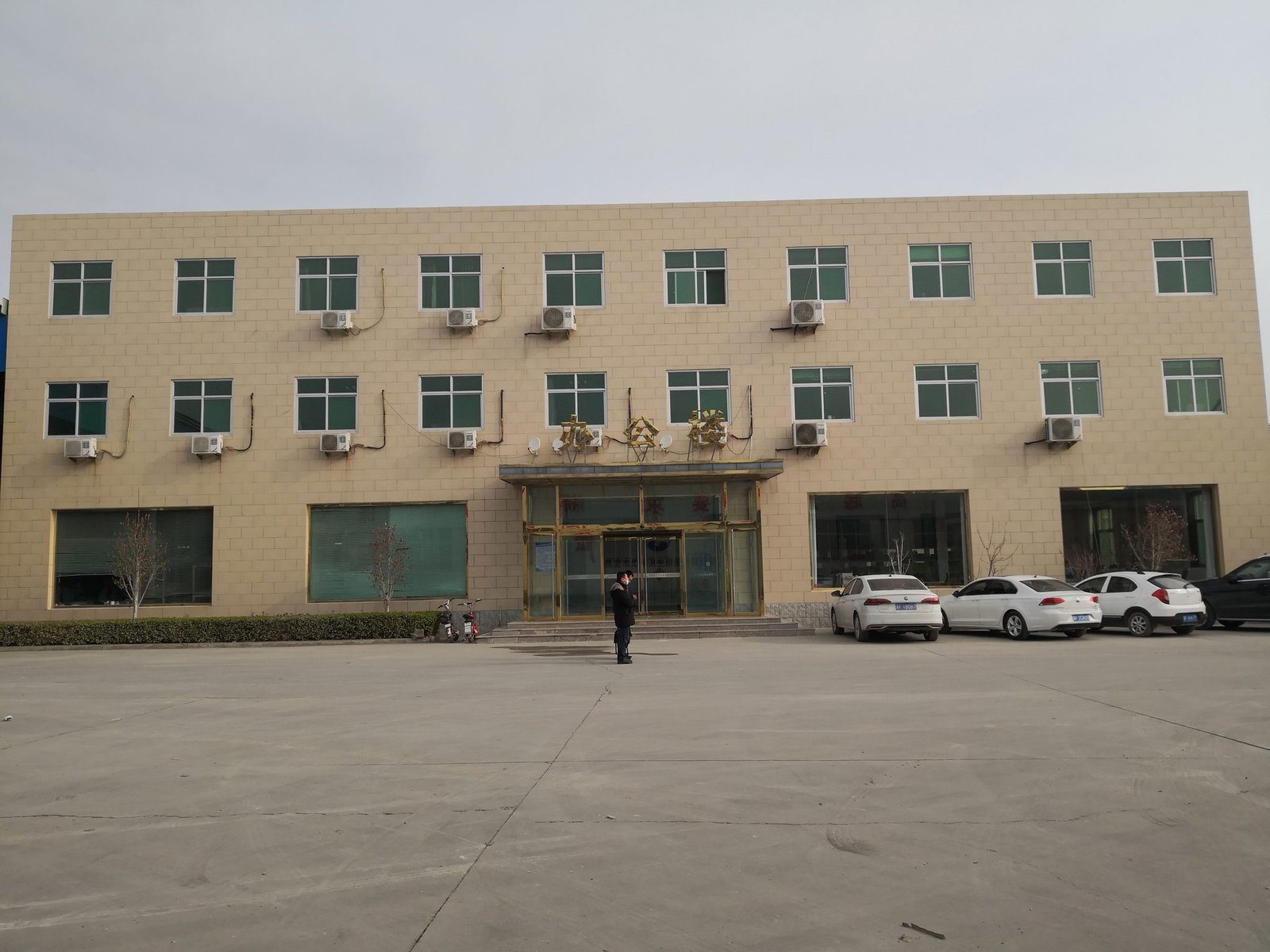
Top Source Paper is a 100% virgin wood pulp tissue manufacturer in Hebei Baoding, 18+ years in papermaking and export, shipping B2B containers only out of Tianjin Xingang. Its published paperwork sits in two places: deliverables the mill states are available with the shipment, and a product clause carrying the material position, the food-contact scope, flushability and the plate-archival policy.
Treat the eight items as artefacts: dated, batch-specific documents requested by name, read against the clause they prove, and filed for the next audit. Five (1 to 4 and 8) are first-party documents or stated terms; three (5 to 7) are product positions the buyer converts into writing before the container and verifies against their own market’s rules.
Key Takeaways
- Documents, not wall seals. Nothing here claims an ISO 9001 or FSC certificate on the mill’s behalf.
- Three deliverables are stated as available with the shipment: a virgin-fibre COA, a wet-strength and zero-dust video, and a moisture-proof loading photo set.
- Quality runs as three gates: mother-roll sampling, in-process checks for GSM, tension and perforation, then pre-shipment case count and drop test.
- Food-contact-safe is scoped to the kitchen paper towel line; 21 CFR 176.170 and Regulation (EC) 1935/2004 are the buyer’s own market checks, not mill certificates.
- A flushable statement without its method and threshold is a label, and it does not transfer to the kitchen line.
- Terms are 30% deposit and 70% balance before shipment, with the QC report and sealing video stated as provided before the balance is called.
Why Tissue Paper Certifications Are Artefacts, Not Seals
A certification is issued to a company once and holds until withdrawn. Import paperwork behaves differently. What travels with a container of tissue is dated evidence: a report naming this lot, a video shot on this line, a photograph taken before these doors closed. Each artefact answers a question asked later, by an auditor or a customs officer, and is worth what its traceability makes it.
That changes the question. Not “are you certified”, but “can you produce this document for this shipment, with this lot code on it”. Top Source Paper names its deliverables on the shipping terms and states its material position on the spec sheet: 100% virgin wood pulp, no recycled pulp, no fluorescent whitening agents. The documents evidence that clause; neither substitutes for a third-party seal a buyer’s market might demand, a separate question taken at item 5.
Telling a mill from a trader and fixing specification is worked through in how to source tissue paper from China. This page starts where that stops: documents requested by name.
1. The 100% Virgin Fibre Verification COA
What the artefact shows. Among the stated deliverables is a “100% Virgin Fiber Verification Report (COA)”, recording tensile strength, brightness and the virgin-fibre position for the lot shipped. It is a factory-issued physical-indicator report drawn from the mother roll behind the load, not an accredited lab certificate.
How the buyer cross-verifies. Three checks at goods-in. The report names the mill that produced this container. Its lot code appears on the cartons. Its tensile and brightness figures land inside the band the buyer specified. A COA failing any of the three is about somebody else’s paper. The band is the buyer’s to set: the published clause states the material, not a target number.
| Advantages | Considerations |
|---|---|
| Three claims on one page, batch-level, so an audit question is answered on paper. | Factory-issued, not third-party: mill name and lot code stay the buyer’s check. |
| Stated as available with the shipment, so asking costs nothing. | Brightness alone does not prove virgin fibre. Read it against item 6. |
2. Burst-Resistance and Zero-Dust QC Video Package
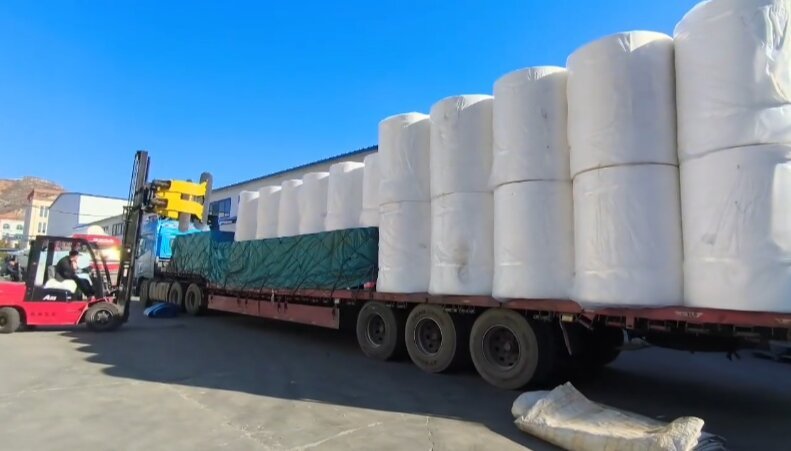
What the artefact shows. Also on the deliverables list: a “Quality and Burst Resistance Inspection Video” covering wet tensile strength and dust rate. Behind it are two named controls: wet-burst strength, long-fibre ratio reinforcement so sheets do not break up wet, and zero-dust micro-pore purification holding the paper-powder rate down for sensitive skin and low-dust wiping.
How the buyer cross-verifies. Check that the footage carries a date or lot marker, and that the wet pull and dust shake ran on the shipped SKU rather than a demo roll. A generic plant loop documents machinery, not your pallet. Buyers on low-dust contract terms should request their own line and file the clip with the COA.
- Advantage: moving evidence that two stated controls held on the shipped batch, not a static line.
- Consideration: value collapses without traceability: no lot marker, no proof about this load.
- Consideration: footage of one SKU does not transfer to another; ply, embossing and fibre ratio differ by line.
3. Moisture-Proof Loading Photo and Video Set
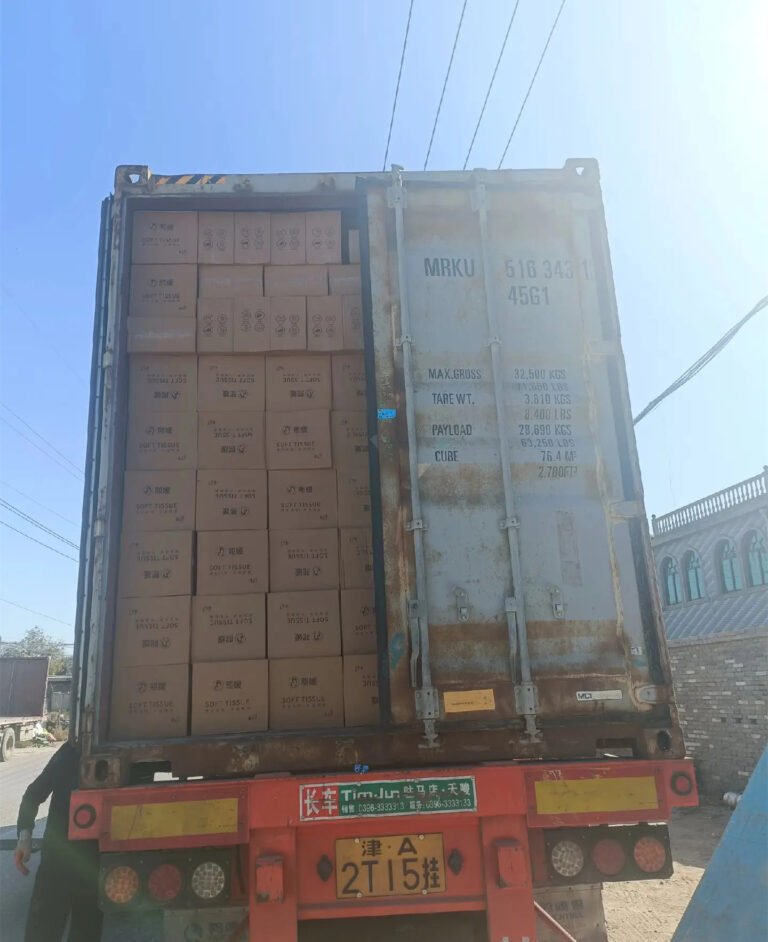
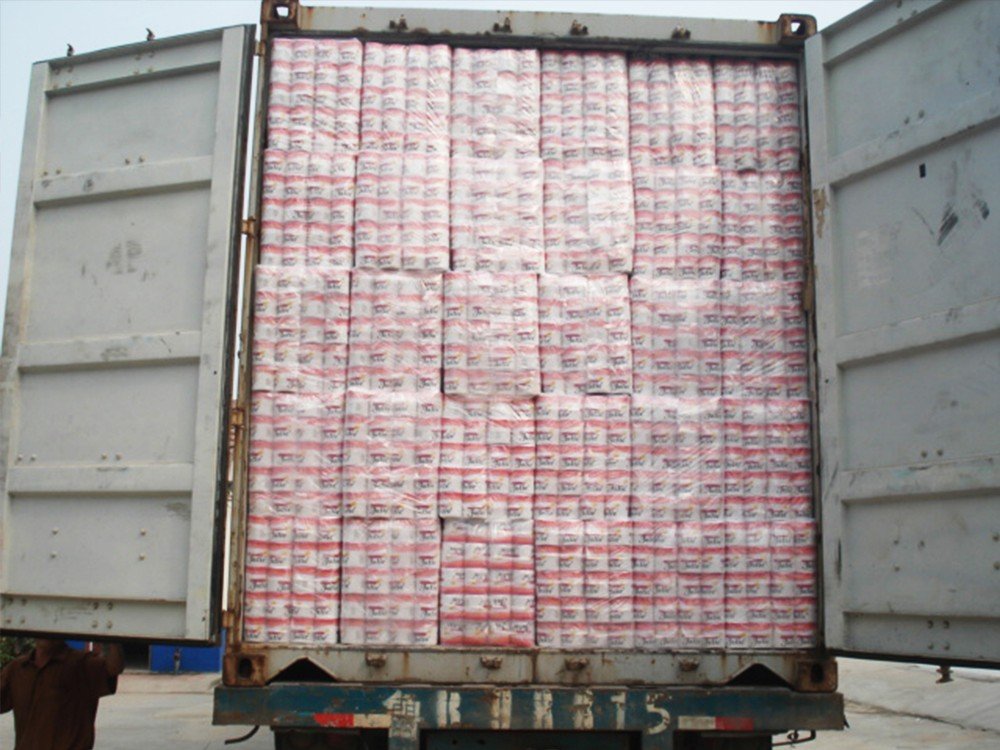
What the artefact shows. The third named deliverable is a “Loading and Moisture-Proof Packing Photos/Videos” package. Its job is narrow: show the four packing controls stated in the shipping terms, on this load. Heavy-duty moisture-proof corrugated cartons. Fumigation-free pallets. High-tensile strapping. A pre-load check of the container’s sealing and water-tightness.
How the buyer cross-verifies. The check is documentary, not procedural. Does the set show this container, seal number visible, each control captured before the doors closed? The protocol itself belongs to container loading and moisture-proof packing; the claim here is narrower. Without the set, a damp carton at goods-in becomes a dispute about recollection.
| Advantages | Considerations |
|---|---|
| Timestamped, container-specific proof behind a wet-cargo or freight claim. | Photographs of a different load carry no weight; no visible seal, no link to your box. |
| Fixed before sealing, while the buyer still has leverage. | It proves departure condition, not the ocean leg or the carrier’s handling. |
4. Three-Stage QC Process Record
What the artefact shows. Quality is stated as three sequential gates: mother-roll sampling for tensile strength and brightness; in-process inspection during rewinding for GSM, tension and the perforation line; pre-shipment total inspection for case count and drop test. Each gate leaves its own record, and a defect at goods-in usually traces to one. High-yield meterage control, the stated position against under-weight and short-length, sits at the rewind gate.
How the buyer cross-verifies. Match the log to the complaint. A short roll, or a sheet count that will not reconcile, points at the rewind gate; crushed cases at pre-shipment. Whether a plant can run these checks at all is the capacity question how a wholesaler evaluates factory capacity and QC takes; this card stops lower, at the record kept after acceptance.
- Advantage: a defect is assigned to a known gate instead of becoming a whole-container argument.
- Consideration: a one-page pass certificate is not the stage log. Ask for the gate by name.
- Consideration: the trail only works filed beside the COA and the lot code.
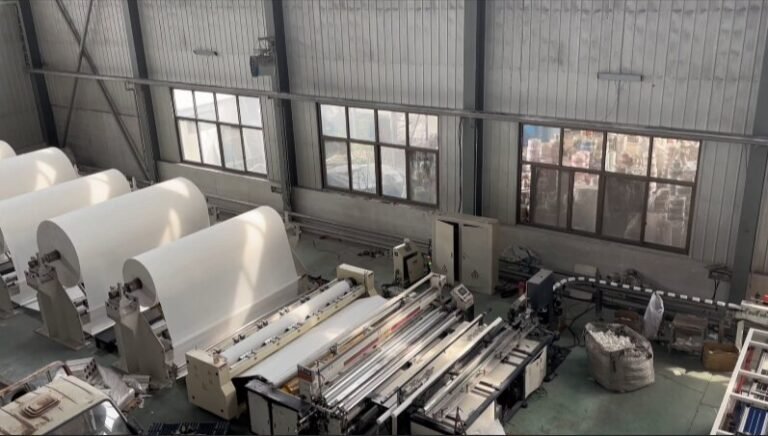
Video: “Precision Manufacturing for Unmatched Quality Toilet paper”, on the Top Source Paper YouTube channel (@topsourcepaper4025). It shows factory precision-machining of production equipment. It is not a lab test or a QC measurement, and not evidence for any artefact here; treat it as production context.
5. Food-Contact-Safe Declaration, Scoped to the Kitchen Line
What the artefact shows. The spec sheet carries a food-contact-safe statement, scoped to kitchen paper towel, whose stated 40% absorbency and oil pick-up uplift comes from 3D water-absorbent mesh embossing and a wet-strength resin formulation. It is not a catalogue-wide claim and not on the deliverables list, so the buyer asks for it in writing, naming the SKUs covered.
How the buyer cross-verifies. Then the buyer does their own work. A US importer checks paper and paperboard against 21 CFR 176.170; an EU importer works against Regulation (EC) No 1935/2004. Both are destination-market rules the buyer clears, and this page makes no claim that Top Source Paper holds either as a certificate. The declaration settles what the mill states about a named line; clearing a border is the buyer's file. Line detail sits on kitchen paper towel GSM and wet-strength specs, and the reference shelf is the buyer resources hub.
| What it establishes | Where to be careful |
|---|---|
| A mill statement that the kitchen paper towel line is food-contact-safe, matched to the SKUs you ship. | Not a food-safety certificate: 21 CFR 176.170 and EU 1935/2004 stay the buyer's references, not credentials claimed by the mill. |
| A scope line: which SKUs the statement covers. | Toilet paper and jumbo formats fall outside it; they carry item 7. |
6. Zero-Fluorescent-Brightener Attestation
What the artefact shows. Two positions on the spec sheet: no fluorescent whitening agents, no harmful chemical additives. Alone that is a sentence; attached to the brightness figure from item 1 it becomes a checkable pair, because optical brighteners raise apparent whiteness independently of fibre quality.
How the buyer cross-verifies. Pull the brightness value from the COA and hold it against the band agreed on the PO. A reading well above that band is the flag worth questioning: what else was added to reach it? A receive-side screen is the buyer's own step: a UV torch on a sample, or one sheet to a local lab. Both are the buyer's method and the buyer's threshold, not the mill's report.
- Advantage: verifiable against a figure already on the COA, so no extra document is needed.
- Consideration: brightness and virgin fibre are related, not identical. A bright sheet can still be virgin stock.
- Consideration: a receive-side UV check screens; it does not certify. A formal result is the buyer's lab step.
7. Flushable and Water-Solubility Test Report
What the artefact shows. The standard toilet paper line is stated as water-soluble and readily biodegradable, at 13-18 GSM inside a 13-45 GSM portfolio. A usable report goes past the adjective: disintegration method, test conditions, passing threshold, and the SKU tested. Like item 5, this is not on the deliverables list, so the buyer asks in writing and asks for the method before the number.
How the buyer cross-verifies. Two scope checks. The report must cover the SKUs sold as flushable; it says nothing about a wet-strength kitchen towel, engineered toward the opposite behaviour. And the buyer maps whatever figure appears against the flushability protocol their own market or retailer applies. Where a scheme demands specific disintegration numbers, that requirement comes from the buyer's schedule, and the report is checked against it.
| Ask for | Refuse |
|---|---|
| The test method by name, conditions stated, and the SKU tested. | A badge or adjective with no method behind it. |
| The passing threshold, beside the buyer's own market requirement. | A number with no threshold, or one copied from another line. |
8. Plate-Artwork Archival and No-Repeat-Plate-Fee Statement
What the artefact shows. The shipping terms state that a client's private-label artwork and formula are encrypted and permanently archived, and that return orders carry no repeat plate fee. Few suppliers put that in writing. It is a first-party policy, not an issued certificate, so it travels as a clause instead of a logo, protecting reorder margin and keeping proprietary artwork out of circulation.
How the buyer cross-verifies. Get it onto the PO or contract, naming the archived artwork and formula, and confirming that the reorder window, 20 to 25 working days against 25 to 30 first order, does not re-invoice the plate. Because custom-print packaging starts at one 40'HQ container, the exemption only earns at reorder scale, and the tier logic sits in MOQ: 20GP versus 40HQ, not here.
- Advantage: the plate is paid once, so repeat orders keep their cost profile and the artwork stays archived.
- Consideration: confirm it at PO acceptance, not on the first reorder invoice.
- Consideration: a changed layout or colour set is different artwork; ask what counts as a revision.
How to Sequence the 8 Artefacts on Your PO
Requested in order, the eight cost one email each. Requested late, they become a chase after the vessel sails. The payment structure gives a forcing point: 30% deposit, 70% balance before shipment, with the terms stating that the QC report and sealing video arrive before that balance is called.
| Stage | Artefacts to request | What it locks |
|---|---|---|
| Sampling, stated at 1 to 3 working days | 8, plus 5 and 7 scoped in writing | Artwork, formula and SKU scope agreed before plates exist |
| PO acceptance | 1 (acceptance band), 6 (brightener statement) | Tensile and brightness bands fixed while still negotiable |
| Production, 25 to 30 working days first order | 4 (stage logs), 2 (batch video) | Gate-level evidence tied to your lot, not the plant |
| Before the 70% balance | 1 (COA), 3 (loading set) | Report and seal footage reviewed before money moves |
| At goods-in | All eight against one lot code | One folder answers the audit question without an email chain |
Held together, those rows are a goods-in folder, and the buyer resources hub holds the trade-term and packing references that sit around it.
FAQ
What is a virgin-fibre COA and why does it matter?
A mill-issued physical-indicator report covering tensile strength, brightness and the 100% virgin-fibre claim for the lot shipped. It matters because it is the only document tying a pallet back to the stated no-recycled-pulp clause, by name and lot code.
Do I need ISO 9001 or FSC to import tissue paper from China?
Sometimes your own market or customer demands them; that is your compliance question. Top Source Paper's published facts list neither certificate, so ask the mill what it can produce and document, and do not assume a seal that is not on file.
What QC video should a container include?
A dated clip of the shipped SKU showing a wet tensile pull and a dust shake, so it evidences this load rather than the plant in general. Without a visible lot or date, footage proves the line, not your pallet.
Can I request a food-contact-safe declaration for a toilet paper SKU?
No. The mill's statement scopes food-contact-safe to the kitchen paper towel line, and toilet paper carries flushability documentation instead. Ask which SKUs each written statement covers, then match them to your own market requirement.
What paperwork proves my private-label plate is not re-charged on reorder?
A written plate-archival statement at PO acceptance, naming the archived artwork and formula and confirming reorder carries no repeat plate fee. The policy exists in the shipping terms; the document is what you keep and cite.
Conclusion: The Goods-In Checklist
Before a container is accepted, open the folder and confirm eight things are in it, each carrying this lot's code. That turns the question of which mill produced a pallet into a page-turn instead of a search.
- COA names the producing mill, lot code matches the cartons, tensile and brightness sit inside the agreed band.
- Burst-resistance and zero-dust video shows your SKU with a lot marker.
- Loading set captures this container, seal visible, all four stated packing controls.
- Three-stage logs are filed and matched to the gate each complaint traces to.
- Food-contact-safe statement names the kitchen SKUs covered and nothing beyond.
- Zero-brightener position read against the COA brightness figure, not taken alone.
- Flushable report carries method, conditions, threshold and the SKU tested.
- Plate-archival and no-repeat-plate-fee wording signed at PO acceptance.
None of the eight is a wall certificate, and that is the point. A seal says what a company was audited as on some past date; these say what shipped to you this month. Planning a container, send the target SKUs and destination market and ask for these artefacts quoted into the order by name.