The box a facial tissue comes in is not packaging. It is the product’s shelf presence, its brand signal, and — for B2B importers — the single most customizable element that separates a commodity SKU from a branded retail line. A cube box in matte-finish printed cardboard with a embossed sleeve tells a different story than a flat box in clear PE wrap. Both contain the same 2-ply virgin pulp tissue. But the buyer who walks into a supermarket in Dubai or a hotel procurement office in Singapore will read them as different products entirely.
This guide covers the three main facial tissue box formats available for customization — cube box, flat box, and printed sleeve — with the specifications that matter for B2B buyers: dimensions, board weight, print options, sleeve materials, and how each format maps to different retail and hospitality channels. All specifications reference 100% virgin wood pulp tissue production standards.
Three Box Formats: What Each One Is and Where It Sells
Cube box (also called square box or upright box): A compact, roughly square carton standing vertically on the counter. The tissue pops up through a perforated opening on the top face. Typical external dimensions are 130 mm × 130 mm × 135 mm, holding 50–100 sheets depending on ply and fold. The cube format dominates the Middle East, Southeast Asia, and premium retail segments globally because its compact footprint fits car cup holders, bedside tables, and reception desks.
Flat box (also called rectangular box or standard box): A wider, lower-profile carton lying horizontally. Tissue pops up through a slot on the top face. Typical dimensions are 230 mm × 115 mm × 80 mm, holding 100–200 sheets. The flat format is the default in North American and European retail — it matches the shelf dimensions of major supermarket chains and fits standard dispensers in hotel bathrooms.
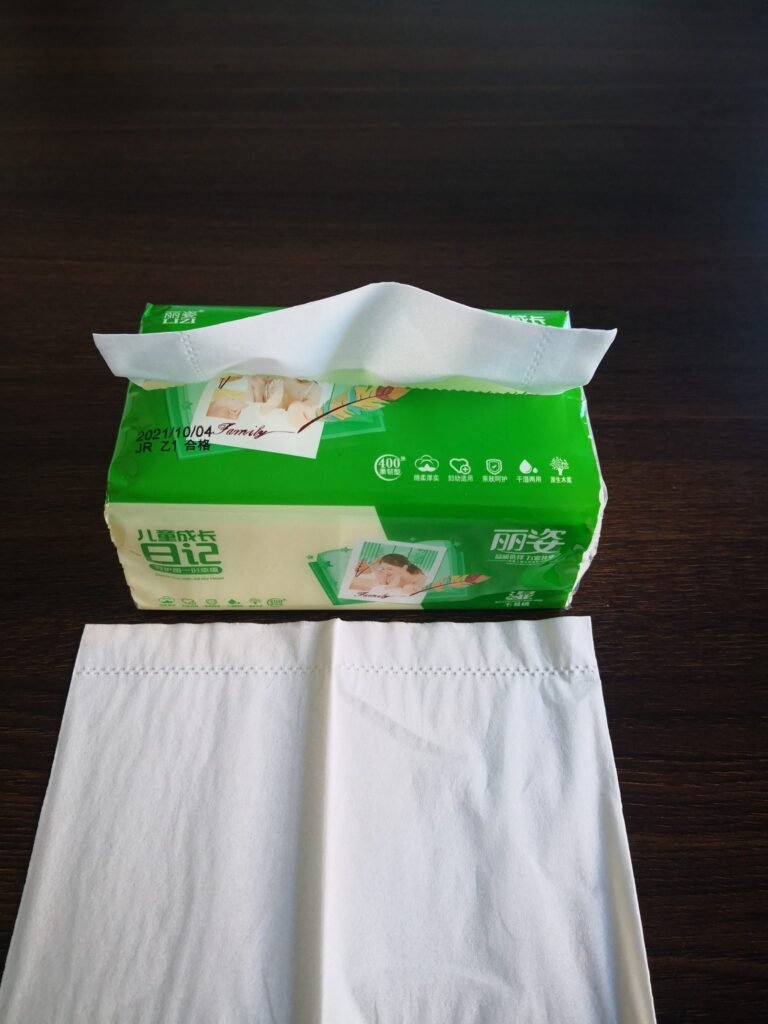
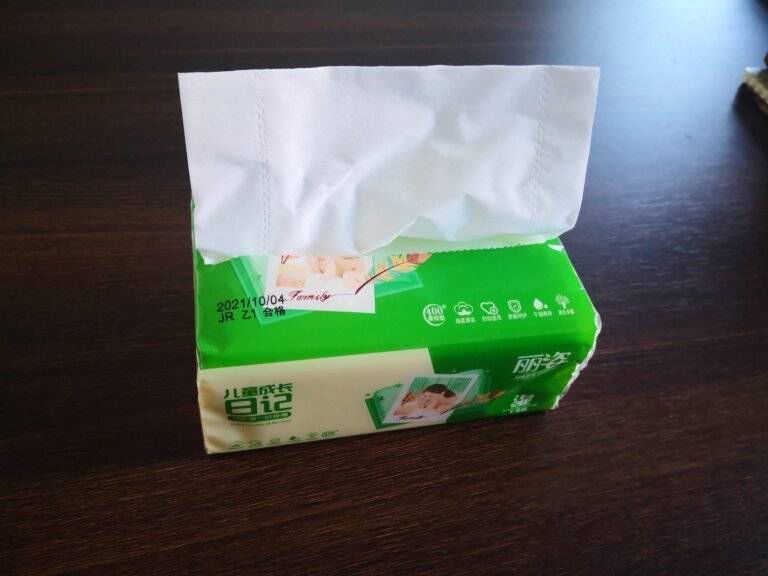
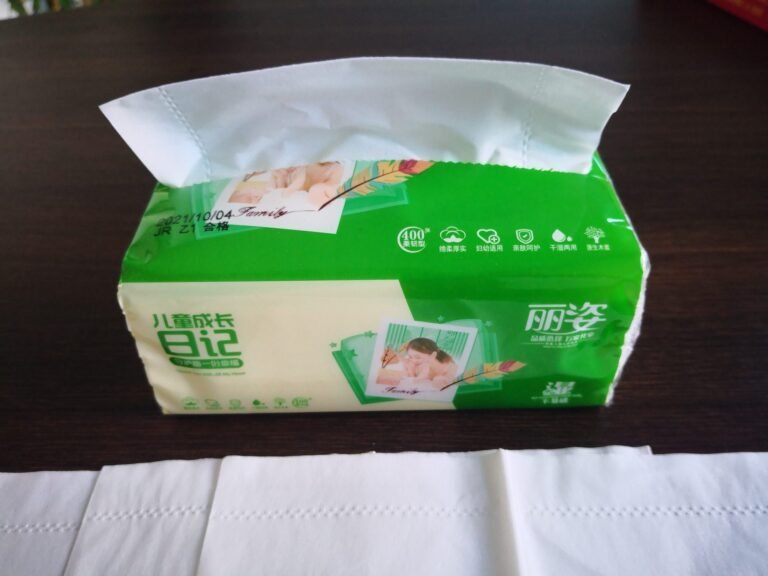
Printed sleeve (PE soft pack): A shrink-wrapped polyethylene sleeve around a stack of tissues without a rigid cardboard box. The sleeve is printed with the brand design and sealed with a peel-open top. Typical dimensions match the flat box format but without the structural rigidity. The soft pack format is dominant in East Asian markets (China, Japan, Korea) and increasingly popular in value-oriented retail segments globally because it eliminates the cardboard box cost while still offering full-surface branding.
Box Dimensions and Sheet Counts: The Specifications That Define the Format
When requesting a quote from a tissue factory, these are the dimensions and counts you need to specify:
| Parameter | Cube Box | Flat Box | Printed Sleeve (PE Pack) |
|---|---|---|---|
| External dimensions (typical) | 130 × 130 × 135 mm | 230 × 115 × 80 mm | 230 × 115 × 75 mm (approx.) |
| Sheet count | 50–100 sheets | 100–200 sheets | 100–200 sheets |
| Ply options | 2-ply, 3-ply | 2-ply, 3-ply | 2-ply, 3-ply |
| Sheet size (unfolded) | 190–200 mm × 190–200 mm | 200–230 mm × 190–200 mm | 200–230 mm × 190–200 mm |
| Board weight (carton) | 250–300 gsm coated board | 250–300 gsm coated board | N/A (PE film only) |
| Tissue fold type | Interfolded (V-fold pop-up) | Interfolded (V-fold pop-up) | Interfolded (V-fold pop-up) |
The sheet count and ply determine the internal fill height, which in turn determines the box height. A 3-ply cube box with 100 sheets is taller than a 2-ply cube box with 50 sheets. The factory adjusts the box tooling to match the fill specification — this is why custom box orders require confirmation of ply and sheet count before the printing plate is made.
Print Customization: From Stock Design to Full Brand Integration
All three formats support full custom printing using eco water-based ink — the same food-contact-safe ink used for napkin printing. The print process differs by format:
Cube Box and Flat Box: Board Printing
The cardboard box is printed before cutting and folding. The print process uses flexographic or offset printing on coated board (250–300 gsm). Customization options include:
- 1–4 color print: Each color requires a separate printing plate (one-time cost). One-color is most economical for logo-only designs; four-color delivers photographic quality for premium brand packaging.
- Matte or gloss finish: Matte finish signals premium positioning; gloss finish is standard for mass-market retail. The finish is applied as a coating after printing.
- Embossing on board: Raised patterns or brand logos pressed into the cardboard surface. Adds tactile quality and shelf differentiation. Requires a custom embossing die (one-time tooling cost).
- Window cutout: A die-cut opening in the box side showing the tissue stack inside. Used primarily in retail where visual product confirmation drives purchase decisions.
Printed Sleeve (PE Pack): Film Printing
The PE sleeve is printed using rotogravure printing on polyethylene film before shrink-wrapping. Customization includes:
- 1–8 color print: Rotogravure supports more colors than board printing, enabling photographic and gradient designs.
- Full-wrap coverage: The sleeve wraps 360° around the tissue stack, providing branding on all faces — top, bottom, and all four sides.
- Peel-open resealable top: A perforated strip that the consumer peels to access the first tissue, then reseals. This is a functional feature that differentiates the product from open-top boxes.
For private-label buyers, the print customization is the primary brand differentiator. The tissue inside is functionally identical across brands — the box design is what the consumer sees, touches, and associates with quality.

Sleeve and Inner Tray Options
Beyond the outer box, there are inner components that affect both product protection and perceived quality:
- Inner plastic tray: A molded PE tray that holds the tissue stack in position inside the box. Prevents shifting during shipping and maintains the pop-up alignment. Standard in cube boxes; optional in flat boxes.
- Inner PE bag: A sealed polyethylene bag around the tissue stack inside the box. Provides moisture protection during storage and shipping. Standard in all formats for ocean freight — critical for importers shipping from China through tropical ports.
- Decorative sleeve (secondary packaging): A printed cardboard sleeve that slides over the primary box. Used for gift sets, hotel amenity kits, and promotional packaging. Adds a layer of premium presentation without changing the primary box tooling.
For hotel and hospitality buyers, the decorative sleeve is a common customization. The primary box is standard white or stock design; the sleeve carries the hotel logo and brand colors. This approach minimizes tooling cost while delivering branded presentation.
Quality Specifications That Apply Across All Formats
Regardless of box format, these tissue quality parameters should be consistent:
- Material: 100% virgin wood pulp with zero fluorescent brightening agents
- Softness: Multi-layer thermal bonding embossing creates a smooth surface for sensitive-skin markets
- Zero-dust technology: Micro-purification process controls paper dust and loose particles — critical for facial tissue used near eyes and sensitive skin
- Edge integrity: Sheets must separate cleanly without tearing or multi-feed — controlled by interfold precision during converting
- Pop-up reliability: Pulling one sheet must advance the next sheet partially into the opening — a function of fold precision and static charge control during production
These specifications are verified through the factory’s three-stage QC process: parent roll inspection (tensile strength and brightness), in-process monitoring (GSM, tension, fold precision during converting), and final inspection (box count, seal integrity, pop-up function test).
MOQ and Ordering Terms
Custom facial tissue box orders follow standard B2B terms:
- White-label (stock box) MOQ: One 20GP container — unprinted boxes in standard design with your tissue inside
- Custom-printed box MOQ: One 40HQ container — the printing plate setup cost is amortized across the full container volume
- Sample lead time: 1–3 business days for format, size, and quality verification samples
- Production lead time: 25–30 business days for first orders (includes plate-making, box tooling setup, and sample approval); 20–25 business days for reorders
- Payment: 30% T/T deposit, 70% before shipment against QC report and container sealing video
- Shipping: From Tianjin Xingang Port. FOB, CIF, CFR, and EXW terms available
One detail worth noting for repeat buyers: established factories permanently archive client-specific box designs, printing plates, and embossing dies. When you reorder, there is no re-plate or re-tooling charge — the factory pulls your archived specification and runs production directly. Top Source Paper in Baoding, China, maintains this archival policy across all custom packaging components.
Choosing the Right Format for Your Market
| Target Market | Recommended Format | Reason |
|---|---|---|
| Middle East retail | Cube box, 3-ply, 80–100 sheets | Compact format dominates regional shelf standards; premium positioning |
| North American retail | Flat box, 2-ply, 150–200 sheets | Matches supermarket shelf dimensions; value-per-sheet positioning |
| European retail | Flat box or printed sleeve | Flat box for premium; PE sleeve for value segments |
| East Asian retail | Printed sleeve (PE pack) | Dominant format; full-wrap branding; resealable top preferred |
| Hotel amenity kits | Cube box with decorative sleeve | Compact for guest rooms; sleeve carries hotel branding |
| Promotional / gift sets | Any format + secondary sleeve | Secondary sleeve enables seasonal or campaign branding without new box tooling |
Frequently Asked Questions
Cube boxes are compact square cartons (130×130×135 mm, 50–100 sheets) dominant in Middle East and premium retail. Flat boxes are wider rectangular cartons (230×115×80 mm, 100–200 sheets) standard in North American and European supermarket shelves. Both use the same 100% virgin wood pulp tissue with interfolded pop-up sheets.
Yes. All three formats — cube box, flat box, and printed PE sleeve — support full custom printing with 1–8 colors using food-safe water-based ink. Printing plates are a one-time cost; established factories archive your design files permanently with no re-plate charges on reorders.
Custom-printed facial tissue boxes require a minimum of one 40HQ container. White-label (stock box) orders start at one 20GP container. Samples for format and quality verification ship in 1–3 business days.
A printed sleeve (PE soft pack) is a polyethylene shrink-wrapped sleeve printed with brand design, replacing the rigid cardboard box. It offers full 360° branding, lower packaging cost, and resealable peel-open top. Dominant format in East Asian markets.
The facial tissue box is not an afterthought — it is the primary brand touchpoint for the end consumer. For B2B importers, choosing the right format and investing in quality print customization is what separates a commodity product from a branded line that commands shelf presence and repeat purchase. The factories that make this easiest are the ones that control the full chain from parent roll to finished box, with permanent design file archival and no re-plate charges on reorders.
A branded sleeve has to sit inside a per-zone tissue spec; see the hotel facial tissue spec and ordering guide.