Every month, a facility management company in Chicago switches three of its office buildings from rolled hand towels to single-use disposable sheets. The reason is not hygiene theory — it is a complaint log. In two of the three buildings, users complained about damp towel rolls and dispensers that stuck. In the third, a hospital-adjacent clinic, the infection control team required single-sheet extraction as a condition of the lease. The decision, for these three buildings, was made by the end users and the contract — not by the product catalog.
For B2B buyers sourcing commercial hand towels in bulk, the choice between disposable (single-sheet) and rolled (centrefeed or interleaved) formats is not a question of which product is objectively better. It is a question of which product fits the facility’s traffic pattern, hygiene requirements, dispenser infrastructure, and cost model. Get the match wrong, and you pay twice: once for the product, and once for the complaints, waste, or dispenser incompatibility that follows.
This guide compares the two formats across the specifications that matter — ply, GSM, absorption speed, dispenser type, cost-per-use, and waste volume — using data from 100% virgin wood pulp production standards. The goal is to give you a decision framework, not a marketing pitch.
Defining the Two Formats
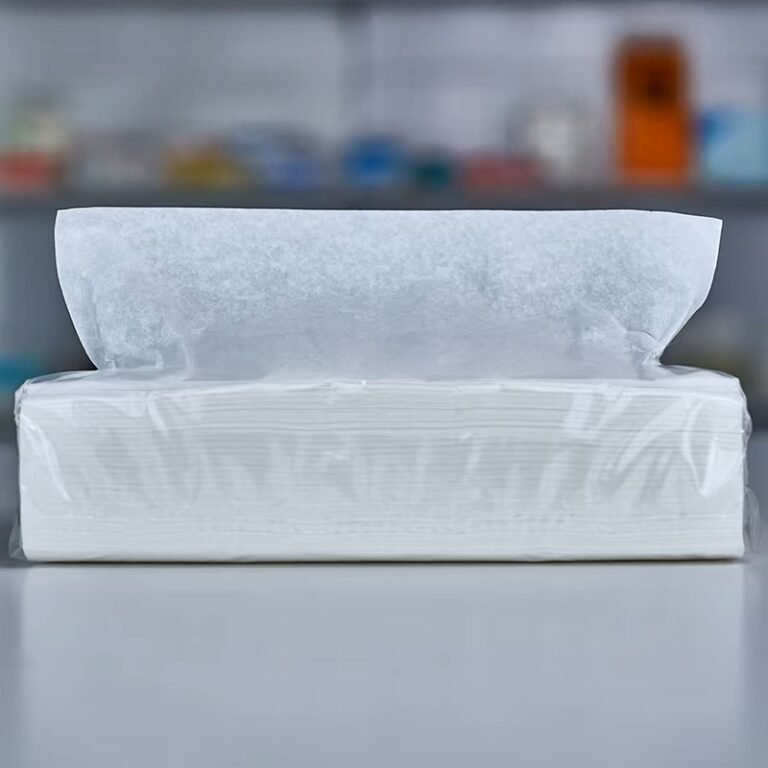
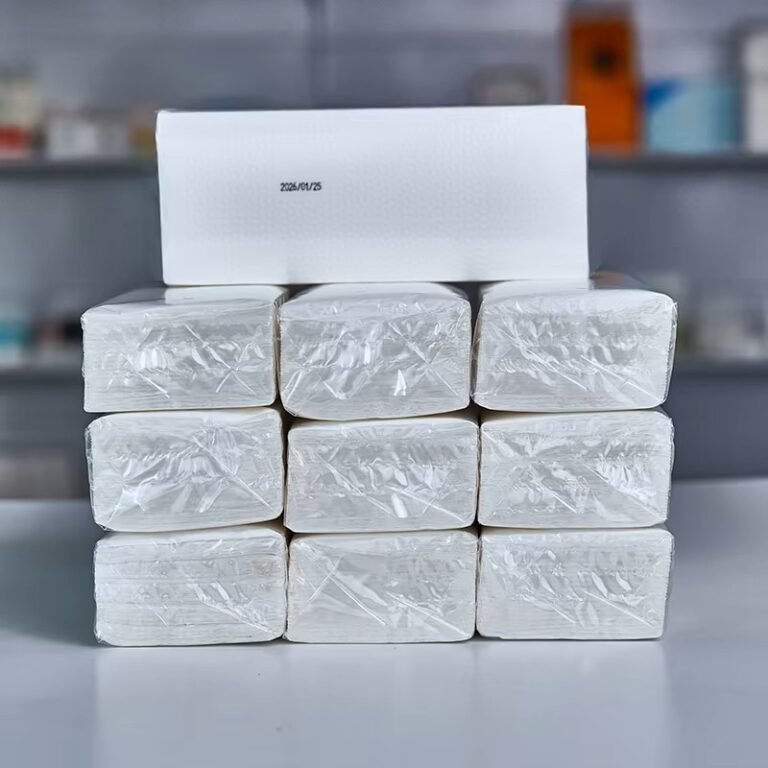
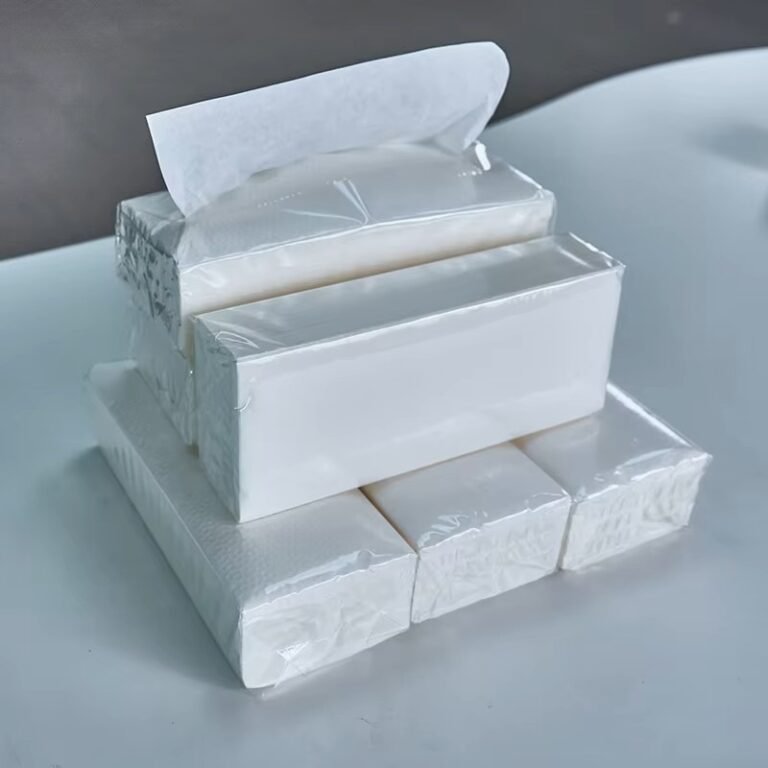
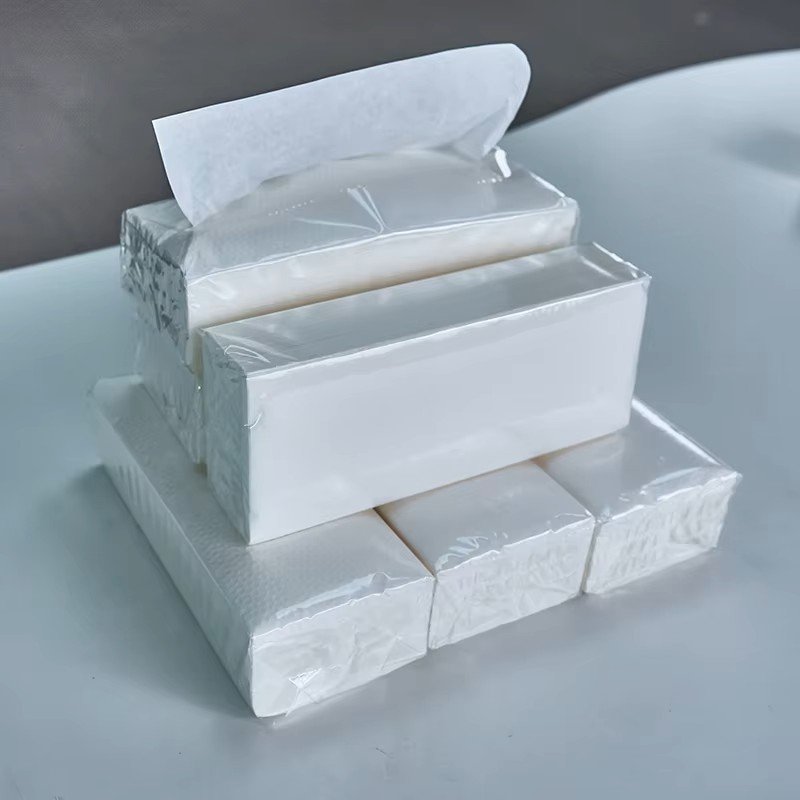
Disposable hand towels (also called single-fold or half-fold towels) are individual sheets — typically 230 mm × 240 mm unfolded — folded once and stacked in an open tray or wall-mounted dispenser. The user lifts one towel. There is no mechanism, no roll to thread, no next-sheet advance. Each towel is independent.
Rolled hand towels come in two sub-formats:
- Centrefeed rolls: Continuous perforated towel on a roll (100–210 meters per roll). The user pulls from the center core and tears at the perforation. Common in industrial and warehouse settings.
- Multifold (V-fold/Z-fold) rolls: Pre-cut sheets interleaved in a rolled pack inside an enclosed dispenser. Pulling one sheet advances the next. Common in office buildings and commercial restrooms.
Both formats are produced from 100% virgin wood pulp at 1-ply or 2-ply construction, with GSM ranging from 13 to 45 depending on the target market. The fiber source and quality are identical — the difference is in the sheet format, dispensing method, and use-case optimization. For a complete specification reference across all commercial paper hand towel formats, consult the product category page.
Hygiene: Single-Sheet Extraction vs Shared Roll Surface
The hygiene argument for disposable towels is straightforward: each user touches only their own towel. There is no shared surface, no dispenser handle, no risk of cross-contamination from the previous user touching the next sheet in the stack.
For multifold rolled dispensers, the mechanism is more complex. When a user pulls one sheet, the next sheet partially drops into position. If the first user’s wet fingers contact the protruding edge of the next sheet, that sheet becomes contaminated before the next user touches it. This is the “multi-feed” problem — and it is a function of fold precision and embossing tension during manufacturing. Factories that control these parameters minimize multi-feed, but cannot eliminate it entirely in high-traffic environments.
For centrefeed rolls, the user tears at the perforation. The remaining roll surface is exposed to ambient air and occasional splash contact from the sink area. In food processing and healthcare environments, this is a documented concern — which is why many hospital specifications now require single-sheet disposable formats.
| Factor | Disposable (Single-Fold) | Rolled (Centrefeed / Multifold) |
|---|---|---|
| Cross-contamination risk | Lowest — each sheet is independent | Moderate — shared roll surface and dispenser mechanism |
| Dispenser touch points | Open tray (minimal) or no-touch | Dispenser lever, slot edge, or protruding sheet |
| Healthcare suitability | Preferred for clinical and exam rooms | Acceptable for general washrooms; restricted in sterile areas |
| Food processing suitability | Preferred — single-use meets HACCP expectations | Centrefeed acceptable if perforation is clean; multifold less ideal |
The hygiene advantage of disposable towels is real but context-dependent. For a general office washroom with 50 users per day, the difference is marginal. For a clinic, food processing line, or hotel guest bathroom where perception matters, the single-sheet format is the safer specification.
Absorption and Performance: What GSM and Ply Actually Mean
Both formats perform identically at the fiber level when GSM and ply are matched. A 2-ply disposable towel at 30 GSM absorbs water at the same rate as a 2-ply centrefeed sheet at 30 GSM — because the fiber composition, embossing pattern, and wet-burst strength are the same. The difference is in how the user interacts with the sheet.
A disposable towel is a fixed size: 230 mm × 240 mm unfolded. The user takes one sheet and uses it. If the towel is too small for their hands or the task, they take a second — which increases consumption rate and cost.
A centrefeed roll gives the user control over sheet length. They can tear a short sheet for quick hand drying or a longer sheet for spill cleanup. This flexibility reduces waste in environments where towel usage varies (kitchens, workshops, warehouses). But it also means inconsistent consumption — some users tear twice the standard length, driving up cost per user.
For multifold rolled towels, the sheet size is fixed (typically 230 mm × 230 mm folded), similar to disposable. The absorption performance is identical. The only difference is the dispensing mechanism.
Quality specifications that apply across both formats:
- Material: 100% virgin wood pulp with calibrated long-to-short fiber ratio
- Absorption speed: Water contact to full absorption within 3 seconds, achieved through embossed capillary channels
- Wet strength: Long-fiber virgin pulp with optimized wet-burst strength — towel holds together during use without disintegrating or leaving residue
- Zero-dust: Micro-purification process controls dust and loose particles, meeting sensitive-skin and clean-room requirements
Cost Model: Per-Unit Price vs Cost-Per-Use
The unit price comparison favors rolled towels. A centrefeed roll at 200 meters contains roughly 800–870 sheets (at 230 mm perforation), and the cost per meter is lower than the cost of pre-cut disposable sheets packaged at equivalent counts. For buyers purchasing by the container, rolled formats deliver more usable towel per carton.
But unit price is not cost-per-use. The actual cost depends on consumption behavior:
- Disposable towels: Predictable consumption. Each user takes 1–2 sheets. In an office with 100 users per day, consumption is 100–200 sheets. The cost is calculable and stable.
- Centrefeed rolls: Variable consumption. Users tear inconsistent lengths. In the same 100-user office, consumption might range from 150 to 350 sheet-equivalents depending on the environment. The unit cost is lower, but the total cost per user can be higher.
- Multifold rolled: Similar to disposable in per-sheet consumption (one sheet per pull), but multi-feed waste adds 5–15% to consumption in high-traffic dispensers.
For facilities that prioritize predictable monthly consumable budgets, disposable towels offer tighter cost control. For facilities where towel usage varies by task (workshops, kitchens, cleaning crews), centrefeed rolls offer flexibility that offsets the consumption variability.
Dispenser Infrastructure: The Hidden Cost
Switching formats means switching dispensers — and this is where the real cost of a format decision shows up.
Disposable towel dispensers are simple: open tray or enclosed wall-mounted holder. They are inexpensive, easy to install, and require no threading or mechanism maintenance. Refilling is a matter of dropping a stack of folded towels into the tray.
Rolled towel dispensers are more complex. Centrefeed dispensers require the roll to be mounted on a core and the paper threaded through a tear-edge. Multifold dispensers require the rolled pack to be loaded and the first sheet advanced correctly. Both types need periodic mechanism maintenance — clearing jams, replacing worn tear-edges, and ensuring the next-sheet advance works properly.
If your facility already has one format installed, switching to the other means purchasing and installing new dispensers across every washroom. For a 20-restroom office building, this can add $2,000–$5,000 in hardware cost — a one-time expense that takes 12–24 months of consumable savings to recover.
Waste Volume and Sustainability
Disposable towels generate more packaging waste per sheet. Each stack of 500 disposable towels requires individual wrapping and carton packing. The per-sheet packaging ratio is higher than rolled formats, where 200 meters of continuous towel is wrapped as a single unit.
However, disposable towels generate less in-use waste. Because each sheet is a fixed size, users do not over-tear or take more than they need. With centrefeed rolls, torn sheets that are too long for the task are discarded partially unused — a form of product waste that offsets the packaging savings.
For facilities tracking sustainability metrics, both formats are produced from 100% virgin wood pulp and are fully biodegradable. The sustainability difference is in consumption efficiency, not material composition.
A Decision Framework for Facility Buyers
| Facility Type | Recommended Format | Reason |
|---|---|---|
| Office buildings (general washrooms) | Either — match existing dispensers | Hygiene difference is marginal at this traffic level |
| Healthcare clinics and exam rooms | Disposable single-fold | Infection control requirements; single-use eliminates cross-contamination |
| Food processing and kitchens | Disposable or centrefeed | HACCP expectations favor single-use; centrefeed acceptable if perforation is clean |
| Warehouses and industrial | Centrefeed roll | Variable task requirements; users control sheet length; high traffic |
| Hotels and hospitality | Disposable single-fold | Guest perception of hygiene; premium presentation |
| Schools and universities | Multifold rolled | High traffic with moderate hygiene requirements; cost-efficient |
The decision is rarely about which format is better in isolation. It is about which format matches the facility’s hygiene requirements, traffic pattern, existing dispenser infrastructure, and consumption predictability needs. When in doubt, match the existing format — the dispenser conversion cost almost always outweighs the per-sheet savings.
Ordering in Bulk: What to Confirm
Both formats follow standard B2B tissue sourcing terms from virgin pulp manufacturers:
- White-label MOQ: One 20GP container for unprinted towels in standard packaging
- Custom print MOQ: One 40HQ container for branded packaging or printed towel designs
- Sample lead time: 1–3 business days for format and quality verification
- Production lead time: 25–30 business days for first orders; 20–25 business days for reorders
- Payment: 30% T/T deposit, 70% before shipment against QC report and container sealing video
- Shipping: From Tianjin Xingang Port under FOB, CIF, CFR, or EXW terms
For buyers evaluating both formats, request samples of each — disposable single-fold, centrefeed roll, and multifold roll — to test dispenser fit and absorption performance before committing to a container order. Established factories like Top Source Paper in Baoding, China, provide samples across all formats with the same 1–3 business day turnaround.
Frequently Asked Questions
Yes, in clinical and food-processing environments where single-use eliminates cross-contamination from shared roll surfaces. For general office washrooms, the hygiene difference is marginal — both formats perform equally when produced from 100% virgin wood pulp.
Rolled towels (especially centrefeed) have a lower unit price per sheet. However, disposable towels offer more predictable consumption — users take 1–2 sheets versus variable tearing from rolls. For budget predictability, disposable is often more cost-effective despite higher per-sheet pricing.
No. Disposable and rolled towels require different dispensers. Switching formats means purchasing new dispensers for every washroom — a cost that typically takes 12–24 months of consumable savings to recover. Match your existing format unless there is a compelling hygiene or operational reason to switch.
White-label hand towels (disposable or rolled) start at one 20GP container. Custom-printed packaging requires one 40HQ container. Samples for format and quality testing ship in 1–3 business days.
The disposable versus rolled hand towel decision is a facility-matching problem, not a product-quality problem. Both formats are produced from the same 100% virgin wood pulp, absorb water within 3 seconds, and meet the same commercial-grade quality standards. The right choice is the one that fits your dispensers, your traffic pattern, and your hygiene requirements — in that order.