A brand owner in the Middle East wants to launch a private-label tissue line. A distributor in South America needs a factory to produce tissue under the buyer’s own specifications. Both are looking for a manufacturing partner in China — but they need fundamentally different things. One needs OEM (Original Equipment Manufacturing), where the factory builds to the buyer’s exact recipe. The other needs ODM (Original Design Manufacturing), where the factory provides a proven base product and the buyer brands it.
The terms are used loosely in the tissue industry, and many factories claim to offer both. But the operational difference is significant — it affects MOQ, lead time, intellectual property protection, quality control responsibility, and the depth of the working relationship. This guide clarifies what OEM and ODM actually mean in tissue manufacturing, how to evaluate which model fits your business, and what to expect from a factory that does both.
OEM Tissue Manufacturing: You Design, They Build
In an OEM arrangement, the buyer provides the complete product specification — fiber composition, ply count, GSM, embossing pattern, sheet size, packaging design, and any custom printing requirements. The factory’s role is to manufacture to that specification consistently, at volume, and within the agreed quality tolerance.
This model suits:
- Established brand owners who have a defined product recipe and need a production partner with the capability to execute it at scale.
- Buyers with specific market requirements — for example, a distributor supplying a government tender that mandates precise GSM, ply, and certification standards.
- Converting plants that purchase mother jumbo rolls to their own specification and handle the final converting and packaging themselves.
The OEM model demands more from the buyer upfront. You need to know your specifications before approaching the factory. But it also gives you full control over the product and creates a clear boundary for quality accountability — if the output does not match the spec, the factory is responsible for correcting it.
ODM Tissue Manufacturing: They Design, You Brand
In an ODM arrangement, the factory provides a proven base product — a tissue formulation, roll size, fold type, or packaging format that has already been developed and tested. The buyer’s contribution is branding: logo placement, packaging design, and market positioning. The factory handles the product development.
This model suits:
- New market entrants who want to launch a tissue brand without investing in product development from scratch.
- Distributors who need a reliable, pre-tested product under their own label to compete against established brands.
- Buyers entering a new product category — for example, a toilet paper distributor adding kitchen towels to their catalog for the first time.
The ODM model reduces the buyer’s upfront development cost and time. The factory has already solved the formulation, tested the production parameters, and optimized the quality control process. The buyer benefits from that accumulated expertise. The tradeoff is less control over the underlying product specification — you are working within the factory’s existing capability set.
The Key Differences: A Side-by-Side Comparison
| Dimension | OEM | ODM |
|---|---|---|
| Product design | Buyer provides full spec | Factory provides base product |
| Buyer expertise required | High — must know specs | Low — factory guides selection |
| MOQ | 1×40’HQ (custom print) | 1×40’HQ (branding on existing base) |
| Lead time (first order) | 25–30 business days | 20–25 business days (shorter, as base product is pre-developed) |
| IP protection | Buyer owns the spec; factory archives and encrypts design files | Factory owns the base formulation; buyer owns the branding |
| Quality accountability | Factory must match buyer’s spec exactly | Factory guarantees its own standard; buyer approves sample |
| Reorder flexibility | Same spec every time; no re-plate charges | Same base product; branding updates possible |
In practice, many tissue factories — including established manufacturers like Top Source Paper in Baoding, China — operate on a spectrum between pure OEM and pure ODM. A buyer might start with an ODM base product, then gradually customize the specification as they learn their market’s preferences. The factory supports this evolution by archiving the buyer’s design files permanently and waiving re-plate charges on reorders.
What to Evaluate in a Potential Manufacturing Partner
Whether you need OEM or ODM, these criteria apply when selecting a tissue manufacturing partner:
1. Product Range and Capability
A factory that produces the full range — mother jumbo rolls, standard toilet paper, jumbo roll tissue, facial tissue, kitchen towels, hand towels, pocket tissues, and napkins — can support your brand across multiple categories. This matters if your growth plan involves expanding from one product line to several. A factory that only makes toilet paper cannot help you launch facial tissue under the same brand with consistent quality standards.
2. Raw Material Control
The factory should use 100% virgin wood pulp with documented fiber sourcing. Ask for the COA (Certificate of Analysis) that covers tensile strength, brightness, and fiber verification. A factory that controls its own pulping and fiber blending — rather than purchasing pre-made pulp from third parties — has tighter quality control over the final product.
3. QC Process Transparency
A three-stage QC process is the minimum standard for a reputable tissue manufacturer:
- Parent roll inspection — tensile strength and brightness verification before production begins
- In-process inspection — GSM, tension, and perforation monitoring during rewinding and converting
- Final inspection — carton specification compliance and drop-testing before shipping
The factory should provide QC documentation with every shipment: a COA, quality inspection video, and loading documentation. If a supplier cannot or will not provide these, treat it as a risk indicator.
4. Sample Speed and Accuracy
Before committing to a container order, you need samples that accurately represent production quality. A factory that can produce and ship samples within 1–3 business days demonstrates both speed and confidence in their process. If the sample matches the bulk order, you have a reliable partner. If it does not, the gap tells you something about production consistency.
5. Design File Security and Reorder Policy
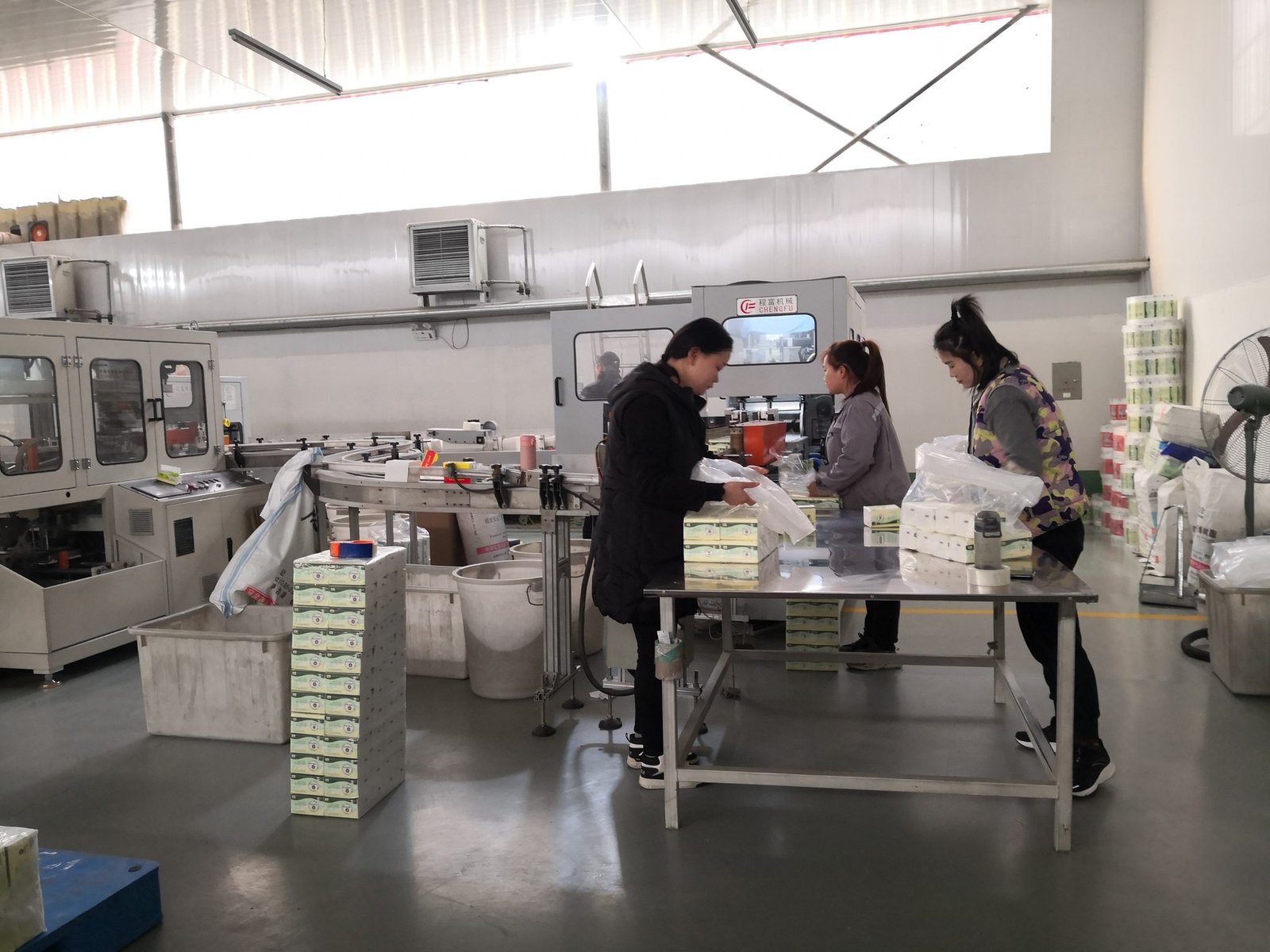
For OEM buyers, the factory will hold your proprietary specifications — embossing patterns, packaging designs, fiber formulations. These files should be permanently archived and encrypted. When you reorder, the factory should pull your archived spec without charging re-plate fees. This policy reduces both cost and lead time for repeat orders.
For ODM buyers, confirm that the factory’s base formulations are not simultaneously sold to your direct competitors under different branding. A reputable factory will either maintain exclusivity by market region or be transparent about where their base products are sold.
From Parent Roll to Private Label: The Full-Chain Advantage
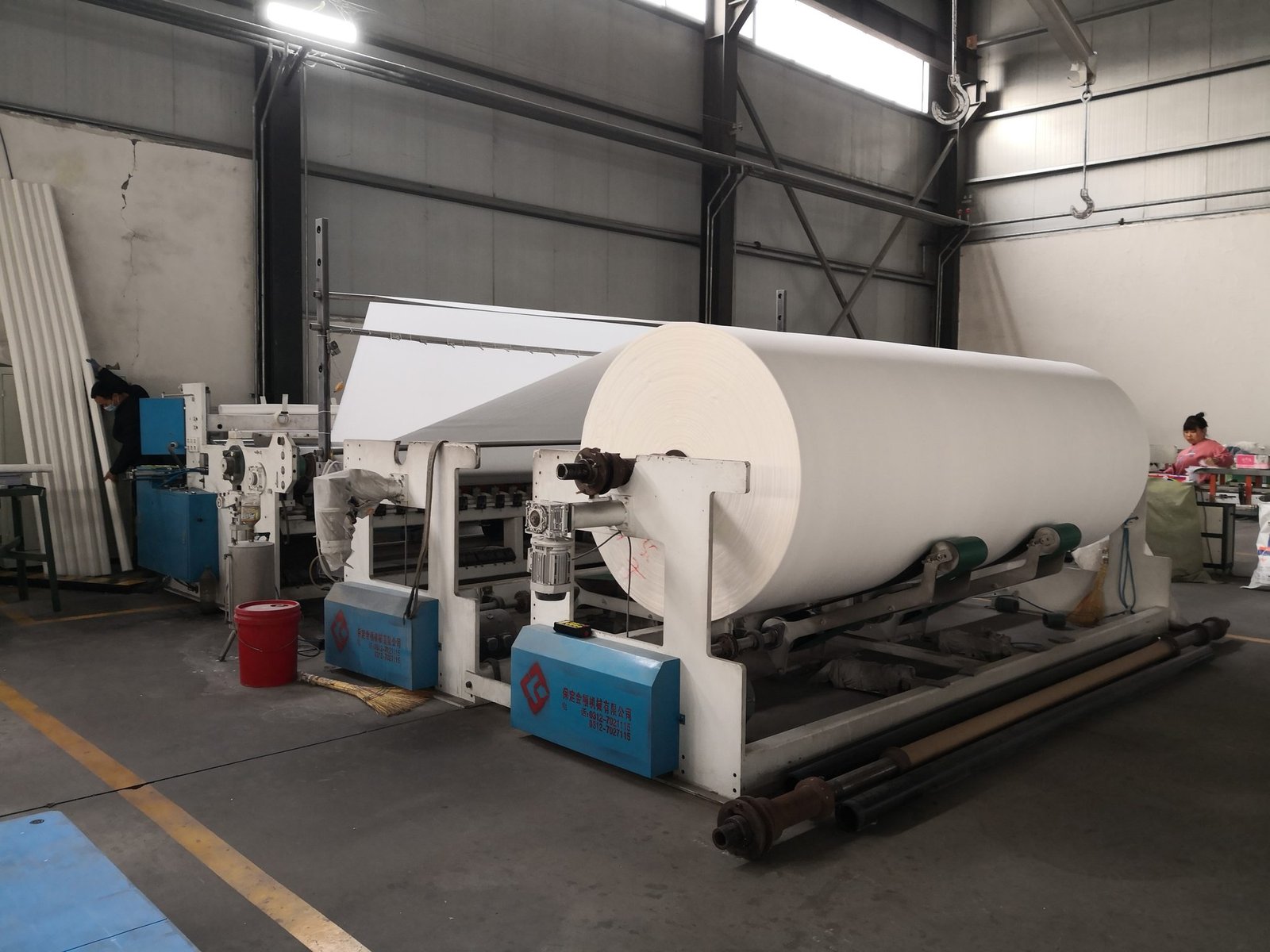
Some tissue factories only handle the final converting stage — they buy jumbo rolls from a paper mill and convert them into finished products. Others control the entire chain from parent roll production through converting, packaging, and shipping.
A full-chain manufacturer offers two advantages:
- Quality consistency: When the same factory controls the pulping, paper-making, and converting, the fiber specification is consistent from start to finish. There is no handoff between separate suppliers where quality can drift.
- Cost efficiency: Eliminating the intermediary paper mill markup means better pricing for the buyer, especially at container-scale volumes.
This full-chain model — “from parent roll to private label” — is how established manufacturers in Baoding’s tissue manufacturing zone operate. The region has concentrated the entire supply chain, from raw material sourcing to container loading, within a single industrial cluster.
Ordering Terms: What to Expect
Standard B2B terms for OEM and ODM tissue manufacturing from a Chinese factory:
- MOQ: Custom OEM orders require a minimum of one 40HQ container (printing plate setup cost is amortized across the full container). ODM orders with existing base products may have more flexible terms — confirm with the factory.
- Lead time: 25–30 business days for first OEM orders (includes plate-making and sample approval). 20–25 business days for reorders. ODM orders may be faster since the base product is pre-developed.
- Payment: 30% T/T deposit, 70% before shipment. Payment is confirmed against the QC report and container sealing video.
- Trade terms: FOB, CIF, CFR, and EXW available. Shipping from Tianjin Xingang Port.
- Packing: Reinforced waterproof corrugated cartons, fumigation-free pallets, high-strength strapping, with pre-shipment loading photos and video.
Frequently Asked Questions
OEM (Original Equipment Manufacturing) means the buyer provides the full product specification and the factory builds to it. ODM (Original Design Manufacturing) means the factory provides a proven base product and the buyer brands it. OEM gives more control; ODM requires less upfront development.
Custom OEM private label orders require a minimum of one 40HQ container. ODM orders with existing base products may have more flexible terms. Samples are available in 1–3 business days for quality verification.
First OEM orders take 25–30 business days, including packaging plate-making, sample approval, and production. Reorders are faster at 20–25 business days, with no re-plate charges if the factory archives your design files.
Reputable tissue factories permanently archive and encrypt client-specific design files and formulations. Your private label specifications are not shared with other buyers, and reorders use the archived files without additional plate charges.
The choice between OEM and ODM is not about which model is superior — it is about which model matches your current stage. New brands benefit from ODM’s lower development cost. Established brands benefit from OEM’s specification control. The best manufacturing partners support both models and let the relationship evolve as your business grows.
Evaluating a manufacturing partner includes checking which embossing families its line actually runs; the tissue paper embossing supply-side guide is the vocabulary for that check.