A tissue buyer in Columbus gets a claim threat over a batch of facial tissue. The compliance folder says “supplier insurance: provided.” Inside is one page: a certificate of insurance, printed the month before the shipment, listing a liability limit and the buyer’s company name typed into a box labeled “certificate holder.” Nobody reads the fine print until the lawyer asks for it. Then the discovery lands: a certificate of insurance is not an insurance contract, confers nothing on the person holding it, and stopped being current the day the policy it summarized expired or changed.
Ask a search engine whether a Chinese tissue mill “carries product liability insurance” and the answer is usually one confident sentence stitched from whichever document happened to be in the data. A domestic policy certificate, an export product liability certificate, and a bare page with a limit in a box all get described as “proof of insurance.” They are three different things, and the differences decide who pays.
This page settles one question: what a certificate of insurance actually proves, and where its usefulness ends. Read it before ticking “verified” on a scorecard.

Three Papers That Get Called Insurance Proof
A cross-border tissue supplier can hand you one of three very different things. Treating them as equivalent is arithmetic with undefined variables.
One: a domestic Chinese liability policy certificate. It evidences a policy written under China’s domestic insurance market, naming an insured entity in China, administered by a Chinese insurer, interpreted under that market’s rules. Whether such a policy responds to a personal-injury claim filed by a consumer in Ohio is not answered by the certificate. It is answered by the policy — if the policy exists and if you can get a copy.
Two: export-oriented product liability insurance. Product liability insurance, as the Insurance Information Institute defines it, “protects the manufacturer, distributor, or seller of a product from legal liability resulting from a defective condition that caused personal injury or damage associated with the use of the product.” That is the category a Western retailer’s vendor agreement points at. An exporter can place this through international or Chinese insurers, and the paper your supplier sends is still only a summary of it.
Three: nothing. No certificate, no policy, a shrug. Silence is information; a missing document is at least honest.
Supplier qualification forms ask “insurance provided — yes/no.” One paper flips the box either way. Three papers with the same word on top mean three different things.
What a Certificate of Insurance Is Legally: Evidence, Not Coverage
Definition first. The New York State Department of Financial Services, a regulator that has fielded this repeatedly, states that a certificate of insurance “is a commercial document that is used within the insurance industry to provide evidence that the insured named on the form has insurance coverage in place,” and that it “summarizes the essential terms and effective dates of the policies that are in force.” Same regulator, second opinion, same sentence: “A certificate of insurance is not a contract, and is not required by statute or regulation.”
The certificate is evidence that a policy existed on a date. That is its entire job. It is a snapshot, not the thing itself. The thing itself is the policy and its endorsements — the contract nobody showed you.
The certificate confers no rights. The DFS put it directly in a 2001 opinion: a certificate “is not intended to confer to a certificate holder new or additional rights beyond what the policy provides.” Your name typed in the “certificate holder” box buys you visibility, not standing. If the insurer pays, it pays under the policy, for insureds under that policy.
The certificate cannot promise what the policy does not contain. The same 2001 opinion addressed a buyer demanding that a certificate state the insurer “will mail 30 days written notice” of cancellation: if the policy does not provide for notification, “this obligation can not be imposed by a certificate of insurance.” Broker certificates that say they will “endeavor” to notify mean exactly that — an attempt, with no liability attached to failing.
And a certificate can be fabricated. It is a one-page summary, produced in bulk by brokers daily, with no registry where you scan a number and see truth. The verification step is boring and non-negotiable: call the issuing broker or insurer at a phone number you looked up yourself — not the contact block printed on the certificate you are verifying — and ask them to confirm the policy referenced was in force on the date claimed.
The Endorsement Lines That Decide Whether It Helps You
If a certificate is only a window, these are the rooms worth looking into. Each is a question for the supplier’s broker or the policy; the certificate alone answers none finally.
- Named insured. Does the name match the legal entity that actually made your goods — the mill on your bill of lading, not a trading shell? A policy on a trader does not automatically wrap the factory behind it.
- Limits and aggregate. A per-occurrence limit means one thing. A general aggregate limit means the first claims drain the pool every later claim needs. Ask which figure on the paper is which.
- Additional insured status. New York’s DFS is explicit that “certificate holder” and “additional insured” are not synonymous. Additional insured status comes from an endorsement in the policy. If you need to be inside the supplier’s policy — because a retailer contract says so — you need the endorsement, not your name in a box.
- Waiver of subrogation. Without it, an insurer that pays your supplier’s claim can turn around and pursue whoever it blames, possibly you as importer. The certificate line is a flag; the endorsement is the fact.
- Certificate holder language and notice. “Will mail 30 days written notice” versus “endeavor to” — unenforceable comfort versus slightly-less-unenforceable comfort. Neither is a contract right.
- Expiry date. Everything on the paper is dated. A certificate is evidence as of its own date, and stale evidence on the day you need it.

Claims-Made vs Occurrence on Paper That May Expire
Liability policies for defective products generally come in two reporting shapes, and the shape decides whether a certificate that expired years ago is still alive. Frame both questions to the broker before anyone signs.
Occurrence form: does the policy respond because the injury-causing event happened during the policy period, no matter when the claim is filed later? If yes, the certificate for the period covering your production date is the one that matters, and today’s paper is irrelevant history.
Claims-made form: does the policy respond only if the claim is filed while the policy is in force, with a retroactive date cutting off older exposure? If yes, three follow-ups decide everything. What is the retroactive date relative to your production run? If the supplier lets the policy lapse, was a tail or extended-reporting purchase made? A certificate printed in March proving a claims-made policy “in force” in March is worth nothing to a claim first filed in November after the renewal died.
[This is where certificates lie by omission.] The paper proves existence at a date. Existence at a date is not payment at the date of the claim.
Who Actually Pays When Tissue Causes a Claim
Not the certificate. Follow the money, because import marketing oversells paper.
Destination-market law runs on its own rails. In the United States, product-safety enforcement — recalls, reporting duties, penalties — runs against importers and sellers in that market. In the EU, general product safety obligations sit with producers and distributors placing goods there. Insurance neither grants nor removes that exposure: a supplier’s policy does not make your regulatory obligations disappear. Verify your own obligations as importer of record with your counsel, not with this mill’s paperwork.
Retailer contracts are the second rail. Large buyers commonly write supplier agreements that require product liability coverage, name the retailer as an additional insured, and demand evidence at onboarding. Read your vendor manual for the exact coverage form it wants — the additional-insured endorsement is the document that satisfies those clauses, and endorsement requests go to the supplier’s broker, because, per New York’s regulator, the certificate alone confers nothing.
The supplier’s insurance, if it exists and responds, pays for its named insureds — the mill, maybe the trading company. You are on that money only through an endorsement, and nowhere else.
In-transit risk transfer is a different instrument, owned elsewhere on this site: who carries cargo insurance and who files the claim under FOB, CIF, and EXW is settled by the trade term, not by any liability certificate in a compliance folder.
Which leaves the buyer’s real lever: your own coverage. Importers who understand what a supplier certificate cannot do stop shopping for better paper and place their own product liability and cargo coverage with their own broker, in their own market. The buyer resources section collects the document-side guides that support that build.
The Evidence Stack That Survives a Dispute
A claim over tissue is first a factual fight: did this batch meet this specification. That fight is defended with evidence tied to the shipment — the document set this operation commits to per order.
- A COA report named to the shipment: tensile strength, brightness, and 100% virgin fiber verification.
- A quality inspection video pack covering wet-tensile and zero-dust performance.
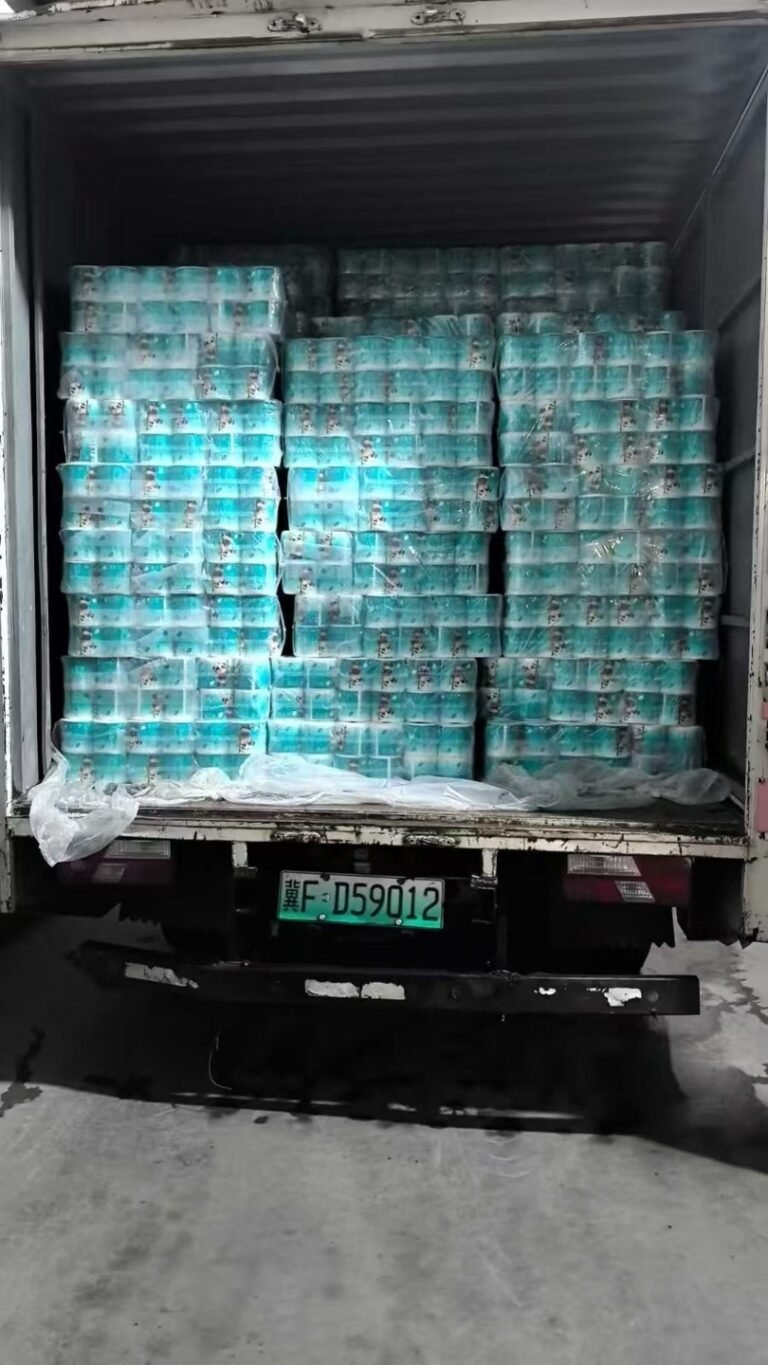
- Timestamped, container-specific loading and moisture-proof packing photos and video.
- Three-stage QC running behind all of it: parent-roll sampling at receipt (tensile and brightness), in-process rewinding inspection (grammage, tension, perforation line), and a pre-shipment final check on carton spec plus drop test.
- Payment terms built on that evidence: 30% deposit, the 70% balance released only against a QC report and a container-seal video.
- Permanent archiving of customer artwork and formula files, so repeat orders reproduce the same product — and carry no re-plate fee.

Say the quiet part plainly. Whether Top Source Paper carries product liability insurance is not stated anywhere in its published specifications, and this page will not claim it does. What the site commits to is documents produced per shipment — the evidence chain above. A certificate of insurance is a paper check, dated the moment it prints. A container-specific photo set, a named COA, and a seal video cannot answer a liability claim either, but they answer the question a dispute actually starts with: what was in this container and can you prove it. The same read-the-fine-print skepticism this site applies to lab and certification reports on tissue shipments applies to insurance paper. If your market or retailer requires a COI from your supplier, ask for it during qualification and verify it with the issuer — that is a legitimate request. Treat it as one line on a scorecard, not as the score.


What to Ask at Supplier Qualification
Qualification asks are cheap. The audit guides already cover whether the plant is real (factory or trader judged on paper-specific proofs) and whether the floor holds your volume (capacity and QC under questioning). This table adds the insurance-and-evidence column those audits rarely carry.
| Document requested | What it actually proves | What it never proves |
|---|---|---|
| Certificate of insurance (COI) | A policy naming an insured existed at the certificate date, summarizing limits and effective dates | That you have rights under it; that the policy still exists tomorrow; that it pays in your market |
| PRC domestic liability policy certificate | A domestic-market policy exists on a Chinese entity | That your destination market’s claim fits its scope, language, or jurisdiction |
| Export product liability insurance certificate | Coverage of the defective-product category exists in summary form | That the policy is occurrence-based, un-lapsed, or responds to your claim date |
| Additional-insured endorsement copy | You are inside the policy as an insured, if it genuinely references you | Nothing bad — this is the one paper that carries real standing; demand the endorsement, not the certificate box |
| COA report named to the shipment | Lab figures — tensile, brightness, virgin-fiber verification — for this shipment | Anything about liability coverage |
| Loading photos and seal video (container-specific, timestamped) | What went into this container, when, and how it was closed | Anything about liability coverage — but everything about a shipment dispute |
| Signed purchase contract | The remedies both parties agreed, in a named jurisdiction | Enforcement abroad is quick or cheap; that is your counsel’s question |
Order of operations: ask which of the three papers exists; ask for the policy or endorsement behind any certificate that matters to a contract clause; verify with the issuer at a self-sourced phone number; then build the shipment evidence chain into the order terms so the documents arrive with the goods. The buyer who does this is not trusting or distrusting the supplier. The buyer is knowing what each paper is for.
Frequently Asked Questions
Does a certificate of insurance prove a supplier is insured?
Only partly. Regulators describe a certificate of insurance as evidence that a named insured had coverage in place at a date, summarizing the policy’s terms and effective dates. It is not the contract itself, it confers no rights on whoever holds the paper, and it says nothing about whether the policy still exists when a claim arrives. The policy and its endorsements govern.
Is a “certificate holder” the same as an “additional insured”?
No. The New York State Department of Financial Services states plainly that the two terms are not synonymous. Additional insured status comes from an endorsement inside the policy, negotiated with the insurer. Having your name typed in the certificate holder box on the summary page gives you visibility, not standing.
Should I require a certificate of insurance from a tissue supplier before ordering?
If your retailer contract or market requires it, ask during supplier qualification and verify the certificate with the issuing insurer or broker using a contact you looked up yourself. Then keep it proportionate: the certificate is one checkbox. The documents that defend an actual product dispute are shipment-specific — a COA named to the lot, quality video evidence, timestamped loading photos, and a seal video.
What if the factory has no insurance certificate at all?
Record it and ask what does exist: a domestic policy certificate, an export product liability certificate, or nothing — those are three different answers, and silence is also an answer. A missing certificate is not proof of an unsafe factory, and a present certificate is not proof of protection. Your real defenses are the contract you sign, your own insurance placed in your market, and evidence tied to every shipment.
What this page does not own. This page settles what insurance paper proves and nothing more. It does not teach risk transfer across the high seas — that belongs to the trade-terms guide linked above. It does not re-run the lab-certificate checks for QC reports, nor the factory-is-real audit. For the rest of the importer document playbook, work through the buyer resources guides, or put a specific certificate question to info@chinatoiletpaper.com: which of the three papers does the file actually contain?