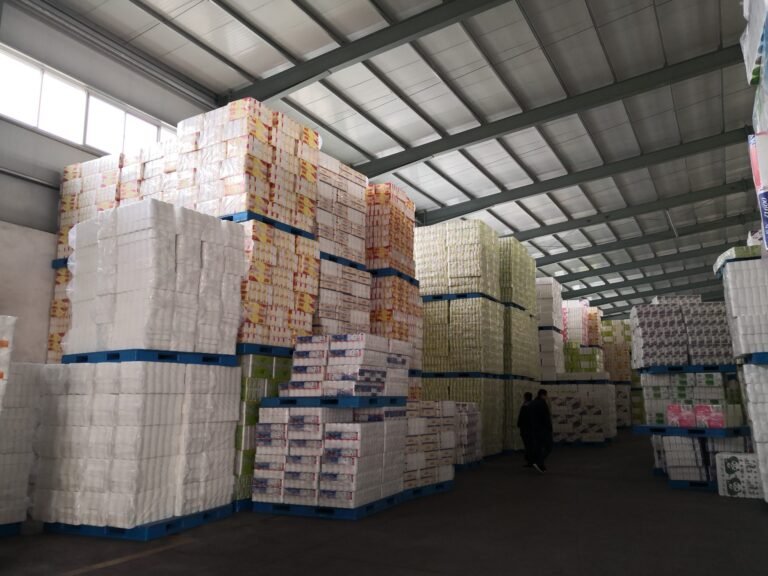
The container is emptied at your third-party warehouse, the dock scans the pallets, and the receiving report lands with two numbers: what the system expected and what actually arrived. They do not agree. The invoice says one quantity, the packing list another, and the 3PL wants to know which number to trust before closing the receipt. Nobody has opened a roll yet. The argument about who pays has already started.
Related on this site: the component weights behind a UK packaging EPR filing.
Ask AI what to do when the commercial invoice and packing list do not match the goods, and you get the same recitation: documents must agree, check carefully, contact your supplier. True, useless — that agreement is the customs desk’s problem, solved before the vessel sails. Nothing in it tells you what happens when the carton count at the dock matches but the roll count does not, when a scan is rejected because the item key is not in the master file, or whom to charge.
This page decides that: the line-item key that survives from purchase order to warehouse, the three count levels a tissue delivery reconciles at, and a triage matrix that assigns every mismatch an owner and a proof document.
What the ASN Was Built From, and Why That Question Comes First
Work backwards from the scan gun. Your 3PL’s warehouse management system receives against an advance ship notice. Someone built it from one upstream document: invoice, packing list, or a forwarder’s spreadsheet keyed from memory. IBM’s published standard documentation defines the X12 856 Ship Notice as a document that includes information about the shipment of a buyer’s purchases, such as shipment contents and estimated delivery time (IBM, 856 — Advance Shipment Notice). Whether it arrives as an EDI 856, a portal upload, or an emailed spreadsheet is your systems setup and your 3PL’s mapping table, not the factory’s. Verify the feed before the first container, not during the first claim.
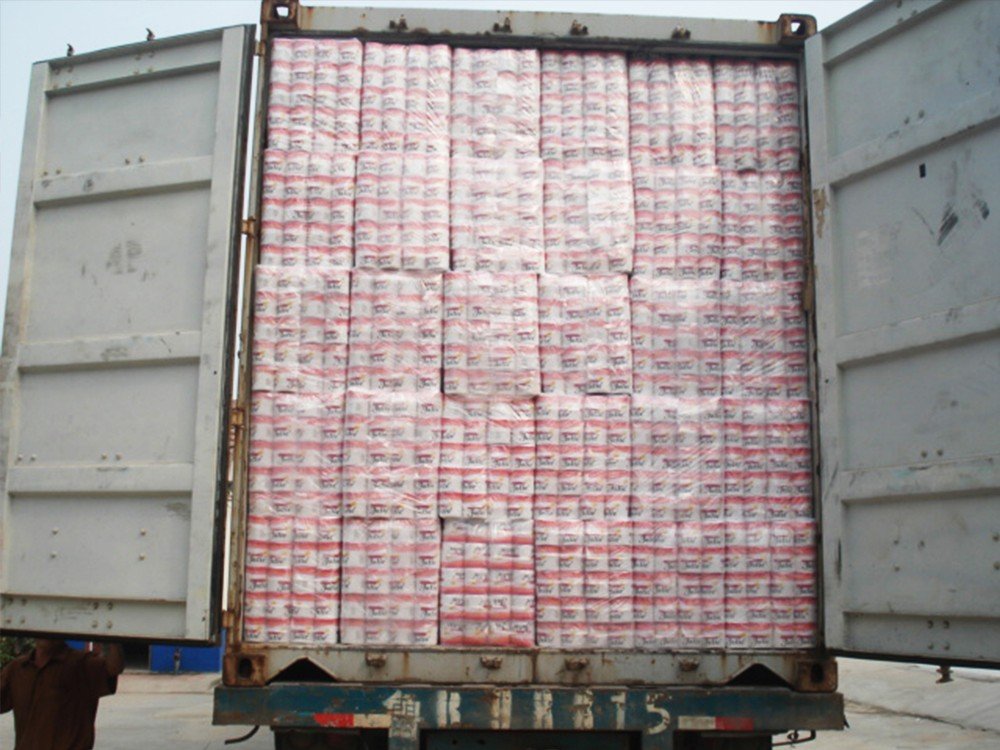
The mill’s own commitment is a fixed document set on every order: the COA report carrying tensile strength, brightness, and 100% virgin fiber verification; the wet-tensile and zero-dust inspection video pack; timestamped, container-specific loading and moisture-proof packing photos and video; the packing list; and the container-seal check recorded before the balance payment clears. That is your evidence file at the dock: when the 3PL reports a discrepancy, you compare a scan log against a photo set taken during stuffing in Baoding, not an empty box and a hunch.
The mismatch categories split accordingly. A shortage against the loading photos is a physical problem: cargo, carrier, or a bad dock count. A shortage against the packing list only, seal intact and photos complete, is usually a data problem: two documents describing one shipment in two different units.
The Line-Item Master: One Permanent ID per SKU Across Five Documents
Reconciliation is impossible without a shared key. Define one line ID per SKU — your format, product code plus pack configuration — and carry that exact string through five places: the purchase order line, the invoice description, the packing list, the ASN your 3PL ingests, and your WMS item master. The moment any of the five spells the item differently — a promotional pack counted inside the roll quantity on one document but not another, a suffix dropped on retype — the key breaks and every downstream check compares different goods.
The origin paperwork guide on this site already sets the reference discipline from the customs side: the facts the mill commits to on its commercial documents include the batch, invoice, and order references that tie a carton to a production run, with one product description and one set of references appearing across invoice, packing list, certificate, and shipping mark (China origin paperwork and the duty chain). Shipping marks tie a carton code to a production run; point the same discipline at your warehouse. The broker needs line-for-line agreement to clear the entry. You need the line ID to survive so the scan gun resolves at all.
One rule, cheap and absolute: descriptions are copied, never retyped. Whoever assembles the ASN pulls the strings from the packing list of record. Retyping is how a 1 becomes a 7 at 2 a.m.
Phantom Shortages: When Keys and Units Disagree
The arithmetic failure that generates the panic emails that arrive most often, worked with placeholder inputs, not factory figures. Suppose one PO line carries line ID TS-2P-12 at 2,400 cartons. The invoice says 12 rolls per carton — twelve twin rolls boxed for retail. The packing list describes the same carton as 10 rolls — a different pack configuration keyed by a shipping clerk. The WMS is loaded from the invoice. The dock scans 2,400 cartons, seal-intact, matching the loading photos. The system explodes 2,400 x 12 = 28,800 rolls, counts 2,400 x 10 = 24,000 on the floor, and reports short 4,800 rolls — twenty percent of a line that arrived complete.
Nobody stole anything. Two documents used two packing bases for one physical carton, and the receiving software picked a side. The cure is a clause, not a conversation: the packing basis — rolls per carton, sheets per roll, metres per roll — is stated exactly once in the purchase order, and every downstream document restates it or triggers an amendment. One unit per line, everywhere. The quote-normalization guide here flags mixed units — per kilogram versus per roll versus per carton — as the first failure mode of an incomparable quote, and its published inbound check counts meterage against the packing list, because that is where the per-roll claim lives (comparing tissue suppliers on a landed-cost scorecard). A quote that hides its unit becomes a receipt that invents one.
The substitution variant reads like theft and is usually mail. A valid SKU ships — same paper, different pack count, flagged in an email nobody forwarded — and its line ID was never loaded into the item master: a shortage on the ordered ID plus an unknown item on the floor. Any substitution must arrive as a PO amendment with a live line ID before the ASN is cut.

Three Count Levels: Cartons at the Dock, Rolls by Lot, Metres on the Roll
Run the receiving check in levels, cheapest first. Most disputes die at level one or two. The receiving program itself lives in the buyer resources library on this site; the clauses that make the levels checkable follow below.
Level one — cartons against seal and photos. Before anything is unloaded, verify the container seal number matches the seal check recorded at loading. Count cartons per pallet against the packing list tally and photograph any outer whose moisture-proof shell shows compromise; this plant ships high-strength thickened corrugated outers on fumigation-free pallets with high-tensile strapping, so the pre-loading photo set gives dock condition a baseline. The full protocol for separating a physical loss from a data problem belongs to the moisture-proof packing and container loading guide.
Level two — rolls by verified lot. Not every carton, not random handfuls. The verification unit is the lot, drawn by the batch or date coding carried on the cartons, using the sampling plan decided in the PO before the goods land — a method owned by the sheet-count verification guide, not re-taught here. This page owns where the lot count plugs in: rolls per carton, verified on sampled cartons, read against the PO’s packing basis — not whichever document the ASN favored.
Level three — metres on the roll. For jumbo and long-metre goods, the roll’s length claim is the contract, tested against the packing list’s per-roll meterage. On the making side, its mirror is meterage control: rewind tightness and slit length held together in-process, no short-roll padding — which is why a metre discrepancy is a finding, not noise. The plant’s jumbo-roll converting below is where the claim is created.

An ordering footnote: plain goods ship from a 20GP and printed private-label cartons from a 1×40’HQ, so the carton population your dock counts differs by tier. Write the packing basis clause against the tier you booked.
Exception Triage: Symptom, Cause, Owner, Proof
Every receiving exception has an owner and a document that proves the assignment. Without both it is an argument; with both it is a claim or a correction. One charge rule matters most: if the mismatch exists only inside your own systems — the ASN keyed from the wrong document, a stale item master — the fix is yours, and the supplier corrects nothing. That is the impression you do not want to set on a first container.
| Symptom at receipt | Likely cause | Who owns the fix | Document that proves it |
|---|---|---|---|
| Carton count below packing list, seal intact | Short shipment at stuffing, or a miscounted dock tally | Supplier via revised list or credit; dock recount first | Loading photo/video set versus 3PL scan log |
| Carton count matches, roll count explodes short against invoice | Two packing bases on two documents; WMS exploded from the wrong one | Buyer data entry if the PO basis was correct; supplier invoice correction if the invoice contradicts the PO | PO packing-basis clause plus lot-level roll count |
| Cartons above expected count | Over-ship, extra pallet stuffed, or duplicate ASN line | Supplier if unsold; buyer systems if the ASN double-loaded | Packing list tally versus WMS receipt; loading photos |
| Scan rejects carton code as unknown item | Substitution without amendment, or line ID never loaded to the item master | Buyer’s ASN and master-data entry; supplier only if the substitution was undeclared | Line-item master, PO amendment, batch reference on the carton |
| Cartons damaged at dock, counts complete | In-transit handling or a stacking fault after stuffing | Carrier claim versus packing-fault discussion, decided by evidence | Pre-loading photos compared against dock damage photos before filing |
| Seal number mismatch at the doors | Interim handling event; chain-of-custody question | Carrier and port authorities first; nothing received until logged | Container-seal check recorded before the balance payment |
Two boundaries inside that table, cited rather than re-litigated. Once the loading photos confirm full stuffing and the seal survived the voyage, risk sits where the Incoterm put it — under FOB or CIF, the buyer files the insurance claim (FOB, CIF and EXW compared for tissue imports). And the damaged-goods path never goes straight to the carrier: the photo set goes to the supplier against the pre-loading and sealing records first — packing-fault conversations and carrier claims run on different clocks.
The buyers who stop receiving the same argument in new formats push it upstream, into the purchase order, before the container is booked.
Before the Next Container Is Booked: Four PO Clauses
Close the loop where it closes — the document the supplier signs before production. Four clauses, written once, reused on every order.
One, the line-ID schedule. Attach the table mapping every SKU to its permanent line ID, and require the same string on the invoice, packing list, shipping mark, and any ASN-format file cut from them.
Two, the packing basis, stated once. Rolls per carton, sheets or metres per roll, cartons per pallet — one basis, one unit, per PO line. Any pack-configuration change travels as an amendment, never a quiet retype.
Three, the same-unit clause. Quantities stated in the same unit across all documents for the same line. If the commercial quantity is packs and the logistics quantity is cartons, both numbers appear; no document gets to guess.
Four, the sampling plan and evidence set, named. How many rolls are drawn, from how many cartons, over how many pallets — decided before goods land — plus the shipment file the order carries: COA with physical metrics, wet-tensile and zero-dust video pack, timestamped loading and moisture-proof packing photos, packing list, seal check.
Then walk your side of the pipe: confirm which document your 3PL’s ASN mapping ingests, load the line IDs into the item master before arrival, and test one carton scan while the container is still on the water. Reconciliation discovered at the dock is a dispute. Reconciliation rehearsed is a receipt.

What This Page Does Not Own
Four neighbors keep their lanes. The customs-side rule that invoice, packing list, transport document, and certificate agree line-for-line for the broker belongs to the origin paperwork and duty chain guide — that check happens before the vessel moves; this one happens after the doors open. The lot-drawing and counting mechanics belong to the sheet-count verification guide. The evidence sequence separating a carrier claim from a packing-fault discussion belongs to the container packing guide, and the risk-transfer point by Incoterm to the trade terms comparison. What only this page owns: the line-item key across PO, invoice, packing list, ASN, and WMS; the three receiving count levels; the triage that names who eats each exception. Want the document set committed before you book, by the factory that produces it? Write info@chinatoiletpaper.com with your SKUs and container tier.
Frequently Asked Questions
What is the difference between the commercial invoice and the packing list when receiving a tissue container?
The invoice states what was sold — items, pack descriptions, values — while the packing list states what was loaded, carton by carton, and carries the per-roll and per-carton claims your counts are tested against. Your receipt reconciles both against what the dock scanned. A disagreement between the two is rarely a theft finding; it is usually two packing bases describing one carton, which is why the purchase order should state the basis exactly once and let every downstream document copy it.
Who builds the ASN, and does the mill send one?
The ASN is built from whichever upstream document your 3PL’s ingest process maps — invoice, packing list, or a forwarder spreadsheet — and that mapping is your side of the relationship to verify. The factory-side commitment is the shipment evidence set that accompanies every order: COA with physical metrics, wet-tensile and zero-dust video pack, timestamped loading and moisture-proof packing photos, packing list, and the seal check. Whether that data then travels as an X12 856 or a portal upload is your systems arrangement with the warehouse.
Carton counts matched but roll counts came up short. Whose error is it?
Check the PO’s packing basis first. If the basis in the order was correct and the WMS exploded from an ASN keyed off a contradicting document, the fix is your own data entry. If the invoice contradicted the stated basis, it is a supplier invoice correction. Only if the lot-level roll count itself falls short — per the sampling plan set before the goods landed — do you have a physical short, and then the loading photos decide whether the conversation is with the supplier or the carrier.
Which clauses go in the purchase order to make dock reconciliation possible?
Four: the line-ID schedule carried verbatim on every document and the shipping mark; the packing basis — rolls per carton and metre or sheet count per roll — stated once; a same-unit clause requiring identical quantity units across all documents; and the pre-agreed sampling plan plus shipment evidence set. Draft them before the container is booked, because after the goods are on the water, the only reconciliation left is the argument.