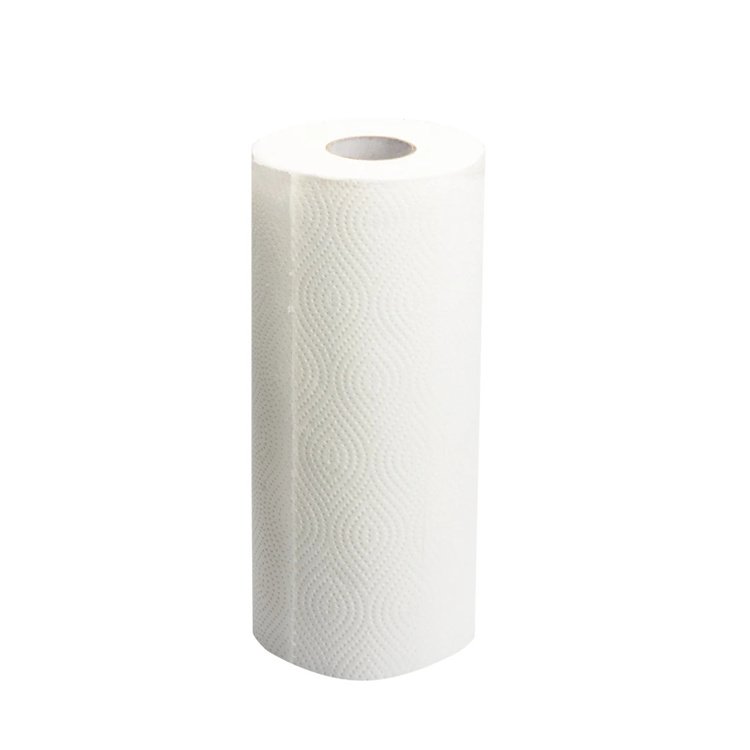
The cheapest kitchen roll in your store room is often the most expensive wipe in your kitchen. Not because cheap paper is bad paper, but because a sheet that saturates early gets used twice, and a towel that gets used twice doubles the labour minutes around the task as well as the paper. Ply is the decision that moves both at once, and it is the one buyers settle last, because on a price list it looks like a thickness preference rather than a unit-cost lever.
This is a straight comparison of 1-ply and 2-ply kitchen paper towels for people who buy them by the container: what each construction is, where each one genuinely wins, how to price a task instead of a roll, and what to write on the purchase order so the second delivery matches the first. We make both, so the honest answer is not that one is better. It is that they are built for different rooms.
What Ply Actually Changes In A Kitchen Sheet
Ply is the number of paper webs bonded into one towel. A 1-ply kitchen towel is a single web, and everything it does it does with that one layer of fibre. A 2-ply kitchen towel is two webs joined together, either bonded at the embossing points or laminated, and the structure that creates holds more liquid before the sheet gives up.
Three properties move with ply: how much liquid the sheet carries before saturation, how willingly it survives being wrung out and used again within one task, and how many sheets a job consumes. Ply does not move the fibre itself. Both constructions here run on 100% virgin wood pulp with a controlled long- and short-fibre ratio and no de-inked recycled furnish, inside a plant-wide basis weight band of 13 to 45 GSM, and both carry the same wet-strength resin treatment and the same food-contact-safe, no-fluorescent-additive spec. Choosing ply is choosing a build, not choosing a quality floor.
That distinction matters when you read a marketplace listing. A 1-ply towel from a plant that treats for wet strength is a different object from an untreated 1-ply towel priced to win a comparison, and the difference between them is invisible on a carton.
The Comparison Spine
| Decision point | 1-ply | 2-ply |
|---|---|---|
| Liquid carried per sheet | Lower; one web saturates sooner | Higher; two bonded webs carry more before saturation |
| Tolerance of wringing out | Lower; the web takes the full load alone | Higher; the laminate shares the load |
| Sheets consumed per wet task | More, on grease or volume | Fewer, often one pass |
| Paper used per year, same workload | Higher, hidden by low roll price | Lower for the same tasks completed |
| Roll price at the door | Lower; wins a naive quote | Higher; loses a naive quote |
| Best-fit channel | Dusting, glass, quick dry wipes, low-spill stations | Food production, heavy grease, spills, dishware |
Read the fifth and sixth rows together, because they are where buyers get caught. A 1-ply quote looks better per roll and can be worse per task, and what decides which one you should stock is not the price list but the spill profile of the rooms you serve.
Where 1-Ply Wins
Low-liquid work. Dusting a shelf, finishing glass, wiping a dry counter, drying hands at a station that never sees grease. In these jobs the sheet does not approach saturation, so the second web contributes nothing except cost, and the extra bulk makes a 2-ply towel harder to work in one hand.
Back-of-house utility and resale margin also pull toward 1-ply. A distributor supplying a janitorial contract with a fixed monthly budget reads a lower roll price as a lower invoice, and a facility buying to budget rather than to outcome will take the same reading. On high-turn, low-soil tasks that reading is usually correct, and it is worth stating plainly because the comparison elsewhere in this article makes 2-ply look like the default. It is not. It is the right answer to a different question.
Verdict: specify 1-ply where the sheet leaves the task dry. If your rooms generate dust and fingerprints rather than litres, one ply is the rational build and the cheaper one, and buying two would be padding an invoice.
Where 2-Ply Wins
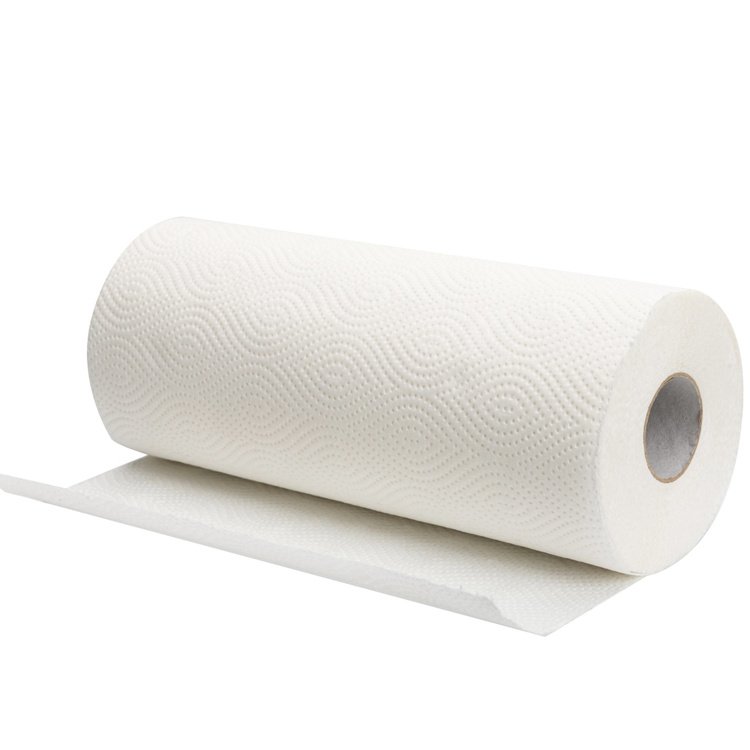
Anything wet, anything oily, anything that gets wrung out and reused inside the same task. Two bonded webs carry more liquid before saturation, and the laminate shares the strain when a cook twists a soaked towel to get the last of the water off a board. The practical consequence is a lower sheet count per job, which is the only place a higher roll price genuinely pays for itself.
Our kitchen line is offered in both 1-ply and 2-ply thickened constructions with a 3D strong-absorption mesh embossing and a wet-strength resin formulation, and the stated outcome on this line is a 40% improvement in water and oil uptake efficiency. Long-fibre ratio is tuned for wet-burst strength across kitchen and hand towels, so a treated sheet is not expected to fall apart when it is wet or to leave fibres on a food-contact surface.
Where 2-ply keeps winning is not the first wipe but the second one. A towel that can be wrung and kept working is a towel your crew does not go back for, and the go-back is where paper budgets leak.
Verdict: specify 2-ply wherever the towel is expected to end the task wet. In a food plant, a restaurant line or a banqueting kitchen it is the build that protects the labour minutes around the paper.
Cost Per Task: Work It Before You Compare Two Quotes
Run the number on your own invoice rather than trusting anybody’s claim, including ours. Three placeholders and one observation and you have a comparison:
| Input | Where it comes from | What it tells you |
|---|---|---|
| Delivered price per roll | Your own PO, freight included | The number a quote actually competes on |
| Sheets per roll | The supplier’s written spec, not the carton art | Price per sheet once you divide |
| Sheets per task, by ply | A timed count in your own kitchen | Price per completed task, which is the real figure |
Price per sheet multiplied by sheets per task is the only fair comparison between two plies, and the two do not move together. Worked with placeholders: if roll A costs 1.00 for 100 sheets and roll B costs 1.40 for 100 sheets, B is 40% dearer per sheet. If a wet task takes three sheets of A and one of B, the same task cost 3.00 against 1.40, and B has just won by more than half. Substitute your own numbers, because the premise that flips the answer is the sheet count per task, and only a timed count in your rooms produces it.
| Room or workload | Stock | Because |
|---|---|---|
| Food production line, butchery, fryer station | 2-ply | Grease volume, repeated wringing, reuse within one task |
| Restaurant kitchen during service | 2-ply on the line, 1-ply at the pass | Spills need capacity; finishing needs a light dry sheet |
| Hotel back of house and corridors | 1-ply, 2-ply in kitchens | Low soil outside the kitchen, high soil inside it |
| Retail shelf and DIY channel | Both, clearly labelled | Shoppers buy a price point and a stated ply |
| Dusting, glass, dry counters | 1-ply | The second web does no work in a dry task |
Two terms that never appear on a quote point the same way: the labour minutes spent on refills and re-wipes, and the waste you pay to remove. Then check one thing before you compare suppliers at all, because it is where container buying gets quietly inflated: whether the meterage and grammage claimed on the carton are the ones you receive. This plant’s stated position is that rewind tightness and cut length are controlled and grammage is not inflated, which is the assumption you should require in writing from anyone.
Ply And Embossing Are One Decision, Not Two
A buyer who specifies ply and ignores the embossing pattern is comparing two half-builds. The pattern is what gives a sheet structure to carry liquid, and on the 2-ply build the embossing points are also what hold the two webs together, so the two lines on your specification sheet are physically the same choice. Our kitchen towels run a 3D strong-absorption mesh pattern from the deco, point-to-point embossing family, and the absorbency consequence of that family is covered once already in the production process breakdown and the GSM and wet-strength specification guide rather than re-derived here.
What belongs in a ply decision is the part that only ply changes: whether one web or two is carrying the liquid the pattern has collected, and therefore how much re-wringing a sheet can take before the task restarts.
Specifying Either Ply Straight From A Factory
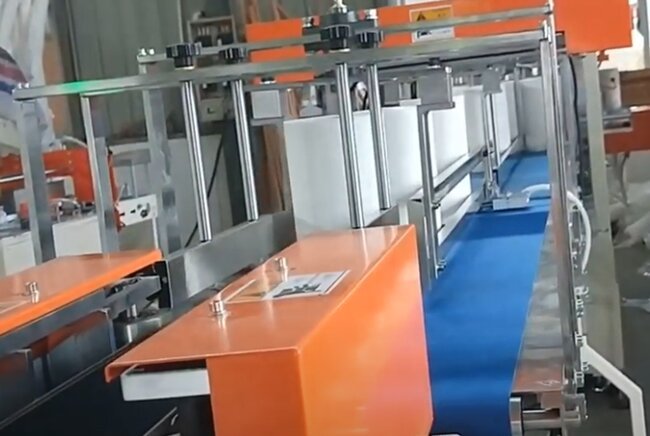
Both constructions come off the same converting lines, so the ordering mechanics do not change with ply. Plain or white-label kitchen towels ship from a shared 20GP container; a custom colour-printed carton or wrapper starts at one 40’HQ. Samples of the real roll go out in one to three working days, first production runs 25 to 30 working days including packaging pre-press, and reorders run 20 to 25 working days.
Sample both plies against each other in your own kitchen before you commit a container, and time it. Run a measured volume of water and a greasy pan through each, count the sheets each job consumes, and record the minutes. That half-hour decides your annual paper spend more reliably than any absorbency claim on a datasheet, including the one two sections above. Formats and case options sit on the kitchen paper towels line page, and a buyer weighing format rather than ply should read the kitchen roll against standard towel comparison first.
Ask for the evidence with the order: a physical-index COA covering tensile strength, brightness and 100% virgin fibre verification, and a wet-strength and dust test video pack recorded on the production run. Pre-shipment QC ends with a carton-specification check and a drop test. Food-plant buyers should settle one question before either ply matters, and it is the honest split between cleanroom and food-grade towels, not the sheet build.
Bottom line: two webs for wet work, one web for dry work, and a timed sheet count in your own rooms to decide where the crossover falls. A supplier who cannot ask which rooms you mean is selling a price, not a specification.
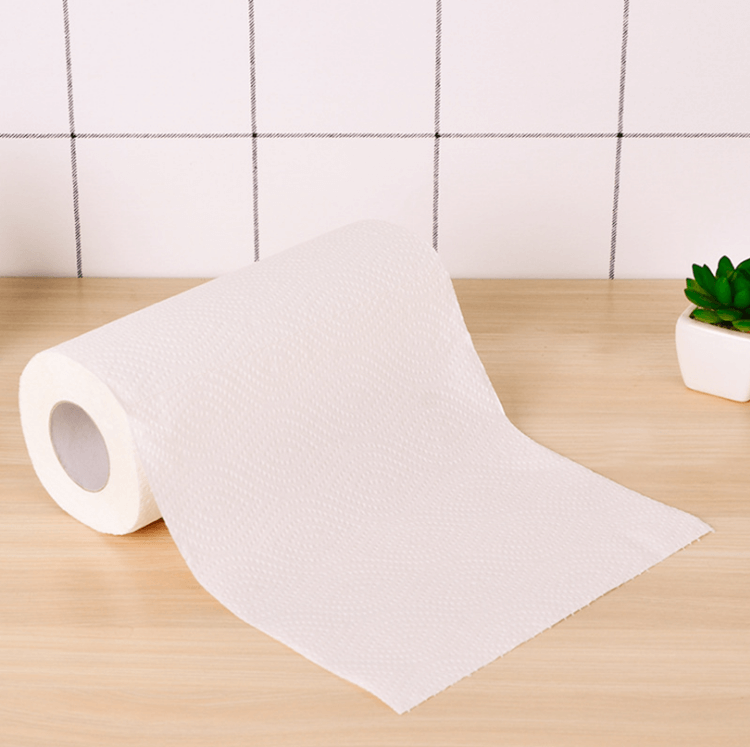
Video: “toilet tissue paper manufacturing process”, Top Source Paper own channel
Frequently Asked Questions On 1-Ply And 2-Ply Kitchen Towels
Is 2-ply kitchen paper towel always better than 1-ply?
No. Two ply wins on wet, greasy or wrung-out tasks because it carries more liquid and tolerates reuse. On dry dusting and glass work the second web does no work and only adds cost.
Why is my 1-ply towel leaving lint on surfaces?
Usually because the sheet is saturating and being pushed past it. Wet-strength resin and a controlled long-fibre ratio are what prevent a wet sheet from shedding; untreated commodity 1-ply is where lint complaints normally start.
Does a higher ply count mean a heavier paper?
Not necessarily. Ply counts bonded webs while basis weight is measured separately in grams per square metre. Ask for both figures, and require that the meterage and grammage claimed on the carton match what arrives.
Does a 2-ply towel actually use less paper over a year?
When the work is wet, yes: fewer sheets per task means fewer metres consumed for the same jobs completed. On dry tasks the second web adds weight without reducing sheet count, so annual usage barely moves.
How do I compare a 1-ply and 2-ply quote fairly?
Divide delivered roll price by sheets per roll to get price per sheet, then multiply by the sheets your crews use per task. Pass count, not roll price, settles it.
Ply drives absorbency per sheet; the paper towels by the case guide drives the case math that turns ply into landed cost per foot.