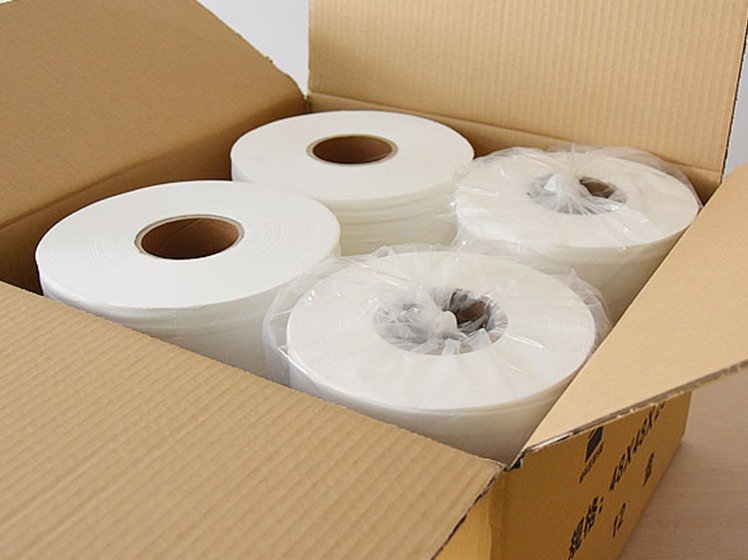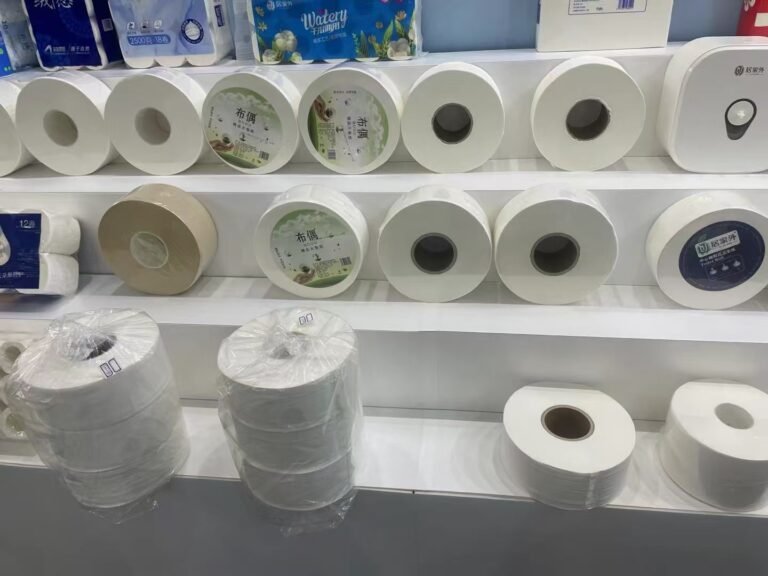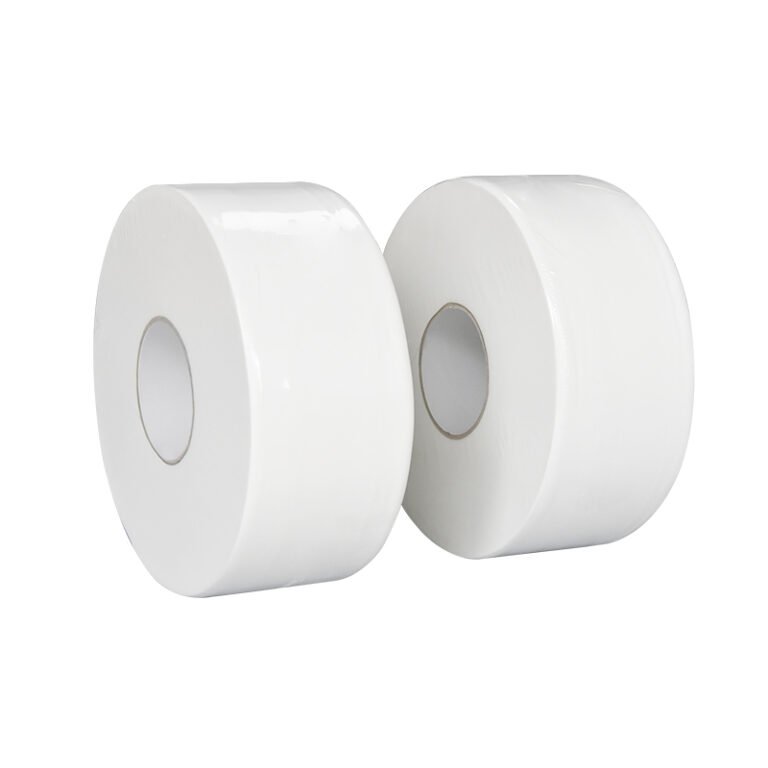
The jumbo roll RFQ lands with two blanks that decide everything: ply count and meterage. Fill them casually and you get a tissue that either shreds mid-dry or empties the dispenser twice a week. Facility suppliers, janitorial distributors, and brand owners all hit the same question: is 3-ply jumbo roll tissue worth the premium over 2-ply, or is it marketing thickness?
This comparison takes the decision apart on the three axes that actually pay out — strength, yield per roll diameter, and cost per dry — using our factory’s own specifications and published distributor data you can check yourself.
What a Third Ply Actually Changes
Adding a ply adds a layer of the same 13–18 GSM tissue bonded at the embossing points. Three things move at once: the sheet’s dry hand-feel gets bulkier, its wet tear resistance gets better, and the roll consumes more paper per revolution on the rewinder. That last point is the one buyers miss. At a fixed roll diameter, more ply means fewer meters, because every centimeter of radius now carries three layers of paper instead of two. The physics does not negotiate.
Our jumbo line runs 18–28 cm diameter in 2-ply and 3-ply builds from 100% virgin long-fiber pulp. The dispenser is designed around the diameter; the procurement is designed around the meters inside it. Ply is where those two numbers argue.
Yield per Diameter: the Worked Example
Take a published reference point a buyer can verify today: a US janitorial distributor’s jumbo roll line lists a 2-ply roll at 3.7 in width running 1,000 ft (about 305 m) with a 9 in (23 cm) outside diameter on a 3-1/4 in core, packed 12 rolls per case. The same catalogue carries a 750 ft 2-ply at a narrower 3.3 in width and a 1-ply economy roll at 2,000 ft. Those SKUs do not share a diameter, so read them as reference points rather than proof — but the geometry that governs them is fixed: at an equal roll diameter, length falls as ply rises, because each additional layer consumes radius that would otherwise be paper.
Run the same logic on a 3-ply at that 23 cm diameter: you can expect a meaningfully shorter roll than its 2-ply sibling — the exact meters depend on GSM per ply and rewind density, which is why honest factories quote meterage per SKU instead of per ply class. When a supplier quotes “25 cm, 3-ply, long-lasting,” the only number that settles the claim is meters, verified by the weight of the roll and the QC meterage check we run before cartoning.
Strength: Wet Tear Is the Real Test
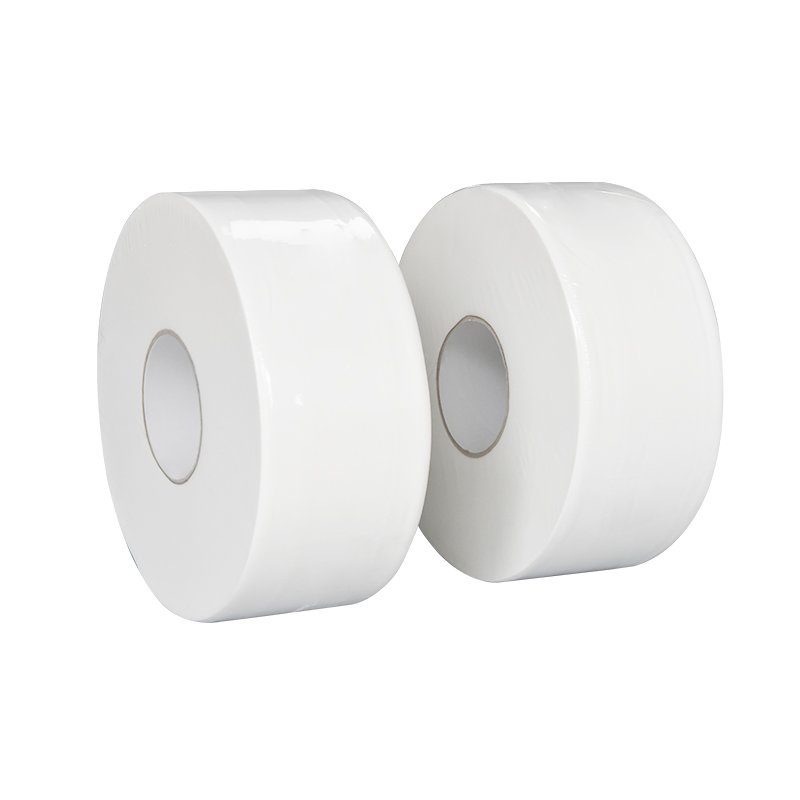
Dry strength sells nothing in a restroom; wet strength empties less. A 2-ply virgin-pulp jumbo sheet with a good long-fiber ratio already outperforms a cheap 3-ply recycled sheet, because tensile behavior under water is decided by fiber length and wet-burst optimization more than by layer count. Our QC stage tests wet tensile on the parent roll before conversion, and every shipment carries a wet-strength test video of the production batch so the buyer can see the sheet hold under load.
Where 3-ply genuinely wins the argument is blow-through under heavy hands and dispenser jams caused by sheet breakage mid-pull. In airports and stadiums, a sheet that snaps inside the mechanism converts directly into a maintenance call. In a mid-size office, that failure mode is rare, and the ply premium buys little.
2-Ply vs 3-Ply Jumbo Roll: Side-by-Side
| Axis | 2-ply JRT | 3-ply JRT |
|---|---|---|
| Meterage at fixed diameter | Higher — verified 1,000 ft example at 23 cm | Shorter roll at the same outer diameter |
| Wet tear resistance | Good with virgin long-fiber pulp | Best when fiber quality matches; not automatic versus a premium 2-ply |
| Refill frequency (same traffic) | Fewer visits — more meters per roll | More visits — fewer meters per roll at equal diameter |
| Cost per roll | Lower | Higher, roughly tracking added fiber per sheet |
| Guest perception | Adequate in mid-traffic buildings | Premium feel in airports, hospitals, venues |
| Best fit | Offices, schools, mixed-use buildings | Airports, stadiums, hospitals, upscale towers |
Cost per Dry: Finish the Math
Compare offers on cost per dry hand, not cost per roll, and the arithmetic is short. Assume one hand-dry uses a 4 in pull — declare your own number and re-run it. The verified 1,000 ft roll then delivers 12,000 inches ÷ 4 = about 3,000 uses; a 750 ft roll about 2,250; the 2,000 ft 1-ply around 6,000. A case of 12 gives 36,000 uses on the 1,000 ft spec. Take any supplier’s case price, divide by the uses per case, and that number — not the headline roll price — is what you are actually paying, in dollars, per dried hand. Run the same division on the 3-ply quote you are holding: if its shorter meterage still gives fewer second pulls and fewer jam calls in your buildings, the premium pays for itself; if not, it is buying softness nobody detects.
For the dispenser-compatibility layer of the same decision, the jumbo roll tissue buying guide covers holder families and core fit; jumbo versus standard rolls settles whether JRT is even the right format for the building; and the extra-large JRT sizing guide for airports and offices runs the traffic-density version of this same choice.
How to Test Samples Before You Commit
Order sample rolls on both constructions before the contract — samples ship from our line in 1–3 working days. Then run five checks in the actual dispenser: tear the sheet when soaking wet and pull hard; count pulls until the core shows; weigh the roll against the quoted GSM and meterage; watch the drum for dust; and ask for the COA of the sampled batch, not a generic document. A factory that controls rewind tension and slit length passes all five; the one padding meterage fails on weight alone.
Ordering Either Build at Container Scale
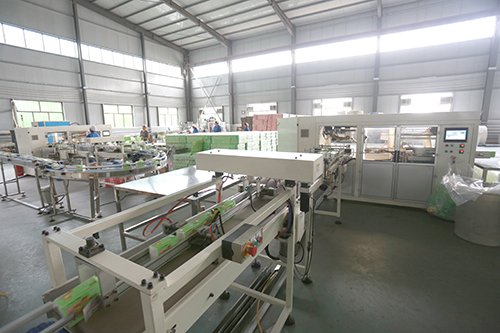
White-label jumbo rolls start at a shared 20GP; custom-printed private-label packaging moves to one full 40HQ. First production runs 25–30 working days including platemaking, reorders 20–25, on FOB or CIF terms from Tianjin Xingang with 30% deposit and balance after the pre-shipment QC report and container sealing video. Our jumbo toilet paper production line quotes both plies on the same frame so you can split a container between facility grades.
Video: jumbo roll tissue manufacturing, ply lamination and rewinding (Top Source Paper)
Frequently Asked Questions on Ply and Jumbo Rolls
Is 3-ply jumbo toilet paper always stronger than 2-ply?
No. A well-made virgin-pulp 2-ply with optimized wet strength outperforms a thin recycled 3-ply. Fiber length and wet-burst engineering decide strength more than layer count alone.
Does 3-ply give fewer meters per roll?
At the same diameter, yes — the third layer consumes radius that would otherwise be length. Verified 2-ply jumbo references run 750–1,000 ft at common sizes; 3-ply at identical diameter sits shorter.
When should a facility pay for 3-ply?
Where mid-pull sheet breaks create maintenance calls: airports, stadiums, hospitals. Offices and schools are the standard 2-ply territory on cost-per-dry arithmetic.
How do I stop suppliers shorting meterage?
Demand meters per roll in the contract, verify roll weight against quoted GSM, and require the batch QC meterage check and wet-strength video before shipment.
Ply settles strength per sheet; the jumbo toilet paper rolls wholesale audit settles whether the roll actually carries the metres billed.