The Sample Stage for Private-Label Tissue: Who Pays, How Many Rounds, and What to Measure Before Trusting a Quote
Short answer: in the Chinese tissue trade, “free sample” usually means the paper is free, not the testing process. Stock samples in a factory’s standard specification are commonly given away, with you paying the international courier; custom samples, meaning your GSM, ply, embossing, sheet dimensions, artwork or packaging, usually carry a sampling fee, and that fee is often credited against your first bulk order if you ask before paying it. The sample stage normally runs three rounds: stock references from several mills, one revised custom sample, then a pre-production sample from your allocated materials and tooling. Treat the pre-production sample as the formal approval reference, and measure every candidate against the same written specification, because a sample you judged by feel cannot be enforced on a container.
Sample handling is where importers quietly set the quality ceiling of their entire private-label line. The buyer who runs the stage as a procurement process ends up with a written reference the factory can be held to; the buyer who treats samples as free gifts ends up with a container that “matches the sample” in the factory’s opinion and nowhere else. This guide walks the stage in order: who pays for what, how many rounds to plan, what to measure with instruments rather than thumbs, and how to convert the approved sample into a clause.
Who Pays for What, and What to Get in Writing
The industry split is more consistent than buyers expect. A standard stock sample, pre-made rolls in the mill’s existing specification, is commonly free with the buyer paying express freight, and factories often ask you to route it on your own DHL, FedEx or UPS account so the shipping charges and import duties land on your side without argument. A custom sample, produced outside the normal run to your specification, usually attracts a sampling fee covering the trial production, the tooling change and the labor of a small non-standard batch. Alibaba’s own buyer guidance on requesting samples sets the same expectation, that the buyer should plan to cover sample and shipping costs, with the sample fee sometimes creditable against a later order; the page is published at activity.alibaba.com. The behavior that separates a serious importer from a curious one is asking for the credit terms before paying: which fee is refundable, against what order value or container count, and in what form, because “we will deduct it later” from a salesperson is not a term until it is written in the quotation. The same written-quote discipline the supplier scorecard guide applies to five competing quotations applies here, one level earlier: record what each factory charges for samples, what it credits, and who carries the courier, because those numbers reveal how each mill treats small buyers long before volume enters the conversation.
Three Rounds Is the Normal Shape of the Stage
Buyers who run the sample stage repeatedly converge on a three-round structure, with a fourth verification step. Round one is stock or reference samples from two to five factories: these prove baseline quality, surface feel, embossing style and packaging direction, and they cost you only freight. Round two is the revised or custom sample: your GSM, ply, sheet count, roll dimensions, and if you are going private label, artwork and packaging, produced on one shortlisted factory. This round carries the sampling fee and the negotiation over who owns the tooling. Round three is the pre-production sample, made from the materials and tooling allocated to your order, and this is the round that matters legally: it is the piece your inspection will be measured against, which is why the approval sample lock article treats it as a document rather than a souvenir. The optional fourth step is a production sample pulled from the actual run, compared against the approved pre-production piece; it is the check that closes the loop between approval and mass production, and skipping it is how “the sample was perfect and the container was not” happens. Plan the calendar accordingly: three rounds inside a month is a fast but realistic pace, and each round costs a week of courier transit on top of the factory’s own prep time.
What to Measure, Round by Round
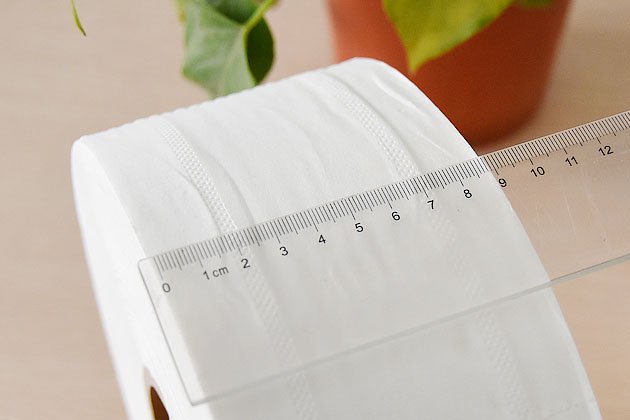
A sample compared by hand feel produces a preference; a sample compared on instruments produces a decision. The short list that covers most of the quality risk in toilet paper and facial tissue: GSM, measured rather than quoted, because the quote sheet’s figure is a claim; ply count, confirmed by separating layers rather than trusting the wrapper; sheet count and roll length, by unwinding one roll fully and counting; finished roll diameter and core specification, both decisive for dispenser fit and container cube; perforation quality, by tearing several sheets and looking for ragged or skipped lines; embossing definition, by comparing the pattern’s depth against the reference; brightness and any optical brightener claims, which the specification should state explicitly; and for facial tissue, dust and lint behavior under the rub test the dust and lint acceptance guide sets out. Wet strength matters if the product crosses into towel or kitchen roll territory, and the same measurement discipline that arbitrates a short-roll claim at the dock, described in the sheet-count verification article, applies to the sample in your hands now. Where a claim is regulated rather than physical, for example eco-label language printed on the packaging, the sample review should check the printed claim against a defined standard; Green Seal’s GS-1 standard for sanitary paper products is publicly published in full at greenseal.org, and a claim that cites it should be verifiable against the same document the inspector will read. Record every measurement against the factory’s name and round number, because the point of the exercise is not approving one sample but comparing factories and rounds on a single sheet of numbers.
Turning the Approved Sample Into a Clause
The sample stage ends, for commercial purposes, at the moment your written approval names a specific physical piece: this roll, this box, this artwork revision, dated, signed by both sides, and stored so a copy can travel with the inspection instruction. From there the clauses do the work. The specification exhibit references the approved sample by identifier, not by description, because “soft white 2-ply” is not a definition. The inspection clause measures the production run against that sample with the instruments named in the sample report, which is the linkage the pre-shipment inspection guide builds into the balance-release trigger. The sampling fee, if credited, appears in the payment schedule the payment terms article structures, so the credit on the first container actually happens. And the tolerance language is written with the sample in hand: how much GSM drift, how many points of brightness, how much embossing variation is acceptable before a lot fails, because those numbers cannot honestly be invented before the pieces exist and cannot be negotiated afterward. An approval sample without clause language is a photo opportunity; with it, it is the enforcement instrument the entire quality system hangs on.
FAQ
Will a Chinese tissue factory send free samples?
Stock samples in the factory’s standard specification are commonly free or low cost, with you paying international courier. Custom samples with your spec, artwork or packaging usually carry a sampling fee, often refundable against a first bulk order if agreed in writing beforehand.
Who pays the courier on samples?
Normally the buyer, and many factories ask you to route the shipment on your own DHL, FedEx or UPS account so duties and charging fall to your side of the document trail. Discussing a freight credit against the first order is common; assuming it is not.
How many sample rounds should I budget?
Three working rounds: stock references from several factories, one revised custom sample, and a pre-production sample from your allocated materials and tooling. Add a production sample from the actual run as the verification step, and plan roughly a week per round for courier transit.
What should I measure on a tissue sample?
GSM by scale, ply by separation, sheet count and roll length by unwinding one roll, roll diameter and core spec, perforation tear quality, embossing depth against a reference, brightness, and dust or lint behavior under a defined rub test. Write the results on one sheet per factory per round.
Is the sample fee ever refundable?
Often yes, against a first bulk order, but the terms differ enough that you should treat them as negotiable and put the exact credit in the quotation. A factory that credits samples openly is telling you it expects repeat business; one that does not is telling you something too. Either way, get the credit written into the quotation before you pay, because a verbal promise from a salesperson is not a term of the order.