On-Time-In-Full Penalties on Imported Tissue: How Importers Stop the Bleeding and Move the Risk Upstream
Short answer: never absorb a retailer’s OTIF deduction until you have reconstructed the timeline for each late container. Most chargebacks mix factory delay, freight delay and UK-side causes, and the split matters because it decides which part you can dispute with the retailer and which part belongs to the supplier or carrier under your purchase order. Fix the contract first, with delivery windows defined against booked appointments rather than vague target dates, a dispute window, and a cap; then build a weekly production-to-booking evidence flow from the factory so a date is never trusted until packing and booking confirmations support it. That combination converts penalty season from an invoice surprise into a reconciliation exercise.
Why Tissue Imports Are Structurally Prone to Late-and-Short Charges
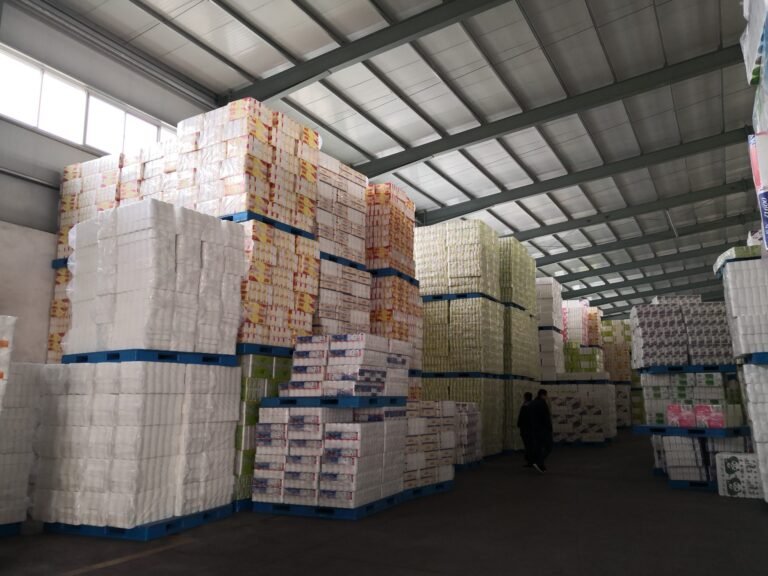
Tissue is the wrong product for a tight OTIF regime: high volume, low unit value, long ocean lead times from China, and retailer demand that spikes with promotions and seasonal resets. A container of private-label toilet paper or kitchen roll represents tens of thousands of cartons, but a three-day appointment miss can be charged per carton, so the penalty logic can outrun the product margin faster than importers expect. The structural cause is the gap between the retailer’s clock, which starts at the distribution center appointment, and the factory’s clock, which starts at production. Everything between them, booking availability, transshipment, customs, haulage, receiving congestion, sits on your margin unless you have allocated it in writing.
That is why the first line of defense is documentary, not logistical. Before chasing containers, make sure your buyer agreement defines on-time at the point you can actually influence. The UK grocery market runs on a supplier code of practice and a designated adjudicator overseeing delivery terms and deductions between the largest retailers and their direct suppliers; the specific body and its current standing shift with policy, so take guidance on your own agreement from the contract text and professional advice rather than from a summary. What does not shift is the principle: knowing exactly which window and which delivery event your contract measures turns a surprise chargeback into a reconciliation. And across every link in the chain, the delivery and cost boundaries you and the factory each control are set by the ICC Incoterms rules, which is why getting those onto the same page as the retailer’s clock is the earliest fix available.
Audit Every Chargeback Before You Accept It
Treat each deduction as a claim to be tested, not a bill to be paid. For every affected purchase order, pull the retailer’s contractual delivery window, not the requested date, and confirm what on-time actually means in your agreement: physical arrival, booked appointment, carrier arrival, or ASN submission. Some schemes also fail early delivery, which surprises importers who expedited at their own cost and then got charged anyway. Check whether the retailer contributed through appointment reschedules, receiving congestion or order amendments, and check whether the same cartons were charged twice, once for late and once for short. Verify the calculation basis, per carton, per order, or a percentage of invoice value, and look for, force-majeure wording, or a cap you can invoke. Where the evidence shows an isolated event with causes outside your control, a temporary waiver or reclassification request supported by a concrete recovery plan usually outperforms a payment protest by email.
The Claim File That Wins Reconciliations
Assemble one folder per container before the chargeback arrives, because documents retrieved after the fact read like excuses. It should hold the purchase order with the retailer’s delivery window; the factory’s production promise and daily completion report; the booking confirmation and container gate-in receipt, which separates origin delay from freight delay; the bill of lading and vessel schedule showing transshipment; the arrival notice, customs clearance record and delivery appointment, which isolate UK-side causes; the retailer’s appointment records and proof of delivery, to test their arithmetic; and the receiving count or ASN reconciliation, which defends the in-full half of the metric. The site’s guide to receipt and ASN reconciliation covers the counting discipline that feeds this file, and the same logic that audits an invoice against a packing list audits a penalty against a timeline.

Build the Early-Warning Flow With the Factory

Weekly production-plan updates are the fiction of most importer-factory relationships: they report intent, not reality. The structure that actually predicts late containers asks the factory for three dated things per order: a rolling completion percentage with carton counts, a packing-progress confirmation against the booked vessel, and a booking confirmation attached, not promised. No ship date counts as credible until those three agree. This is the same evidence discipline you use to verify a supplier’s real capacity before committing volume, applied continuously instead of at onboarding. Split large reorders across two sailings rather than betting one container on OTIF, and hold a small buffer of the retailer’s fastest-moving SKUs in your warehouse to survive one bad week without a promotion breach.
Pass the Risk Upstream Without Breaking the Supplier
A factory that feels it is being handed unlimited retail penalties will price that fear into your cartons or quietly deprioritize your orders, so make the pass-through proportional and evidenced. The balanced structure: production-window slippage caused by the factory accrues to the factory at the rate stated in the purchase order, capped per container; carrier and port events fall on the freight side per your Incoterms allocation; retailer-caused delays and force majeure sit with nobody. Require the same evidence pack from the factory, gate-in dates and booking records, so claims are mutual. Ask the supplier what they need to hit dates, because the fixes are usually capacity slots, earlier packaging-material commitments, or deposit timing, not fewer promises. When a mid-order change is unavoidable, run it through the change-control routine in the guide to mid-order change control, so one amendment does not silently poison a delivery window months later.
Do the Recovery Economics Per Container
When a miss is already unfolding, expedite with arithmetic rather than panic. Airfreight the narrow band of cartons where avoided penalty plus preserved margin plus delisting risk exceeds the premium; partial-ship the rest; split future orders across sailings; and tell the retailer a dated recovery plan before they compose the angry email. For low-value tissue, full-container airfreight almost never pays; for a contracted promotion with a hard date and a real shelf reset behind it, sometimes a fast few pallets buys the whole account another year. The judgment becomes routine once the timeline file exists, because you are no longer guessing whose delay it is and what it costs to beat.
Protect the In-Full Half Before It Becomes the Late Half
OTIF has two failures and importers obsess over the wrong one. Timing is visible; short-shipment is quiet and expensive, because a count discrepancy found at the distribution center reopens an order that already sailed, which converts a paperwork error into a fresh late delivery. The defense is counting at the only two moments you can see the truth: what the container actually held, from the packing list and the loading photos, and what your receipt actually recorded, from the same discipline you use to verify sheet counts when a roll runs short. Reconcile those against the ASN before the truck reaches the retailer, not after. A container with a clean timeline file but an unverified count is a chargeback waiting on a date. Once the count is trusted, the only variable left is schedule, which is the half your early-warning flow was built to control.
Talk to the Retailer Like a Partner Before You Pay Like a Defendant
Most chargebacks harden when they arrive as a surprise deduction, and soften when the retailer has already heard it coming. Where a miss is unfolding, a short proactive note with a dated recovery plan, which SKUs are covered, what is expedited, when the balance lands, converts an adversarial credit note into a joint problem. It also protects the next negotiation: a supplier who flags issues early and brings arithmetic earns the benefit of the doubt on ambiguous causes, and can more readily get a waiver or reclassification when the evidence shows an isolated, external event. Save the harder posture for the deductions that fail the audit, the duplicated, uncaused or unsupported ones, and pursue those through the dispute route your agreement provides. The pattern that keeps both margins and the account healthy is simple: evidence on every charge, honesty on the ones you genuinely caused, and a standing weekly conversation with the buyer that is not only happening when money moves.
Frequently Asked Questions
Can I pass my retailer’s OTIF penalty straight to the Chinese factory?
Only for the delay segment the factory caused, only at the rate your purchase order states, and only if your claim file proves origin slippage rather than carrier or UK-side causes. A blanket penalty pass-through without evidence damages the relationship and is usually commercially unsupportable.
Does being on time but short count as an OTIF failure?
Yes. On-time-in-full measures both, and short-shipment charges are the easiest to defend against once every container has a receipt count reconciled to the packing list and ASN, so build that reconciliation into receiving on day one.
How much stock should I hold to protect an OTIF score?
Enough buffer of the retailer’s fastest-moving SKUs to survive one missed sailing, usually a few weeks of cover, without over-investing in slow SKUs. The buffer is insurance against ocean variability, not a substitute for the evidence flow that prevents misses.