Short answer: under the EU General Product Safety Regulation (GPSR), formally Regulation (EU) 2023/988, private-label facial tissue cannot be placed on the EU market unless an economic operator established inside the Union is the “responsible person” for its safety. The duty sits first on an EU-established manufacturer; when the manufacturer is outside the EU, as your converter is, it passes to the EU importer, then a written authorised representative, then another EU-established operator such as a fulfilment service provider. A brand marketing under its own name is treated as the manufacturer, so a non-EU owner must appoint an EU responsible person. At the factory only artwork and paperwork change, not legal status; confirm every legal point against the current consolidated text and your EU counsel.
What the GPSR Asks Before Tissue Reaches an EU Shelf
The GPSR replaced the older product-safety directive, and that is why it now surfaces in buyer enquiries. One deliberate omission here: this article states no application date. The timing has moved during the transition, so read the current consolidated text on EUR-Lex with your counsel before you promise a buyer a date. What the regulation covers has not moved: it applies to consumer products broadly, and ordinary paper facial tissue is not one of the listed exclusions, which center on food, medicines and similar regimes. For anyone running GPSR private label tissue into the EU, the rule reads the same way: every product sold to EU consumers needs an identifiable EU-established operator accountable for its safety, plus identity and traceability details on pack. Verify the scope and date in the current consolidated text, because the enforceable version of any sentence here is the regulation: Regulation (EU) 2023/988 on EUR-Lex.
For ordinary, unmedicated tissue the GPSR does not on its face impose CE marking, which belongs to specific regimes with their own conformity rules. What applies instead is product-safety compliance, identity and traceability labeling, and an EU-established operator where the manufacturer sits outside the Union. The Commission keeps a plain-language overview worth reading before you brief a printer: the Commission's plain-language GPSR overview on its consumer-product-safety pages. If the tissue is lotioned, fragranced, or makes antimicrobial or baby-care claims, other rules may engage; that is for counsel, not a converter.
Who the Regulation Puts First: The Role Ladder
The GPSR does not accept “anyone willing to sign a letter.” It sets an order of preference for the duty, following whoever is closest to the product when it is placed on the market. An EU-established manufacturer is the responsible person and needs no separate appointment. If the manufacturer sits outside the EU, the role falls to the importer, then to an authorised representative appointed in writing, then to another EU-established operator who can be addressed, which in practice can be a fulfilment service provider.
| Who the regulation puts first | When the next role applies | What the factory must print for that role |
|---|---|---|
| EU manufacturer (or brand treated as manufacturer) | Moves to the importer only if no EU manufacturer exists | Brand name, registered mark, postal address, batch/lot identifier, from buyer artwork |
| EU importer | Manufacturer is outside the EU and no importer named | Importer name and address in the identity block; the converter prints, it does not appoint |
| Written authorised representative | No EU manufacturer and no EU importer in the chain | Representative name and address as a print element; the mandate stays between you and that entity |
| Other EU operator, e.g. fulfilment provider | None of the above exists for the product | That operator’s identity block and the batch coding field agreed in the purchase order |
Read the table as a decision aid, not a certificate. The middle column is the regulation’s logic; the last is only what a converter can do with artwork you provide. A plant does not become the responsible person by printing an address; the appointment and duty stay with you and your EU operator.
What Changes in the Purchase Order and Artwork
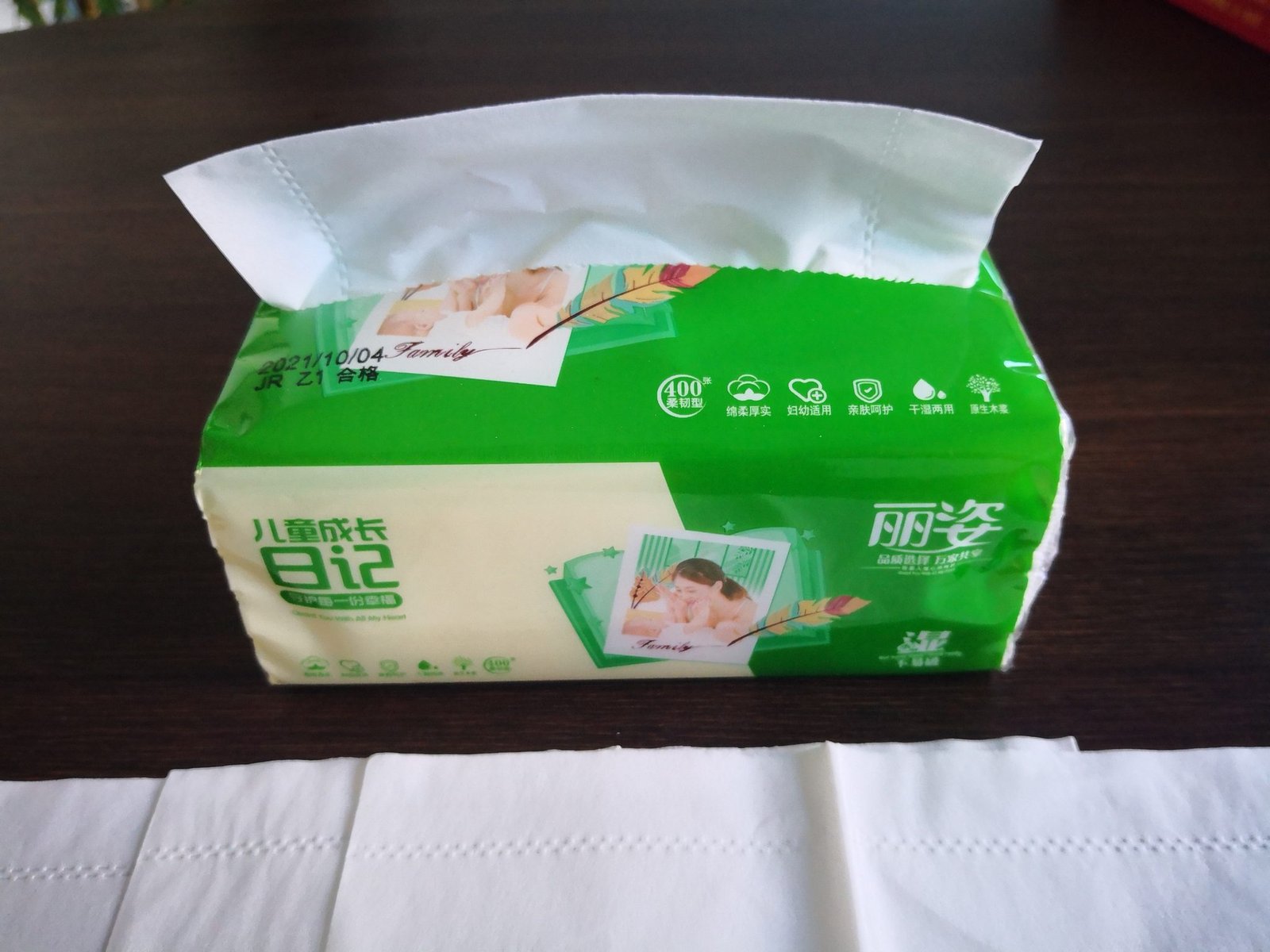
Private-label tissue is already artwork-driven packaging, a printed carton or printed PE sleeve, so the GPSR changes the content of the file, not the production route. The purchase order should name the EU entity acting as responsible person, so the address block given to the printer traces to a decided role. The print file must carry the identity block: brand name, registered mark, postal address, and, where the manufacturer is outside the EU, the responsible person’s name and address. You also agree a batch coding scheme plus the reserved field, because a per-run identifier makes a pack traceable.
There is a commercial consequence: printed outer packaging carrying a required address block and coding field is still governed by the same custom-print minimum as any printed carton or sleeve, one 40-foot high-cube container for printed packaging against a 20-foot container for plain white-label goods. Because plates and artwork are archived, a reorder keeping the same identity block carries no repeat plate fee; one that changes the address must re-approve the artwork first. Build the block into your first approval.
What the Factory Can Honestly Supply, and What It Cannot
A Chinese converter can supply the physical and documentary side: place your address block and batch field into the print file and run them; apply the batch code per your purchase-order scheme; keep production records tied to each run, the discipline behind your certification and QC report package; and hold those records for an agreed retention period. What it cannot do is stand in as the EU responsible person, take on the reporting duties that follow, or provide EU legal representation, because it is not established in the Union. Printing an address is not being that address.
The print work is the same OEM conversation as board choice, ink and film: the OEM and private-label program runs printed cartons and sleeves to your artwork, the vehicle the identity block rides on. The regulation changes what you require the pack to say, not what the factory can produce.
Traceability on the Pack: Name, Address, Batch
Traceability turns GPSR from abstraction into a print specification. A pack normally carries the manufacturer or brand name and address, the responsible person’s details where the manufacturer sits outside the EU, and information identifying a batch or series, so a single run can be pinpointed if a problem surfaces. Where the product cannot reasonably carry the details, the text contemplates them on the parcel or an accompanying document, and, for online sales, in the listing too.
Two boundaries keep this focused. The mechanics of building a recall-ready paper set and pulling a batch belong to the lot-traceability and recall-folder guide; GPSR gives that habit a legal reason. Whether the barcode you print is yours or your supplier’s is settled in who owns the GTIN on private-label tissue, which this article points to rather than repeats.

Marketplaces and Online Listings
Many private-label brands never take physical possession in the EU; goods move from the container to a marketplace fulfilment centre or a dealer warehouse while the owner sits outside the Union. Where no EU manufacturer, importer or authorised representative exists, the regulation contemplates another EU-established operator who can be addressed, and a fulfilment service provider is the usual candidate; treat it as a route to verify, not a default.
Distance-selling rules also push the on-pack identity details into the product listing, so the name and address you print must trace to a decided EU entity and appear in your listing fields. That job sits with you and the platform, not the converter, which has no visibility into, and no responsibility for, your Amazon or dealer listing data.
Reporting and Retention: Who Holds the Duty
The responsible person keeps information on product risks, cooperates with market-surveillance authorities, and informs them where there is reason to believe a product presents a risk, including reporting accidents. None of that transfers to the factory: a Chinese converter cannot notify EU authorities or act as their contact.
What the factory can do is retain records and the batch linkage for an agreed period and answer a trace-back fast enough for the responsible person to act inside the regulation’s clock. This separation pairs with the supplier liability certificate explainer, because insurance and a GPSR responsible person answer different questions: who is covered, and who is legally accountable.

Frequently Asked Questions
Does my Chinese tissue factory have to register under GPSR or act as the responsible person?
No. The GPSR requires an economic operator established inside the EU to be the responsible person for a consumer product; a converter located in China is outside the Union, so it cannot hold that role and does not offer it as a service. The factory can print the responsible-person name, address and batch identifier from artwork you supply and keep records for an agreed retention period. Appoint the EU operator yourself and confirm the requirement with your product-compliance counsel.
Do private-label facial tissues need CE marking because of GPSR?
For ordinary, unmedicated tissue the GPSR does not on its face impose CE marking, which comes from specific regimes with their own conformity rules. What applies instead is product-safety compliance, identity and traceability labeling, and an EU-established operator where the manufacturer is outside the EU. If the tissue is lotioned, fragranced, or makes antimicrobial or baby-care claims, other rules may engage, so verify each SKU against the current consolidated text and with counsel.
What exactly has to be printed on the pack for GPSR?
Typically the manufacturer or brand name and any registered trade name or mark with a postal address, the responsible person’s name and address where the manufacturer sits outside the EU, and information identifying a batch or series, with those details permitted on the product, packaging, parcel or an accompanying document where the pack cannot reasonably carry them, and mirrored in the listing for online sales. The precise list, format and fallbacks are legal-text detail to confirm, then hand to your printer as approved artwork.
Can my fulfilment service provider be the GPSR responsible person?
The ladder of responsible operators can, where no EU manufacturer, importer or authorised representative exists, point to another EU-established operator who can be addressed, and a fulfilment service provider handling the goods is the usual candidate. Treat it as a route to verify, not a default: confirm with the provider and your counsel that it will accept the role, and remember the converter that ships your cartons has no part in that appointment.