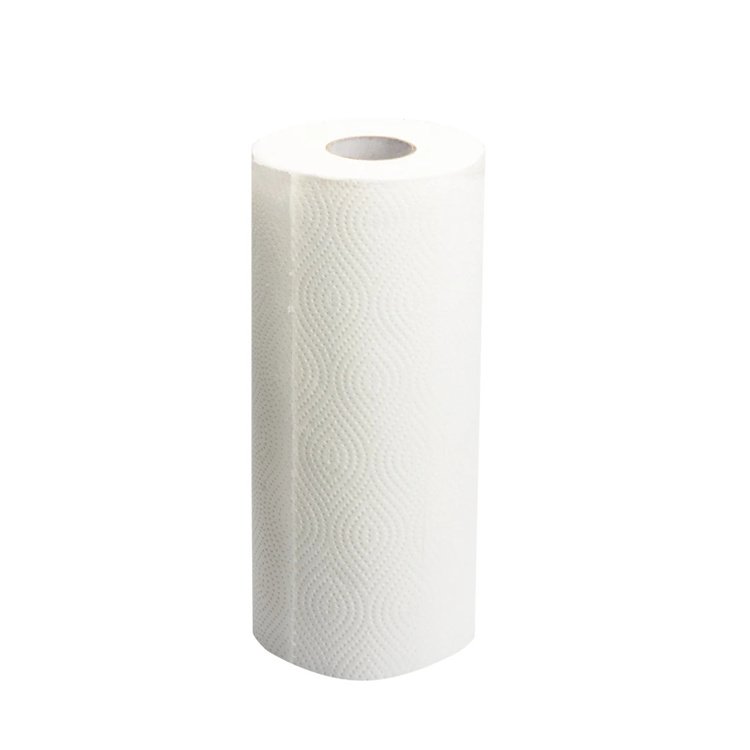
Food-plant buyers routinely ask suppliers for “cleanroom paper towels” for a packing area. The request is reasonable, and it is also a category mix-up that can waste a lot of procurement time: the wipes that genuinely belong in a graded cleanroom are not paper towels at all. Sorting out what “food-grade” and “cleanroom” actually mean — and which one a virgin-pulp paper towel can honestly deliver — is the first specification decision in any food-processing wiping program.
This guide sets the two categories straight, then gives the specs that matter for food-contact wiping in a plant: wet strength, absorbency, lint control, and the cleanliness of the furnish itself.
First, the Honest Distinction: Food-Grade Paper Towel vs Cleanroom Wipe
A paper towel and a cleanroom wipe are different products serving different contamination models. A paper towel is cellulose — wood fiber. A true cleanroom wipe for an ISO-graded space is usually a synthetic non-woven (polyester or polypropylene, or a cellulose-polyester spunlace) that is specifically tested for particle generation, because ordinary cellulose sheds fibers. The same logic is why plain cardboard is banned from graded cleanrooms: it continuously sheds cellulose particles.
We make virgin-wood-pulp paper towels, not particle-tested synthetic cleanroom wipes. We will not claim an ISO cleanliness class we do not hold. What we do make is a paper towel built for the food-processing reality — surfaces, equipment, spills, hands — where the requirement is food-contact safety and low lint, not a semiconductor fab particle count. If your application is genuinely a graded cleanroom, buy synthetic wipes and test them to a particle standard. If your application is a food plant, keep reading.
What “Food-Grade” Actually Requires of a Paper Towel
For food-contact and food-adjacent wiping, three properties of the furnish decide safety, and all three are build choices, not marketing words.
No recycled waste paper. Recycled furnish carries ink residues and variable fiber quality — a real risk the moment a towel touches food-contact surfaces. Every kitchen towel we run is 100% virgin wood pulp with a balanced long-to-short fiber ratio and no reclaimed material.
No fluorescent whitening agents or harmful additives. Brighteners and uncontrolled chemical additives have no business on a towel that dries hands that will handle food. Our environmental and hygiene baseline is no fluorescent agents and no harmful chemical additives, with the product specified food-contact safe.
Controlled dust. A towel that sheds paper dust into an open product line is a contamination event. We run a zero-dust micro-hole purification process that controls the paper-dust rate, which is the same protocol that makes the sheet suitable for high-standard, low-dust wiping.
Performance Specs: Wet Strength and Absorbency
Safety gets the towel allowed into the plant; performance gets it used. Two numbers carry the decision.
Wet-burst strength. A food-plant towel is soaked constantly — wiping a wet bench, drying damp hands, lifting a spill. A sheet that disintegrates when wet leaves pulp fragments on the surface it was cleaning. Our kitchen towels carry a wet-strength resin formula and long-fiber reinforcement so they do not break apart wet and leave no paper residue behind.
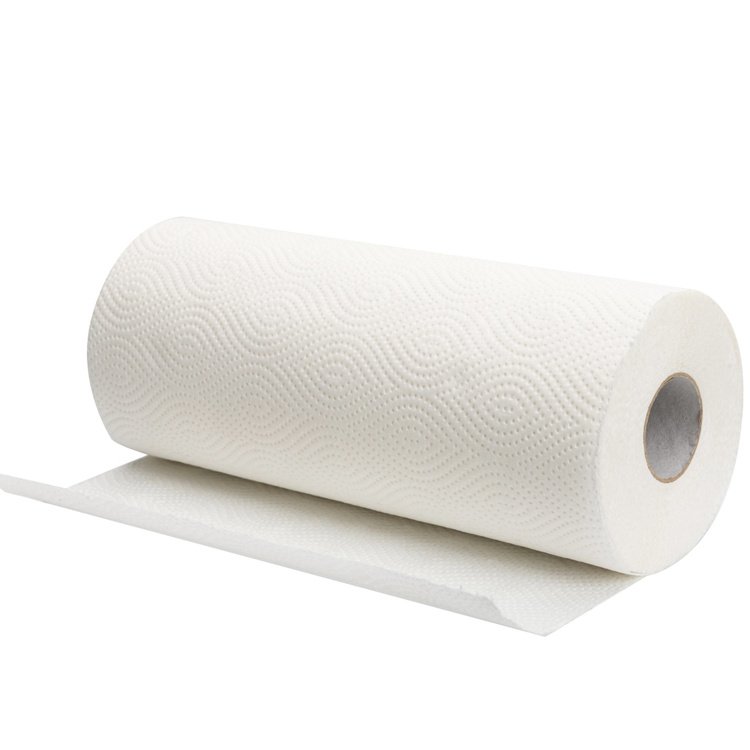
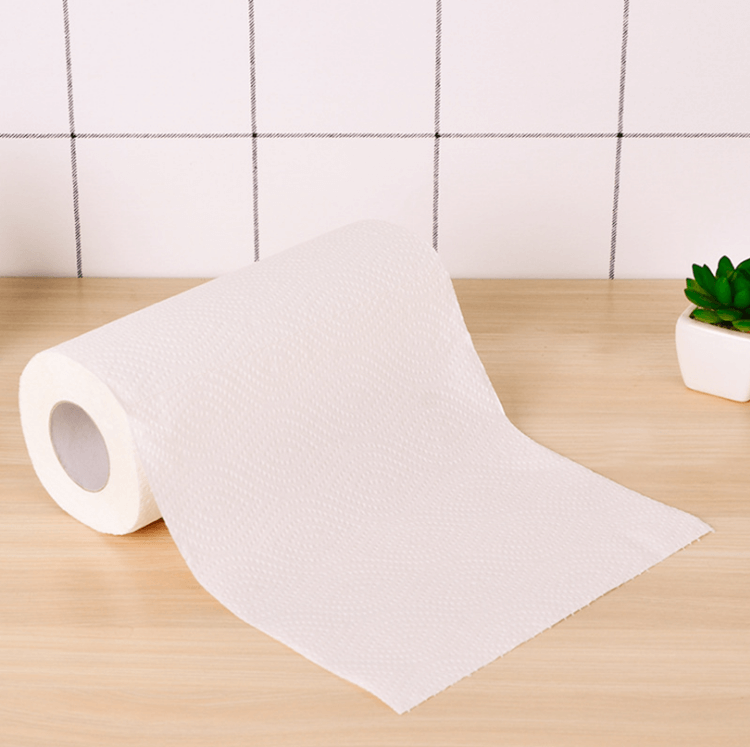
Absorbency and oil uptake. Food processing is wet and greasy. The 3D strong-absorbent net-pattern embossing on our kitchen line raises absorbency and oil-uptake efficiency by up to 40 percent versus a flat sheet, so one sheet does the job two would. Basis weight sits inside the factory’s 13 to 45 GSM portfolio range, specified per format.
Specifying It on a Purchase Order
The way to keep a food-grade program honest is to make the properties contract deliverables rather than adjectives on a quote.
- Furnish: state 100% virgin wood pulp, no recycled fiber, no fluorescent whitening agents — verifiable, not assumed.
- Performance: declare wet-strength target and the ply/GSM band, and ask for a batch wet-strength and burst-resistance test video, which we provide as a standard shipment deliverable.
- Cleanliness: require a virgin-fiber COA covering tensile strength and brightness, contract-provided with the order.
- Hygiene context: keep the cleanroom-vs-food-grade line explicit in the spec so nobody substitutes a particle-tested synthetic wipe or, worse, a dusty generic towel.
For the deeper wet-strength and GSM reasoning behind those numbers, the kitchen paper towel GSM and wet-strength spec guide is the reference, and how kitchen paper towels are made walks through the wet-strength resin and embossing process itself.
Packing for a Plant That Cannot Take Moisture
Food-grade intent collapses if the towel arrives damp. A moldy or water-spotted carton is a rejection at your door and a supplier dispute you did not need. Our ocean-freight standard uses high-strength thickened moisture-proof corrugated outer cartons, fumigation-free pallets and high-tensile strapping, and a container water- and airtightness check before loading, so the towels reach a dry plant dry. When you vet any paper-towel supplier on wet-performance claims, the guide to vetting wet-strength and absorbency claims covers the questions to ask before the container ships.
Order Terms for a Food-Grade Program
Food-grade kitchen towels follow the same factory terms as the rest of the line: unbranded white-label ships from a shared 20GP container, and a custom-printed program — your carton, your inner-pack — starts at one full 40HQ. Samples ship in 1 to 3 working days so a QA lead can run their own wet-strength and lint checks before committing volume, first production runs 25 to 30 working days, and reorders 20 to 25. The full food-contact line is on the kitchen paper towel product page.

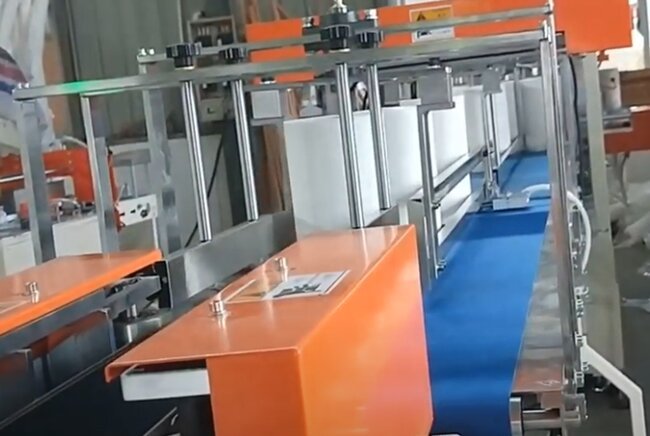
Video: precision tissue manufacturing process (Top Source Paper)
Frequently Asked Questions on Food-Grade Paper Towels
Is a food-grade paper towel the same as a cleanroom wipe?
No. Cleanroom wipes are particle-tested synthetic non-wovens; a paper towel is cellulose. For a graded cleanroom buy synthetic wipes; for a food plant buy a food-contact-safe, low-dust paper towel.
What makes a paper towel safe for food contact?
100% virgin wood pulp with no recycled fiber, no fluorescent whitening agents or harmful additives, and controlled paper dust through a zero-dust purification process.
How do I stop a towel shedding pulp on food surfaces?
Specify wet-burst strength and low lint, backed by a batch wet-strength test video, so the sheet stays intact when wet instead of leaving residue.
Can you prove the towels are virgin pulp?
Yes — contract a virgin-fiber COA (tensile and brightness) and a wet-strength test video as shipment deliverables.
For the sheet build behind those specs, see the 1-ply versus 2-ply kitchen paper towel comparison.