Walk into any airport terminal, hospital corridor, or university washroom and you will find one of two things on the dispenser: a standard roll that needs replacing every few days, or a jumbo roll that runs for weeks without intervention. The choice between them is not cosmetic. It drives maintenance labor, per-sheet cost, user satisfaction, and the frequency of supply deliveries across your facility.
This comparison breaks down the specification differences between jumbo toilet paper and standard rolls across the dimensions that matter to facility managers and janitorial distributors: roll diameter and meterage, ply and GSM, dispenser compatibility, cost per use, and the facility types where each format delivers the best return.
What Defines a Jumbo Toilet Paper Roll
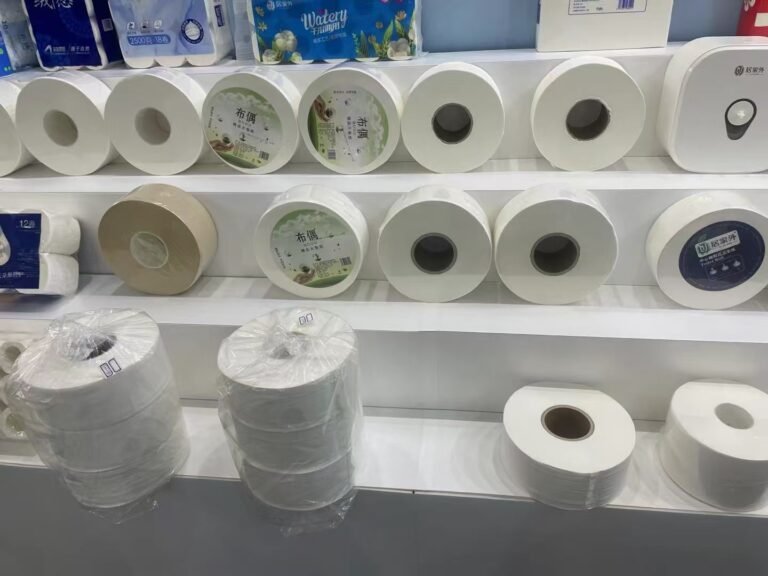
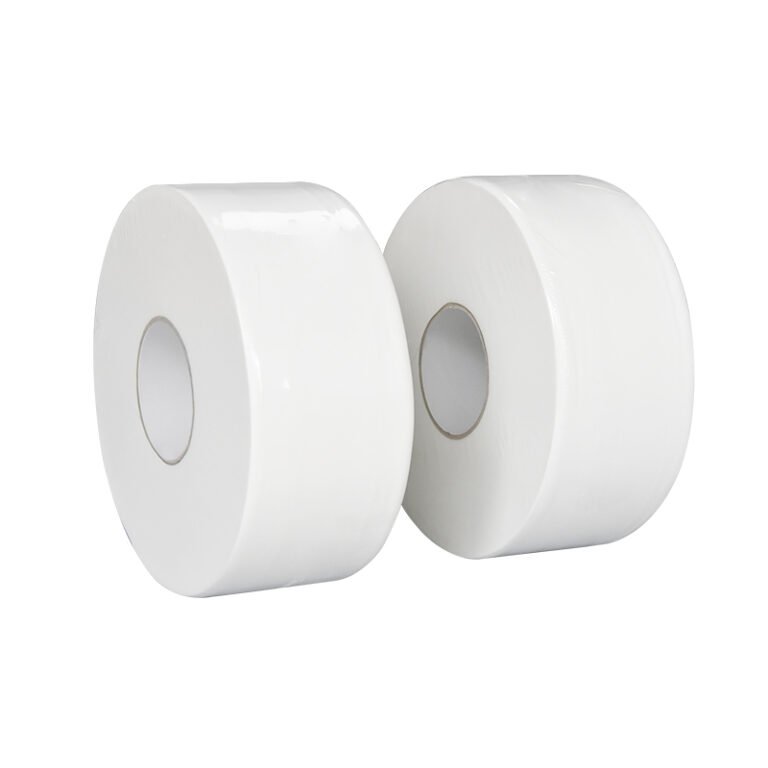
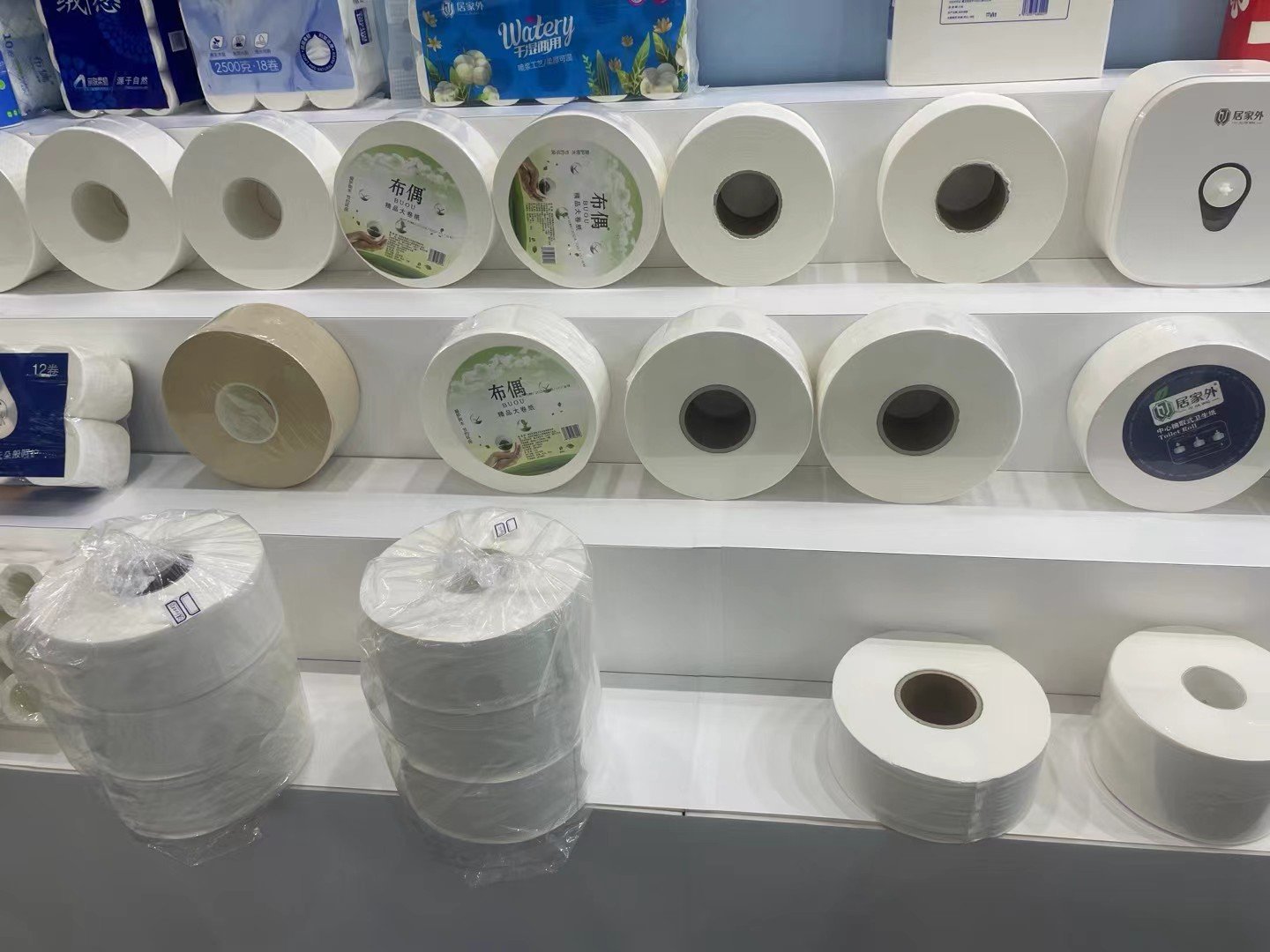
Jumbo toilet paper (also called JRT for jumbo roll tissue) is defined by its diameter. Standard commercial rolls typically measure 10–12 cm in diameter, while jumbo rolls range from 18–28 cm. The larger diameter means significantly more paper per roll, which translates directly into fewer changeouts and lower labor cost per sheet delivered.
A standard commercial roll contains roughly 50–80 meters of paper depending on ply and core size. A jumbo roll at 25 cm diameter holds 300–500 meters or more. In a high-traffic washroom that consumes 100 meters per day, a standard roll lasts less than one day while a jumbo roll lasts three to five days. The labor savings compound across a multi-building campus.
Both formats are manufactured from 100% virgin wood pulp at our facility, with the same embossing options (micro, edge, or deco point-to-point) and the same quality control standards. The difference is purely in form factor and the dispenser ecosystem each one serves.
Specification Comparison: Jumbo vs Standard Rolls
| Specification | Standard Roll | Jumbo Roll (JRT) |
|---|---|---|
| Diameter | 10–12 cm | 18–28 cm |
| Paper length | 50–80 meters | 300–500+ meters |
| Ply options | 1-ply, 2-ply, 3-ply | 2-ply, 3-ply (most common) |
| GSM range | 13–25 GSM | 15–30 GSM |
| Core type | Cardboard core or coreless | Large cardboard core (fits JRT dispenser) |
| Changeout frequency | Daily to every 2 days (high traffic) | Every 3–7 days (high traffic) |
| Dispenser type | Standard wall-mount, enclosed or open | JRT-specific enclosed dispenser with core adapter |
| Best suited for | Low-traffic, space-constrained, legacy installations | High-traffic, labor-optimized, new installations |
The ply and GSM ranges overlap between the two formats. Both are available in 100% virgin wood pulp, and both can be specified with the same embossing patterns. The practical difference is that jumbo rolls tend toward 2-ply at 18–25 GSM for commercial washrooms, while standard rolls span a wider range from economy 1-ply to premium 3-ply.
Cost Per Use: The Real Economics
Comparing price per roll is misleading. A jumbo roll costs more per unit than a standard roll, but the relevant metric is cost per meter of paper delivered, and then cost per use in your specific facility.
Here is the calculation framework:
- Cost per meter: Divide the roll price by its meterage. Jumbo rolls typically deliver a lower cost per meter because the manufacturing and packaging cost per unit of paper decreases at larger roll sizes.
- Labor cost per changeout: Each roll change requires a maintenance visit. In a 50-restroom facility using standard rolls changed daily, that is 50 visits per day. Switching to jumbo rolls at 5-day intervals reduces that to 10 visits per day. At typical janitorial labor rates, this saves thousands of dollars per month.
- Supply delivery frequency: Fewer changeouts mean fewer supply deliveries to the facility, which matters for distributors managing logistics across multiple client sites.
For facilities evaluating a switch to jumbo roll tissue, the payback period is almost immediate once you factor in labor savings, even though the per-unit roll price is higher.
Dispenser Compatibility and Retrofit Considerations
The single largest barrier to switching formats is dispenser compatibility. Standard rolls and jumbo rolls use different dispensers, and the existing dispenser fleet represents a sunk cost that facilities are reluctant to abandon.
For new construction or full washroom renovations, the recommendation is straightforward: specify jumbo roll dispensers from the start. The labor savings over the life of the installation far exceed the incremental dispenser cost.
For existing facilities with standard roll dispensers already installed, the switch to jumbo requires replacing the dispensers. This is a capital expense that needs to be weighed against ongoing labor savings. Most facilities phase the transition: convert the highest-traffic washrooms first (airports, stadiums, hospitals) where the labor savings are largest, then expand to moderate-traffic areas as budget allows.
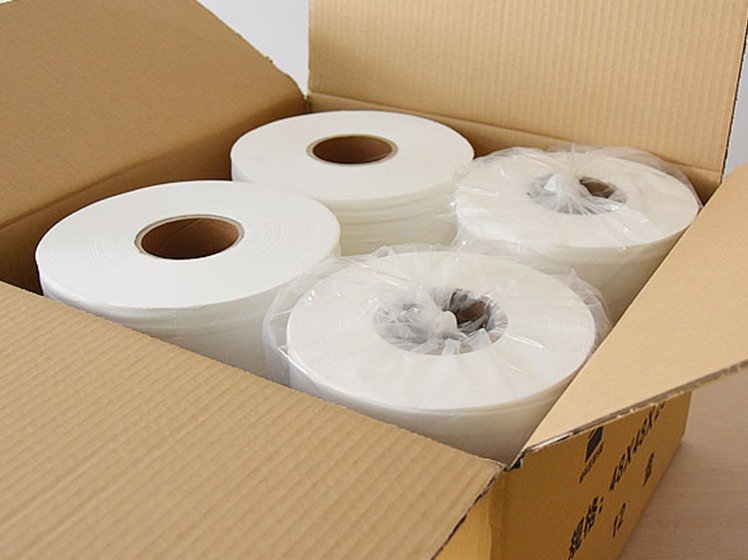
Core size matters within the jumbo format as well. JRT dispensers accept specific core diameters, and rolls must be manufactured to match. Our jumbo rolls are produced to standard core dimensions that fit the most common commercial JRT dispenser systems. If you are unsure about compatibility, request a sample roll to test in your existing dispensers before placing a container order.
Which Facility Types Benefit Most from Jumbo Rolls
Not every facility benefits equally from jumbo rolls. The format pays off most when three conditions align: high daily traffic, multiple washroom stations, and labor cost sensitivity.
High-benefit facilities: Airports, hospitals, universities, large office buildings, stadiums, shopping malls, and factory washrooms. These locations consume 100+ meters of toilet paper per day per station, making the changeout reduction from daily to weekly a significant operational improvement.
Moderate-benefit facilities: Hotels, restaurants, mid-size offices, and retail stores. Traffic is moderate and changeout labor is often part of a broader cleaning routine. Jumbo rolls still save money, but the payback period is longer.
Low-benefit facilities: Small offices, single-restroom shops, and residential buildings. Traffic is low enough that standard rolls last a week or more, and the dispenser investment is hard to justify.
Ordering and Sourcing
Both jumbo toilet paper and standard rolls follow the same ordering structure from our factory. White-label orders start at one 20GP container; custom-printed packaging requires one 40’HQ container minimum. First production runs take 25–30 working days; reorders take 20–25 working days. Sampling is completed within 1–3 working days.
Many distributors order both formats in mixed containers to serve their full customer base. A typical first order might include jumbo rolls for commercial clients and standard rolls for retail and hospitality accounts, shipped together in one 40’HQ to optimize freight cost.
Trade terms are available as FOB, CIF, CFR, or EXW from Tianjin Xingang Port. Payment follows the standard 30% T/T deposit plus 70% before shipment structure. Each shipment includes a COA confirming 100% virgin wood fiber, along with pre-shipment inspection photos and container loading documentation.
For facility managers or distributors comparing jumbo toilet paper against standard rolls for a specific project, our team can provide specification sheets, dispenser compatibility guidance, and sample rolls for testing. Reach out at info@chinatoiletpaper.com or WhatsApp +86-13180210660.
After format, the next dial to set is ply: 2-ply versus 3-ply jumbo roll tissue weighs strength against yield.
Frequently Asked Questions
What is the main difference between jumbo toilet paper and standard rolls?
Jumbo toilet paper rolls have a diameter of 18–28 cm and contain 300–500+ meters of paper, compared to 10–12 cm and 50–80 meters for standard rolls. The larger format reduces changeout frequency from daily to every 3–7 days in high-traffic washrooms.
Can I use jumbo rolls with my existing dispensers?
Jumbo rolls require JRT-specific dispensers with matching core diameters. They are not compatible with standard roll dispensers. If you are switching formats, plan for dispenser replacement alongside the roll supply order.
Is jumbo toilet paper more cost-effective than standard rolls?
On a per-meter basis, jumbo rolls typically cost less. When labor savings from reduced changeouts are included, the total cost of ownership is significantly lower for high-traffic facilities. The per-unit roll price is higher, but the cost per use is lower.
What ply and GSM options are available for jumbo rolls?
Jumbo rolls are most commonly specified in 2-ply at 18–25 GSM for commercial washrooms. Both 2-ply and 3-ply options are available, manufactured from 100% virgin wood pulp with the same embossing and quality control standards as standard rolls.
What is the MOQ for ordering jumbo toilet paper?
White-label jumbo toilet paper starts at one 20GP container. Custom-printed packaging requires one 40’HQ container minimum. Lead time is 25–30 working days for first orders and 20–25 working days for reorders.

To size jumbo capacity against real footfall and change-out labor, see the high-traffic jumbo sizing guide.
Once jumbo beats standard rolls for the venue, the order still has to survive an audit; see the jumbo toilet paper rolls wholesale quote audit.