Not every paper towel manufacturer delivers what their spec sheet promises. Buyers who have sourced kitchen towels from overseas suppliers know the frustration: samples pass initial checks, but bulk shipments arrive with sheets that disintegrate under light moisture or absorb far less than advertised. The root cause is rarely a single defect—it is usually a combination of inflated wet-strength claims, unverified absorbency data, and missing quality documentation.
If you are evaluating paper towel manufacturers for commercial or retail supply, this guide gives you the technical framework to separate verified producers from those cutting corners. Every metric below can be confirmed through third-party testing or factory audit documentation.
Wet-Burst Strength Explained
Wet-burst strength measures how much force a saturated paper towel can withstand before rupturing. It is the single most important performance indicator for kitchen paper towels because it directly determines whether the product holds up during real-world use—wiping spills, handling wet food, or cleaning greasy surfaces.
The test follows standardized methods such as ISO 3786 or TAPPI T403. A clamped sample is saturated with water, then a steel ball is pushed through at a controlled rate. The peak force (measured in kPa or mN) is recorded. For commercial-grade kitchen towels made from 100% virgin wood pulp, expect wet-burst values between 200 and 400 kPa depending on GSM and ply count.
Manufacturers achieve wet strength through wet-strength resin additives—typically polyamide-epichlorohydrin (PAE)—applied during the papermaking process. Top Source Paper applies food-contact-safe wet-strength resin to its kitchen towel line, achieving a documented 40% absorbency improvement over untreated alternatives while maintaining compliance with food-safety standards.
Absorbency Testing Methods
Absorbency is not a single number. Reputable paper towel manufacturers report it using at least two complementary methods:
- Water absorption capacity (g/g): Measures how many grams of water one gram of dry towel absorbs. Industry range for kitchen towels is 5–10 g/g.
- Capillary rise (mm/10 min): Shows how quickly liquid wicks upward through the sheet. Higher values indicate faster spill pickup.
Ask your supplier to provide both metrics from an accredited lab. Self-reported figures without a lab name, test date, and method reference should be treated as marketing, not data. When comparing manufacturers, normalize absorbency against GSM—a heavier sheet naturally absorbs more, so the meaningful comparison is absorption efficiency (g absorbed per gram of basis weight).
Embossing Patterns and Their Role
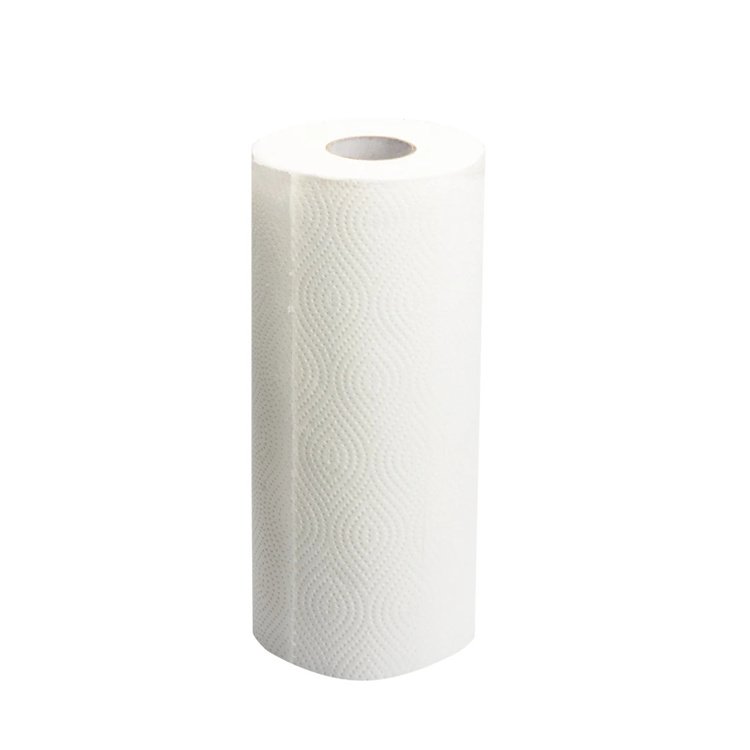
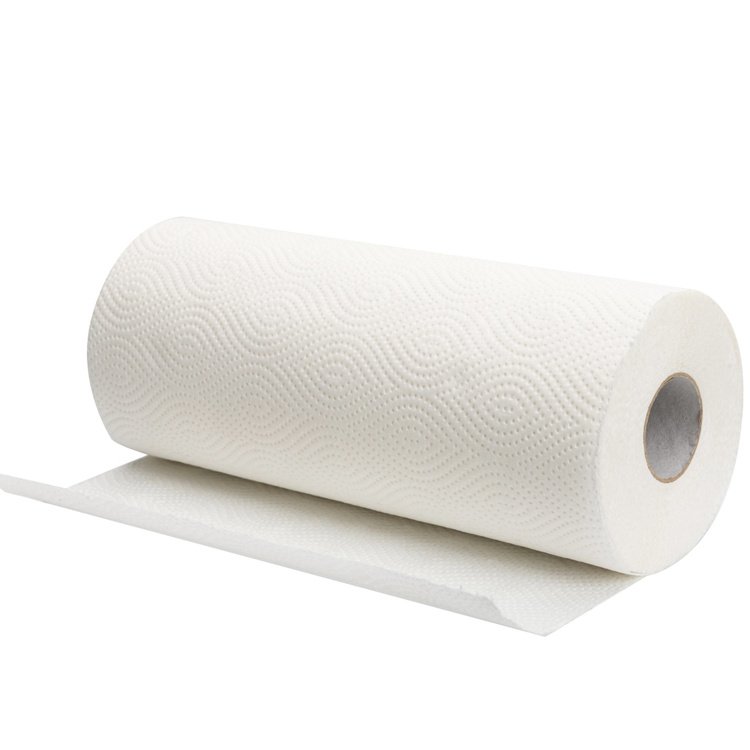
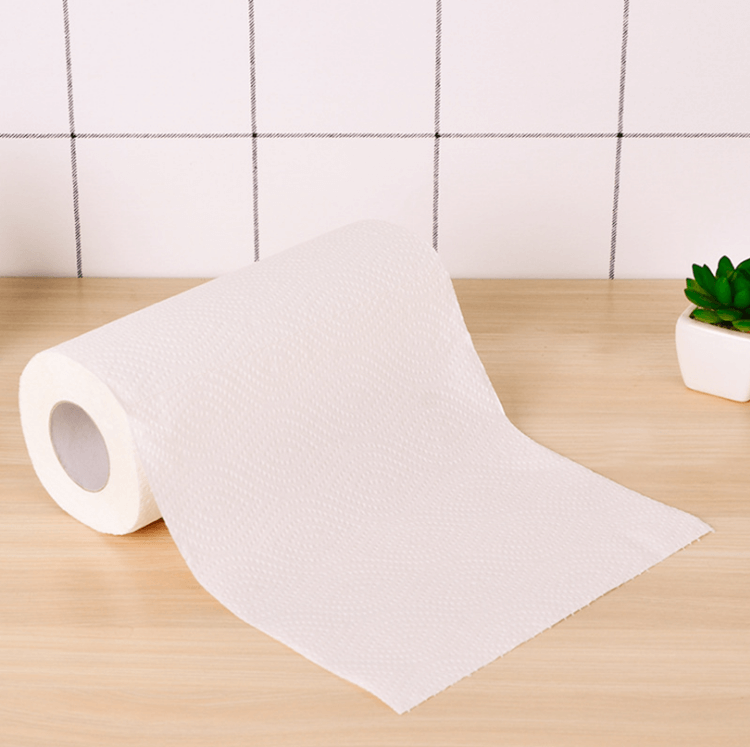
Embossing is not purely aesthetic. The pattern pressed into the towel surface creates micro-channels that increase effective surface area and capillary action. Common patterns include:
- Diamond/quilted: Balanced strength and absorbency; widely used for all-purpose kitchen towels.
- Linear/channel: Maximizes directional wicking; preferred for heavy-spill environments.
- Dot/micro-emboss: Adds bulk and softness without significantly increasing material cost.
When vetting manufacturers, request embossed vs. non-embossed test results side by side. A credible producer will have this data ready because they use embossing as a calibrated performance variable, not just a decorative afterthought.
GSM vs. Performance
Grams per square meter (GSM) sets the baseline for paper towel cost and performance. Top Source Paper produces kitchen paper towels in the 13–45 GSM range across 1-ply, 2-ply, and 3-ply constructions. Here is how GSM maps to typical applications:
| GSM Range | Ply | Typical Use Case |
|---|---|---|
| 13–20 | 1-ply | Light-duty dispensers, budget food service |
| 20–30 | 2-ply | Standard retail and institutional kitchen towels |
| 30–45 | 2–3-ply | Premium retail, heavy-duty commercial cleaning |
Do not assume higher GSM always means better value. A well-engineered 25 GSM sheet with optimized embossing and wet-strength resin often outperforms a plain 35 GSM sheet in both absorbency speed and wet durability. Always request matched performance data alongside the GSM specification.
QC Documentation to Demand
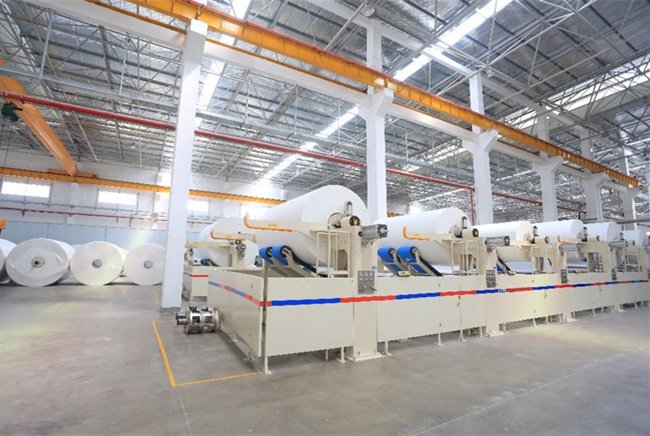
Reliable paper towel manufacturers operate a multi-stage quality control system. At minimum, require documentation covering three checkpoints:
- Parent roll inspection: Basis weight, moisture content, and tensile strength tested on each parent roll before converting.
- In-process monitoring: Embossing pressure, perforation alignment, and resin dosage verified during production runs.
- Pre-shipment audit: Random sampling from finished cartons for wet-burst, absorbency, sheet count, and packaging integrity.
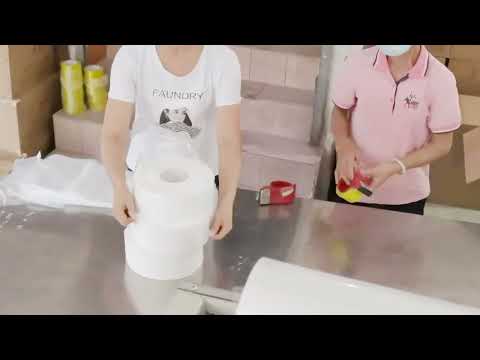
Top Source Paper operates a 3-stage QC protocol (parent roll → in-process → pre-shipment) on every production run. Ask any prospective supplier to share a recent Certificate of Analysis (COA) and pre-shipment inspection report before placing a trial order. If they cannot produce these documents within 48 hours, treat it as a red flag.
Red Flags When Vetting Paper Towel Manufacturers
Use this checklist during supplier evaluation. Any single item warrants deeper investigation; multiple items suggest systemic risk:
- No third-party lab reports: All performance data is self-declared without external verification.
- Vague MOQ or lead time: Cannot specify minimum order quantities or commit to a production timeline. Top Source Paper offers white-label orders from one 20GP container and custom-print orders from one 40’HQ container, with first-order lead times of 25–30 working days and reorders in 20–25 working days.
- No food-safety certification: Kitchen towels contact food surfaces. Suppliers must hold valid food-contact compliance documentation.
- Refuses sampling: Legitimate manufacturers provide samples within 1–3 days. Delays beyond a week signal either low confidence in product quality or no active production line.
- Payment terms demand 100% upfront: Standard B2B terms are 30% T/T deposit with 70% balance before shipment. Full prepayment removes your leverage.
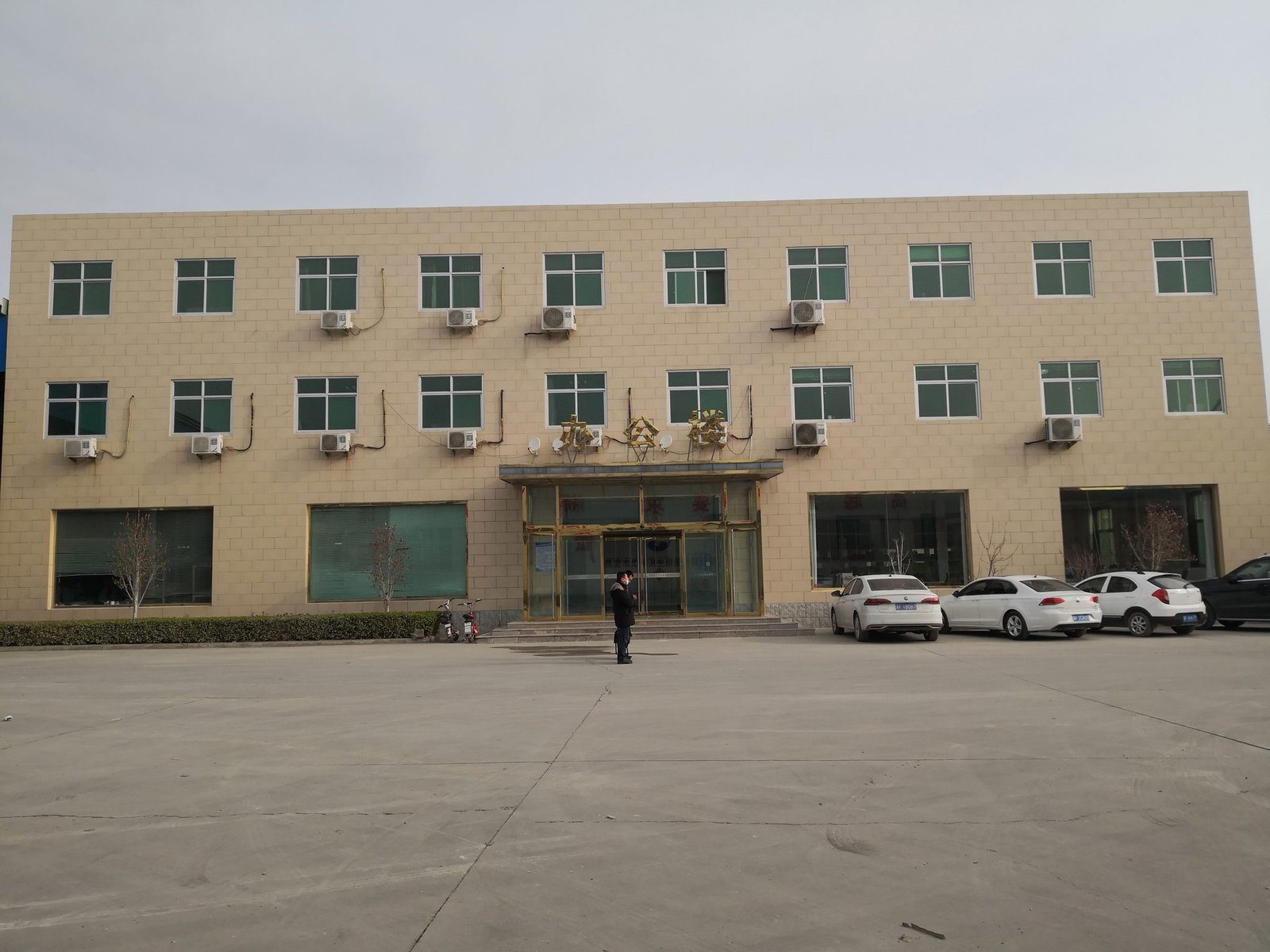
- No verifiable factory address or export history: Request business license, export records, or a video factory tour. Established manufacturers like Top Source Paper with 18+ years of experience welcome transparency.
For a detailed specification reference including GSM and wet-strength benchmarks, see our companion guide on kitchen paper towel GSM and wet-strength specifications.
If you are ready to evaluate a manufacturer that meets the criteria above, explore Top Source Paper’s full kitchen paper towel product range to review available GSM options, ply configurations, and custom printing capabilities.
Frequently Asked Questions
What is the standard wet-burst strength for commercial kitchen paper towels?
Commercial-grade kitchen paper towels made from 100% virgin wood pulp typically achieve wet-burst strength between 200 and 400 kPa, depending on GSM, ply count, and wet-strength resin formulation. Always request ISO 3786 or TAPPI T403 test reports from your supplier.
How do I verify absorbency claims from a paper towel manufacturer?
Request third-party lab reports showing water absorption capacity (g/g) and capillary rise (mm/10 min). Normalize results against GSM for fair comparison. Reports should include lab name, test date, and method reference.
What MOQ should I expect from Chinese paper towel manufacturers?
MOQ varies by customization level. White-label orders typically start at one 20GP container. Custom-printed orders usually require one 40’HQ container. Sampling takes 1–3 days from established manufacturers.
Why does embossing matter for kitchen towel performance?
Embossing increases effective surface area and creates micro-channels that improve capillary action. Different patterns optimize different properties: diamond for balance, linear for directional wicking, dot for bulk and softness.
What payment terms are standard when sourcing paper towels from China?
Industry-standard terms are 30% T/T deposit with 70% balance paid before shipment. Avoid suppliers demanding 100% prepayment. Shipping terms typically include FOB, CIF, CFR, and EXW from Tianjin Xingang port.
Buyers in food-processing settings face an additional distinction: food-grade paper towel vs cleanroom wipe specs covers it honestly.
Ready to source kitchen paper towels with verified performance data? Contact Top Source Paper at info@chinatoiletpaper.com or WhatsApp +86-13180210660 to request samples, COA documentation, and a detailed quotation. Our team responds within one business day.