
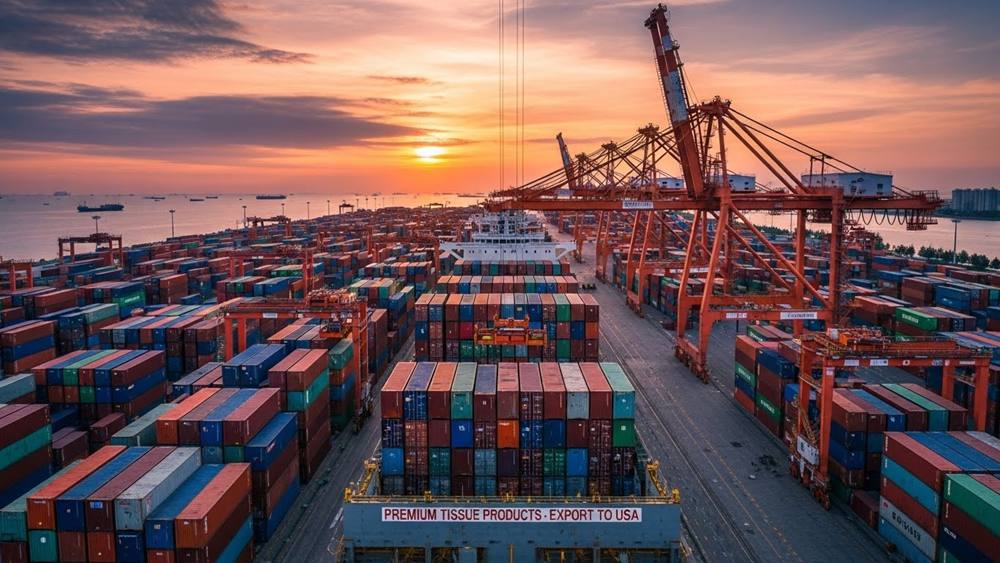
Global procurement managers are increasingly turning to Southeast Asia as they seek to diversify tissue supply chains and mitigate rising operational costs. Vietnam has quickly transitioned from a net importer to a major regional manufacturing hub, supported by a projected 11% annual growth rate through 2026. By utilizing some of the most advanced machine fleets in Asia, these facilities provide the scale and quality required to serve high-volume markets in the United States, Australia, and across Europe.
We examine the leading players in the market, from Saigon Paper Corporation to specialized exporters like Xuan Mai Paper, to help you identify the right partners for your needs. This overview covers production capacities, logistics efficiency through major ports in Hai Phong and Ho Chi Minh City, and the growing emphasis on sustainable fibers. Understanding how Vietnam reached $199 million in toilet paper exports in 2022 offers a clear roadmap for businesses looking to leverage the country’s manufacturing advantages.
Top 10 Manufacturers and Export-Ready Mills in Vietnam
Quick Comparison: Top Picks
| Manufacturer | Location | Core Strength | Verdict |
|---|---|---|---|
| Top Source Hygiene | Mancheng, Baoding (Global Shipping) | Toilet Paper, Jumbo Roll Tissue, Kitchen Towels, Facial Tissues, Napkins | Premier choice for high-capacity factory-direct OEM/ODM with global standards. |
| Saigon Paper Corporation | Ho Chi Minh City, Vietnam | Toilet tissue paper, parent jumbo rolls, sanitary paper | Leading market share holder in Vietnam with flexible OEM manufacturing capabilities. |
| Xuan Mai Paper Co., Ltd | Ho Chi Minh City, Vietnam | Toilet tissue paper parent jumbo rolls | Expert wholesaler specializing in advanced technology for high-quality jumbo rolls. |
| Stavian Tissue | Vietnam | Toilet paper, tissue products | Top recommendation for sustainability and international FSC-certified exports. |
| Chanh Duong Paper | Vietnam | Pulp and paper, sanitary paper | Major industrial capacity with a strong integrated raw material supply chain. |
| VinaKraft | Binh Duong, Vietnam | Paper, packaging, sanitary paper | Massive annual capacity utilizing advanced Japanese and Thai manufacturing technology. |
| SGP (Saigon Green Paper) | My Xuan A Industrial Park, Vietnam | Sanitary paper (toilet rolls, tissues, napkins) | Strong local brand recognition with a massive 30% household market share in Vietnam. |
| Dong Hai Ben Tre | Ben Tre, Vietnam | Pulp and paper, sanitary products | One of the largest local enterprises with high potential for ASEAN market expansion. |
| Cheng Loong Binh Duong Paper | Binh Duong, Vietnam | Industrial paper, household paper (tissue) | Billion-dollar scale facilities designed for high export readiness and modern production. |
| An Binh Paper | Vietnam | Tissue paper, sanitary paper | Highly specialized and agile producer perfect for sourcing agents and targeted segments. |
Top Source Hygiene
Top Source Hygiene operates as a direct factory partner, drawing on three decades of manufacturing experience to produce high-volume paper goods. Based in Mancheng, their facility manages a significant monthly output of 2,860 tons to meet the needs of large-scale commercial buyers and retail brands. This direct-from-source model eliminates intermediary costs and gives clients better oversight of the production timeline for essential products like jumbo rolls and kitchen towels.
The company handles the technical demands of private labeling by offering full customization for ply count, sheet size, and packaging. They maintain rigorous quality control through ISO 9001 and FDA certifications, ensuring that shipments meet the safety requirements of international markets. This combination of massive scale and verified compliance helps global distributors minimize stock shortages and maintain a consistent standard across their inventory.
At a Glance:
- 📍 Location: Mancheng, Baoding (Global Shipping)
- 🏭 Core Strength: Toilet Paper, Jumbo Roll Tissue, Kitchen Towels, Facial Tissues, Napkins
- 🌍 Key Markets: North America, Europe, Asia, Africa, South America, Oceania
Why We Picked Them:
| ✅ The Wins | ⚠️ Trade-offs |
|---|---|
|
|
Saigon Paper Corporation
Saigon Paper Corporation has built a massive infrastructure since 1997, positioning itself as a cornerstone of the paper industry in Southeast Asia. By operating large-scale mills with integrated production lines, the company maintains strict factory control over the entire manufacturing process, from raw pulp processing to final packaging. This level of vertical integration allows them to offer consistent quality across both parent jumbo rolls and consumer-ready sanitary products, ensuring that international buyers receive goods that meet rigorous industrial standards.
For businesses looking to source from Vietnam, partnering with an established leader like Saigon Paper significantly reduces supply chain risks. Their dominant market share in the sanitary sector is a testament to their reliable local execution and ability to scale production to meet high-volume demands. Whether providing flexible OEM specifications for global brands or supplying raw materials for other manufacturers, their operational transparency and decades of experience provide the stability needed for long-term procurement partnerships.
At a Glance:
- 📍 Location: Ho Chi Minh City, Vietnam
- 🏭 Core Strength: Toilet tissue paper, parent jumbo rolls, sanitary paper
- 🌍 Key Markets: Domestic Vietnam, international exports
Why We Picked Them:
| ✅ The Wins | ⚠️ Trade-offs |
|---|---|
|
|
Xuan Mai Paper Co., Ltd
Xuan Mai Paper Co., Ltd has established a significant presence in the Vietnamese industrial landscape since 2004. Operating out of a four-hectare facility within the Hiep Phuoc Industrial Park, the company maintains tight control over the entire production cycle. This localized execution allows the team to monitor quality standards directly at the source, ensuring that every jumbo roll meets specific technical requirements. By managing their own manufacturing and conversion processes, the company reduces the risks often associated with third-party sourcing and supply chain fragmentation.
The company functions as a primary wholesaler and exporter, catering to both domestic needs and international markets. The facility handles high-volume demands, particularly for toilet tissue paper parent jumbo rolls. This industrial scale provides stability for partners looking for consistent supply and rigorous factory-level oversight. A long-standing tenure in Ho Chi Minh City suggests a deep understanding of regional logistics and a refined manufacturing workflow that prioritizes output reliability and material integrity.
At a Glance:
- 📍 Location: Ho Chi Minh City, Vietnam
- 🏭 Core Strength: Toilet tissue paper parent jumbo rolls
- 🌍 Key Markets: Domestic and international
Why We Picked Them:
| ✅ The Wins | ⚠️ Trade-offs |
|---|---|
|
|
Stavian Tissue
Stavian Tissue operates as a major manufacturer in Vietnam, specializing in toilet paper and high-grade tissue products for wholesale markets. The company maintains strict control over its production lines to ensure every batch meets the rigorous demands of international retailers. By managing local factory operations directly, they provide a reliable source for businesses looking to secure high-volume paper goods without the typical risks associated with third-party sourcing.
This manufacturer builds its reputation on meeting global certification standards, specifically FSC requirements for sustainable forest management. They streamline the export process for partners in Southeast Asia and beyond, reducing the logistical hurdles of international sourcing. Because they oversee the entire manufacturing process, they offer transparent quality control and risk reduction for brands that require eco-friendly documentation for their supply chains.
At a Glance:
- 📍 Location: Vietnam
- 🏭 Core Strength: Toilet paper, tissue products
- 🌍 Key Markets: Global exports, Southeast Asia
Why We Picked Them:
| ✅ The Wins | ⚠️ Trade-offs |
|---|---|
|
|
Chanh Duong Paper
Chanh Duong Paper operates as a cornerstone of Vietnam’s industrial landscape, specializing in the large-scale production of pulp and paper. By maintaining substantial industrial capacity, the company ensures high-volume output specifically tailored for the sanitary and industrial sectors. This scale allows for localized execution that minimizes the logistical hurdles often associated with cross-border sourcing, providing a stable foundation for partners who prioritize direct factory control within the Southeast Asian region.
The facility boasts a specialized infrastructure designed to streamline the manufacturing of toilet tissue and related applications. This setup helps reduce operational risks by securing a reliable supply chain from raw materials to finished goods. By focusing on both industrial and sanitary paper, Chanh Duong provides a versatile production hub that meets strict quality standards while maintaining the efficiency required for heavy industrial demands.
At a Glance:
- 📍 Location: Vietnam
- 🏭 Core Strength: Pulp and paper, sanitary paper
- 🌍 Key Markets: Domestic Vietnam
Why We Picked Them:
| ✅ The Wins | ⚠️ Trade-offs |
|---|---|
|
|
VinaKraft
VinaKraft operates as a significant joint venture between Thailand’s Siam Cement Group and Japan’s Rengo, bringing heavy-industry expertise to the Binh Duong region. The facility manages the entire production cycle through integrated technology, ensuring that every batch of paper meets specific technical standards. This partnership allows for tight factory control over the manufacturing process, which directly supports businesses looking for stable, high-volume supply chains within Vietnam.
By leveraging the combined resources of its Thai and Japanese parent companies, the plant maintains a massive 500,000-ton annual capacity. This scale helps reduce risks associated with supply shortages for large-scale exporters and domestic distributors. The company focuses on high-grade packaging and sanitary paper, providing consistent quality that caters to both the local Vietnamese market and international shipping requirements.
At a Glance:
- 📍 Location: Binh Duong, Vietnam
- 🏭 Core Strength: Paper, packaging, sanitary paper
- 🌍 Key Markets: Domestic and exports
Why We Picked Them:
| ✅ The Wins | ⚠️ Trade-offs |
|---|---|
|
|
SGP (Saigon Green Paper)
SGP operates as one of the four largest industrial paper mills in Vietnam, maintaining direct control over high-volume production at their My Xuan A facility. This massive scale allows them to dominate the local sanitary paper sector, supplying everything from bulk toilet rolls to specialty facial tissues. By managing the entire manufacturing process in-house, they ensure consistent quality standards and reliable factory control that smaller distributors often lack.
Their nationwide distribution network supports large-scale local execution while they begin expanding their reach into international markets. Working with an established mill of this size reduces supply chain risks because they have the infrastructure to handle high-demand orders without relying on third-party intermediaries. While they focus heavily on the domestic market, their increasing export capacity makes them a stable option for regional buyers seeking high-volume paper supplies.
At a Glance:
- 📍 Location: My Xuan A Industrial Park, Vietnam
- 🏭 Core Strength: Sanitary paper (toilet rolls, tissues, napkins)
- 🌍 Key Markets: Vietnam domestic, increasing exports
Why We Picked Them:
| ✅ The Wins | ⚠️ Trade-offs |
|---|---|
|
|
Dong Hai Ben Tre
Dong Hai Ben Tre functions as a major player in Vietnam, managing substantial production capacity to support the national paper industry. The company maintains direct control over its factory operations, which allows for steady output of pulp and paper products. This local execution strategy helps minimize risks for domestic partners who depend on large-scale manufacturing for their daily operations and raw material needs.
Beyond its current footprint, the company produces a variety of items including sanitary products to serve diverse market needs. The business is currently scaling its operations with the aim of growing its presence across the ASEAN market. By focusing on high-volume production, they contribute a significant portion of the country’s industrial paper capacity and offer strong potential for future regional trade expansion.
At a Glance:
- 📍 Location: Ben Tre, Vietnam
- 🏭 Core Strength: Pulp and paper, sanitary products
- 🌍 Key Markets: Domestic Vietnam
Why We Picked Them:
| ✅ The Wins | ⚠️ Trade-offs |
|---|---|
|
|
Cheng Loong Binh Duong Paper
Cheng Loong Binh Duong Paper operates as a massive Taiwan-based FDI project, anchoring its production in a state-of-the-art $1 billion mill. By maintaining direct factory control over a facility designed for 1 million tons of annual output, the company ensures tight oversight throughout the manufacturing lifecycle. This level of local execution in Binh Duong allows them to manage complex industrial requirements while providing a stable supply chain that minimizes risk for high-volume partners.
The operation utilizes modern manufacturing techniques to bridge the gap between heavy industrial paper needs and consumer-grade household tissue. Their infrastructure is built specifically for high export readiness, meeting international standards that facilitate seamless trade with global markets. Since the mill combines massive scale with precision engineering, it maintains consistent quality across its diverse product lines for both domestic and international clients.
At a Glance:
- 📍 Location: Binh Duong, Vietnam
- 🏭 Core Strength: Industrial paper, household paper (tissue)
- 🌍 Key Markets: Exports, domestic
Why We Picked Them:
| ✅ The Wins | ⚠️ Trade-offs |
|---|---|
|
|
An Binh Paper
An Binh Paper operates as a cornerstone of Vietnam’s domestic manufacturing, holding its position as the third-largest local producer in the country. With an annual output reaching 80,000 tons, the company maintains tight factory control over its dedicated production lines for tissue and sanitary products. This scale allows them to serve the local market while providing a reliable foundation for international buyers looking for specialized manufacturing partners within Southeast Asia.
The company focuses on localized execution to navigate a competitive export landscape, offering a level of agility that is often missing from larger FDI-backed competitors. By concentrating on specific sanitary segments, An Binh reduces production risks and ensures that quality standards remain consistent across their entire catalog. Sourcing agents find value in their ability to adapt to specific order requirements, making them a strategic choice for businesses that prioritize direct communication and regional expertise.
At a Glance:
- 📍 Location: Vietnam
- 🏭 Core Strength: Tissue paper, sanitary paper
- 🌍 Key Markets: Domestic Vietnam
Why We Picked Them:
| ✅ The Wins | ⚠️ Trade-offs |
|---|---|
|
|
Vietnam’s Rise in Global Tissue Manufacturing
Vietnam evolved from a net importer to a dominant regional supply hub, driven by an 11% projected annual growth rate through 2026. The industry operates one of the most advanced machine fleets in Asia, focusing on high-volume production and sustainable material integration to serve both domestic demand and major global markets like the United States and Australia.
Industrial Modernization and Production Capacity
Vietnam’s tissue production capacity expanded more than five-fold since 2007, maintaining a steady 11% compound annual growth rate. This expansion relies on one of the youngest and most technologically advanced machine fleets in the Asian market. The industry recently added 14 high-speed tissue machines, significantly boosting the national output. Most manufacturing activity occurs within specialized clusters near Hanoi and Ho Chi Minh City, where mills utilize established infrastructure and deep labor pools.
Recent factory installations reflect a shift toward massive scale, with individual mills now supporting annual capacities between 100,000 and 150,000 tons. These facilities often feature integrated production lines that handle everything from pulp processing to final conversion. This concentrated industrial footprint allows manufacturers to minimize internal logistics costs while maximizing throughput for parent rolls and finished retail products.
Export Growth and Strategic Global Markets
A pivotal shift occurred in 2021 when Vietnam’s tissue exports began exceeding its imports, signaling the country’s maturation as a global supplier. In 2022, toilet paper exports reached $199 million, ranking the nation 30th globally in this category. Malaysia, Australia, and the United States serve as the primary destinations for these goods. Trade volumes continue to expand in Thailand and Japan as regional buyers look for diversified alternatives to traditional Chinese supply chains.
Domestic dynamics also play a role in manufacturing stability. Rising GDP and improving sanitation standards across Vietnam drive local consumption, which analysts expect to reach 10.9kg per person by 2026. This strong domestic base provides a safety net for manufacturers, allowing them to scale production and invest in export-ready technologies while maintaining high utilization rates across their facilities.
Sustainable Fiber Solutions and Material Innovation
Sustainability now dictates the operational strategies of Vietnam’s leading mills. Approximately 55% of manufacturing sites utilize on-site recycled fiber to meet the growing international demand for circular products. Manufacturers are increasingly sourcing renewable Acacia and bamboo to comply with ecological standards and forest management certifications. These materials provide a renewable alternative to traditional wood pulp and align with the preferences of eco-conscious wholesalers in Western markets.
Beyond raw materials, the sector focuses on energy efficiency to reduce its environmental footprint. Many large-scale operations are transitioning away from high-carbon fuel oils toward cleaner energy sources. This green transformation helps Vietnamese manufacturers remain competitive as global buyers implement stricter carbon-reporting requirements and environmental compliance benchmarks for their supply chains.
Cost Efficiency and Scale: The Vietnamese Advantage
Vietnam provides a high-volume, cost-effective manufacturing base for toilet paper through competitive labor rates and massive foreign-invested industrial capacity. Leading mills now operate facilities capable of producing up to 1 million tons annually, positioning the country as a primary regional alternative to traditional supply hubs like China and Thailand.
Labor and Operational Cost Advantages
Vietnam maintains competitive wage structures that sit significantly lower than neighboring manufacturing centers such as China and Thailand. These reduced labor costs directly lower the overhead for production facilities, allowing manufacturers to offer more aggressive pricing on bulk tissue orders. The industrial ecosystem supports this cost advantage by providing access to affordable local resources and a workforce increasingly trained in modern paper-making processes.
Saigon Paper Corporation and other prominent mills leverage integrated technologies within specialized industrial parks to maximize output efficiency. By concentrating operations in these zones, they reduce logistics expenses and streamline the path from raw pulp to finished retail goods. This integration ensures that high-quality parent rolls and finished products remain affordable for international buyers and domestic retailers alike.
The domestic paper industry gains stability from Vietnam’s steady GDP growth and rapid urbanization. These economic factors create a predictable operational environment that helps large-scale export mills manage long-term costs. As cities expand and modern sanitation standards become universal, the rising internal demand further supports the economies of scale needed to keep production expenses low for the global market.
Industrial Scale and Capacity of Leading Mills
Facilities backed by Foreign Direct Investment (FDI) now control 76% of Vietnam’s total paper capacity. These investors prioritize large-scale plants that produce over 50,000 tons every year, moving away from the small, inefficient factories of the past. This concentration of capital ensures that the industry uses the latest machinery to maintain consistent quality across massive production runs.
Major industry players like Cheng Loong Binh Duong and VinaKraft operate some of the largest facilities in Southeast Asia. Cheng Loong’s site in Binh Duong is designed for a total capacity of 1 million tons of industrial paper alongside 50,000 tons of household tissue. VinaKraft supports this ecosystem with a 500,000-ton annual capacity, providing the heavy-duty industrial backbone required to sustain a global supply chain.
Xuan Mai Paper Co. contributes to this scale by specializing in high-volume parent roll production from its 4-hectare facility in the Hiep Phuoc Industrial Park. By focusing on jumbo reels for global converters, Xuan Mai serves as a vital link for international brands that require reliable raw materials for their own finishing plants. This specialization allows Vietnamese mills to serve multiple levels of the global tissue market simultaneously.
Growth Projections for 2026 and Regional Positioning
Toilet paper volume is set to grow by 2.5% in 2026, spurred by the recovery of the tourism sector and the expansion of e-commerce packaging needs. As more hotels and commercial centers open, the demand for high-quality sanitary paper continues to rise. This growth ensures that mills remain at full utilization, which stabilizes prices for wholesalers sourcing from the region.
Total FDI-driven manufacturing capacity is currently moving toward a 5-million-ton milestone. This expansion establishes Vietnam as the primary ASEAN paper hub, effectively overtaking Thailand in total output potential. The massive influx of capital into new machine fleets means the country now operates one of the youngest and most technologically advanced production bases in Asia.
The concentration of these massive mills allows Vietnam to serve as a high-volume alternative to China for global supply chains and private-label OEM sourcing. Sourcing agents can leverage this scale to secure diverse product lines, from budget-friendly bulk rolls to premium FSC-certified tissue. This regional positioning makes Vietnam a central player for any organization looking to diversify its procurement strategy in the tissue and hygiene sector.
Build Your Unique Toilet Paper Brand with 30 Years of OEM Expertise
Navigating Logistics from Hai Phong and Ho Chi Minh City Ports
Vietnam utilizes two major port complexes to facilitate the global distribution of tissue products. Hai Phong Port handles northern exports for industrial zones near Hanoi, while the Ho Chi Minh City port system processes over 80% of southern shipments. These hubs support a multimodal logistics network that connects major manufacturing clusters in Binh Duong and northern provinces to established maritime lanes with specialized handling for jumbo rolls and finished goods.
Strategic Export Hub: Hai Phong Port in Northern Vietnam
Hai Phong Port serves as the primary maritime gateway for tissue paper exports originating from northern industrial zones. Its deep-water berths support large container vessels, which enables direct shipments to major markets across Asia, Europe, and the United States. This infrastructure allows manufacturers to bypass smaller feeder ports, reducing the risk of cargo damage during transshipment.
The port connects to northern producers, including regional leaders like SGP, through an integrated network of road and rail links near Hanoi. These transport corridors allow for the efficient movement of heavy containerized cargo from factory floors to the terminal. Specialized handling facilities at the port manage various cargo types, including bulk jumbo rolls and finished toilet paper products, ensuring that paper goods remain dry and secure during the loading process.
Vietnam’s Primary Trade Gateway: Ho Chi Minh City Port Complex
The southern port system, which includes the high-capacity Cat Lai Terminal, processes more than 80% of southern Vietnam’s total exports. Its strategic proximity to major manufacturing hubs allows corporations such as Saigon Paper Corporation and Xuan Mai Paper Co., Ltd to minimize transport times between the mill and the maritime terminal. This geographic advantage helps wholesalers lower domestic drayage costs and improve overall profit margins.
A multimodal logistics network utilizes river, road, and rail links to move goods from Binh Duong and surrounding provinces to the docks. This flexibility is essential for handling high-volume capacity required by global retailers sourcing finished consumer tissue goods. By leveraging the river barge system, manufacturers can often move large quantities of jumbo rolls more cost-effectively than by road alone, particularly during peak shipping seasons.
Transit Timelines and Logistics Efficiency for 2026 Shipments
Standard production schedules for 40-foot high-cube containers generally range from 20 to 25 days. This timeframe accounts for the rigorous quality control and packaging processes required for international export. Efficient scheduling ensures that bulk orders meet the technical specifications of global buyers while maintaining steady inventory flow for regional distributors.
Regional shipping routes to Asia and Oceania typically require between 10 and 20 days for final delivery. For long-haul maritime lanes reaching North America and Europe, established carrier networks provide transit times between 7 and 14 days for priority shipments. Sourcing from mills located nearest to these two major port hubs reduces domestic logistics variables and stabilizes supply chain reliability for high-volume wholesalers.
Sustainability and FSC Compliance in Vietnamese Mills
Vietnamese tissue manufacturers adopt FSC standards and eco-efficient technologies to align with global sourcing requirements. This transition toward green manufacturing enables mills to expand into international markets while optimizing production at major facilities in industrial hubs.
FSC Certification and International Export Standards
FSC standards verify sustainable forest management and the chain-of-custody for wood-based products like tissue parent rolls. Vietnamese mills pursue these certifications to meet the rigorous sourcing requirements of global retail brands and sustainable wholesalers in the EU and US. This certification reduces deforestation risks and ensures that toilet paper jumbo reels comply with international environmental regulations.
Eco-Friendly Production at Major Vietnamese Facilities
Saigon Paper Corporation utilizes efficient manufacturing at its My Xuan mills to maintain a significant share of the household paper market while following green practices. Stavian Tissue focuses on FSC-compliant sourcing to address the 4.5% annual growth in the demand for certified hygiene products. Xuan Mai Paper invests in ongoing technical improvements at Hiep Phuoc Industrial Park to provide eco-certified raw materials for converters.
The Industry-Wide Shift Toward Green Manufacturing
Vietnam’s tissue sector undergoes a green transformation fueled by increased exports and a shift toward digital manufacturing processes. Integrated sanitary and packaging production targets a 5 million ton FDI capacity to enhance competitiveness across ASEAN markets. Compliance with sustainability standards reduces environmental impact while supporting the goals of global OEM partners.
Pro Tip: How to Source Premium Bamboo Tissue from Northern Vietnam
Sourcing premium bamboo tissue in Northern Vietnam requires a focus on provinces like Thanh Hoa and Hoa Binh, which host the country’s densest bamboo forests. Success depends on auditing for FSC certification to meet 2026 environmental regulations, verifying technical specs like GSM and ply count, and utilizing Hai Phong port’s 40-foot high-cube capacity to minimize unit costs and lead times.
Identifying Regional Raw Material Hubs
Concentrating sourcing efforts in provinces like Thanh Hoa and Hoa Binh provides a significant advantage. These regions contain the highest concentration of bamboo forests in Vietnam, supporting local pulp production directly at the source. We recommend evaluating mills based on their proximity to these raw material hubs. Reducing the distance between the forest and the facility minimizes transport costs and lowers the carbon footprint of 2026 shipments, which is becoming a standard requirement for international buyers.
Quality control starts with the pulp. Prioritize manufacturing facilities that use 100% virgin bamboo pulp rather than blends. This ensures the tissue maintains the specific softness and tensile strength required for premium international markets. Virgin pulp also offers better consistency for high-end retail products, helping brands avoid the texture variations often found in lower-quality regional exports.
Verifying Sustainability and Technical Specifications
Auditing mills for FSC (Forest Stewardship Council) certification is a non-negotiable step for modern supply chains. This certification ensures the bamboo is harvested responsibly, allowing brands to meet the 2026 environmental regulations currently being implemented across Europe and North America. Beyond the paperwork, technicians should perform onsite tests for GSM (grams per square meter) and ply count consistency. These metrics determine the durability and absorbency standards required by commercial and retail clients.
Chemical usage is another critical factor for premium positioning. Review the bleaching processes used by the mill, specifically seeking out facilities that avoid fluorescent whiteners. Selecting chemical-free or TCF (Totally Chlorine Free) processes aligns with the growing global demand for hypoallergenic and skin-safe paper products. This focus on health and safety provides a competitive edge in the wellness-oriented consumer segment.
Optimizing Logistics through Hai Phong Port
Efficient logistics in Northern Vietnam center on Hai Phong port. Coordinate production schedules with actual port departure times to reduce warehouse storage fees and expedite export timelines. Using this northern gateway allows for faster transit to major markets in Asia and the US West Coast compared to moving goods from southern industrial zones. Tightly integrated schedules help maintain the flow of goods without unnecessary bottlenecks at the factory level.
Shipping efficiency depends on container selection. Plan for 40-foot high-cube (40’HQ) container volumes to maximize the amount of lightweight tissue product per shipment. This strategy lowers the per-unit cost of bamboo products, making the final retail price more competitive. For custom OEM orders, establish clear lead times of 15-25 days. Setting these expectations early allows global distribution centers to maintain steady stock levels and avoid the costs associated with emergency air freight or inventory stockouts.
Perguntas frequentes
Which companies are the largest tissue exporters in Vietnam?
Saigon Paper Corporation (SGP) leads the market with a 30% share of household paper products. Other major exporters include Dong Hai Ben Tre, VinaKraft, Lee & Man Paper, Stavian Tissue, and Xuan Mai Paper, all of which maintain significant production capacities for regional and global markets.
What is the standard lead time for shipping from Vietnam to the US West Coast?
Sea freight from Ho Chi Minh City or Hai Phong to West Coast ports like Los Angeles takes approximately 20 to 25 days for full container loads (FCL). Total door-to-door delivery usually ranges between 25 and 35 days after factoring in customs clearance and inland transport.
Can I source FSC-certified toilet paper from Vietnamese mills?
While FSC certification is not universal across all local producers, several export-focused manufacturers like Stavian Tissue prioritize these standards. Buyers should verify specific certifications directly with suppliers to ensure the products meet international environmental compliance.
What are the advantages of sourcing bamboo tissue from Vietnam?
Bamboo tissue is highly renewable and biodegradable, making it a sustainable alternative to traditional wood pulp. It is naturally hypoallergenic, free from harsh chemicals like BPA or chlorine, and offers a high level of softness and strength suitable for sensitive skin.
How do I find a reliable OEM partner for private-label toilet paper in Vietnam?
Businesses can partner with established manufacturers such as Saigon Paper Corporation or Xuan Mai Paper, which offer specialized OEM services. These mills provide flexible options for custom ply, GSM, and packaging to help brands develop their own product lines.
Final Thoughts
Vietnam’s transformation into a regional manufacturing leader stems from heavy investment in high-speed machinery and strategic industrial clusters. The country offers a reliable alternative to traditional supply chains by combining competitive labor costs with massive production capacities. Large-scale mills near major ports provide the infrastructure needed to meet global demand for both recycled and virgin pulp products.
International buyers benefit from these expanding networks through predictable lead times and access to sustainable materials like bamboo. As global regulations tighten around environmental compliance, Vietnamese manufacturers continue to adopt green technologies and certifications to stay competitive. This shift positions the sector as a stable source for high-volume orders and private-label partnerships.
SEO
Title: The Emerging Giant: Top 10 Toilet Paper Manufacturers in Vietnam and Southeast Asian Export Trends
Description: Vietnam toilet paper manufacturers provide scale and cost efficiency for global procurement managers through advanced mills and FSC fibers.
URL: vietnam-toilet-paper-manufacturers
Keywords: Vietnam toilet paper manufacturers
